







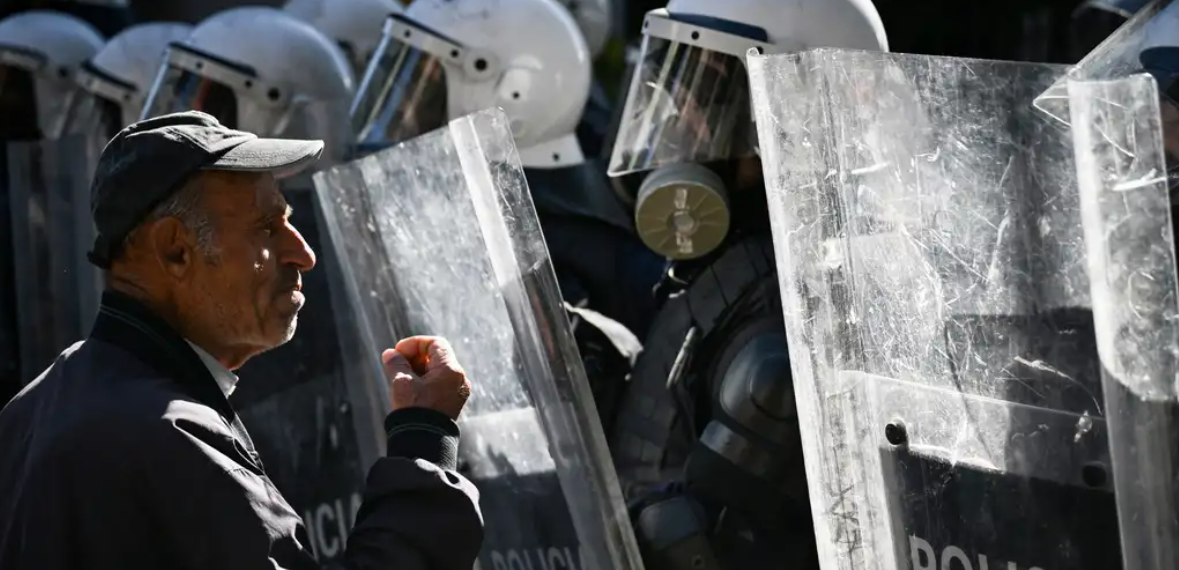
Expert from DGAP, Nikola Xaviereff, analyzes the protests in Albania, Prime Minister Edi Rama’s stance, foreign influence, and the role of the EU and Germany.
Deutsche Welle: How do you comment on the current wave of protests in Albania? Do you see similarities with other protests in Europe or in the Balkans?
Nikola Xaviereff: It is interesting that across Europe, despite the different political orientations of various countries, a similar discontent is visible among young people. They view the future with concern, influenced by fear of unemployment, high living costs and the climate catastrophe. At the same time, they are losing trust in political leadership.
From a broader perspective, dissatisfaction is growing with what democracy can actually deliver in the face of profound systemic changes. If we compare it with Serbia, the protest movement in Albania follows similar patterns: it opposes the non-transparent sale of natural resources and assets of symbolic importance, and demands institutions that serve citizens better.
Deutsche Welle: After about 130 days of mostly peaceful protests, violence suddenly erupted. How do you explain this escalation? And are the measures announced by the government an appropriate response?

Nikola Xaviereff: The government’s reaction does not follow a conciliatory approach; it aims more at confrontation, escalating tensions and repression. This shows that the current leadership has no convincing answers to existing challenges and relies on a top-down authoritarian approach instead of opening the political process.
Citizens demand transparency and that their political concerns be taken into account. In this context, violence should be understood as a tactic of resistance, through which they seek to draw attention and express their disappointment.
Deutsche Welle: Prime Minister Edi Rama also blames “foreign forces” for escalating the situation and speaks of efforts to destabilize Albania. How do you comment on this?
Nikola Xaviereff: Edi Rama has put himself in a difficult situation in domestic politics, trying to secure influence through informal channels close to the centers of power surrounding US President Donald Trump, especially through his trusted people and family members. His foreign policy, which relegates formal relations between governments in favor of private interests, is causing dissatisfaction among Albanian citizens.
The claim that foreign forces stand behind the destabilization is a political tactic to divert attention from the real problems and avoid responsibility for them.
Deutsche Welle: Can you say with certainty that foreign states such as Russia or Iran, or their secret services, are influencing the protests, as Prime Minister Rama claims? On what do you base your assessment?
Nikola Xaviereff: It cannot be ruled out that certain foreign actors or their secret services may try to influence the protests. However, there is no convincing evidence that they are decisively or even systematically directing or orchestrating the protests. Moreover, both are currently heavily engaged with their own domestic challenges.
Deutsche Welle: Many protesters seem to oppose not only the government but also the traditional opposition. At the same time, the movement lacks clear political leadership. What political potential does such a movement have?
Nikola Xaviereff: Young people’s dissatisfaction is directed both against the current government and against the entire political establishment. As with other protest movements in Europe, this is expected to increase political pressure and give further impetus to parties seeking to change power. In Albania, this movement calls Edi Rama’s power into question. As an illiberal prime minister, he must seek dialogue and create more space for civil society participation if he wants to take the country toward EU membership.
Deutsche Welle: Rama also presents the protests as a risk to Albania’s EU membership. Can the protests really endanger the European integration process?
Nikola Xaviereff: The protests highlight the gap between the state-led reform process aimed at aligning with EU legislation and standards (acquis communautaire) and real changes on the ground. Precisely because Albania aims for EU membership, students may paradoxically ask Brussels to use its influence to push the government into dialogue and take citizens’ concerns seriously. The claim that the protests endanger the European integration process is a political phrase without substance.
Deutsche Welle: The anger of many protesters is increasingly directed also against the European Union and its stance toward the Albanian government. Do you see a risk of rising Euroscepticism?
Nikola Xaviereff: The Albanian population generally has a very positive attitude toward the EU and links European integration with liberal standards and values, good governance, the rule of law, transparency and media freedom. Unlike Serbia, young people in Albania expect the EU to use its influence to support their demands. If this does not happen, the EU risks losing credibility.
In the short term, however, this is not expected to call into question the generally positive attitude of the population toward EU membership.
Deutsche Welle: What should the EU and especially Germany do to prevent a further loss of trust, particularly on the eve of the Berlin Process?
Nikola Xaviereff: The EU leadership has the opportunity to clearly address the main concerns of students in its annual enlargement package. It can emphasize that the protests are a healthy sign of democratic debate and, at the same time, ask Tirana, through the technical language of the enlargement process, to take the protesters’ demands seriously. These demands are also linked to the formal chapters of accession negotiations with the EU. For its part, Germany has the opportunity, at the upcoming Berlin Process summit, to call on Albania’s political leadership to contribute to reducing tensions, maintain calm and demonstrate substance.
(Nikola Xavieref is a researcher at the Center for Order and Governance in Eastern Europe, Russia and Central Asia of DGAP (German Council on Foreign Relations))
DW