







The United Kingdom will test whether artificial intelligence tools can help improve the detection of breast cancer, in what is presented as the largest study of its kind in the world. The trial, called EDITH, will involve around 660,000 women aged 50 to 71 who are awaiting routine breast cancer screening, which in Britain is offered every three years.
Women can withdraw from the study if they do not want to take part, Euronews reports, which covered the announcement of the trial. The UK government is supporting the study with 10 million pounds, around 12 million euros, according to the same source. Early detection of breast cancer can save lives, but diagnosis is a time-consuming process.
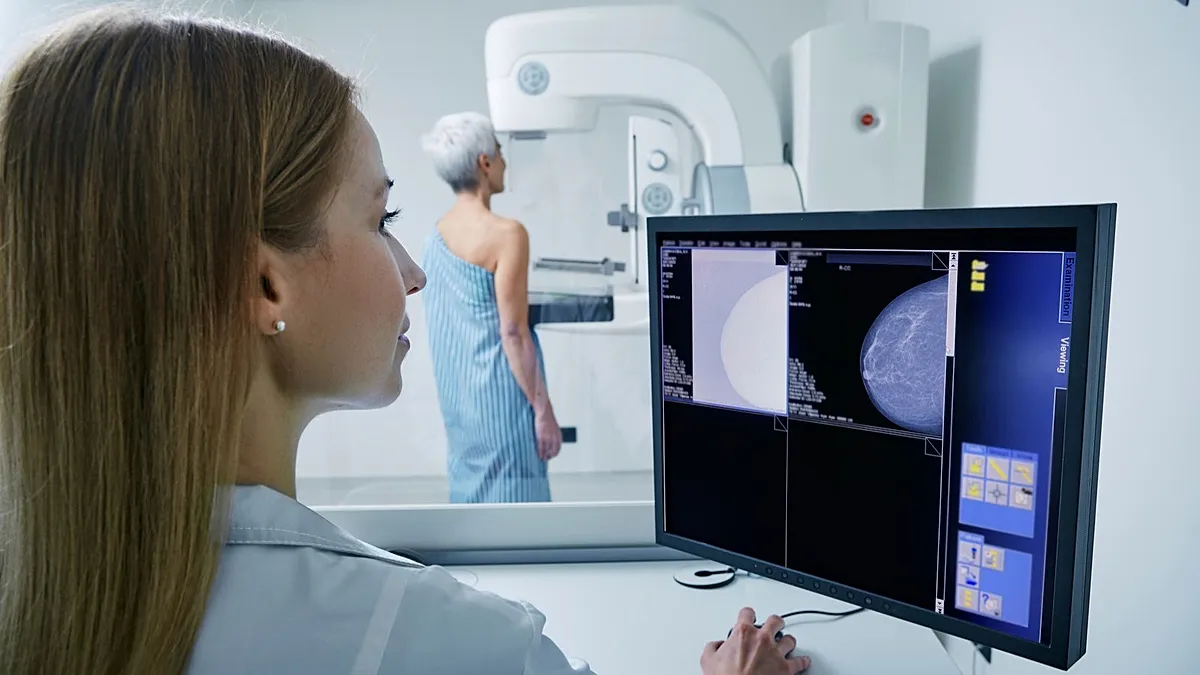
Currently in Britain, at least two radiologists review every mammogram, while fewer than 1% of these scans show signs of cancer. In the trial, radiologists will use an artificial intelligence-assisted tool to detect cancers that are too small to see or feel.

The aim is to give specialists more time to diagnose and care for women with cancer, by reducing the time they spend reviewing mammograms with no signs of disease.
How the women will be divided in the EDITH trial: Women will be divided into three groups. The first group will undergo standard screening, with two radiologists reviewing the X-rays. In the second group, a radiologist and the artificial intelligence tool will both review the mammograms, to see whether the tool catches signs of cancer that the radiologist may have missed.
In the third group, the tool will carry out the first review of the X-rays and determine whether the likelihood of cancer is high or low. If the likelihood is low, the images will be reviewed by one radiologist; if it is high, they will be checked by two radiologists, who will decide whether the patient should be sent for additional tests.
Every mammogram will in any case be reviewed by at least one radiologist, according to the trial announcement. The artificial intelligence-assisted tool will be integrated into routine screening only if the study shows it is as safe and effective as the current programme. The British Secretary of State for Health and Social Care, Yvette Cooper, said that, if successful, this technology could help women receive a diagnosis and start treatment much sooner, giving them the best chance of recovery.
Professor of Radiology at the University of Cambridge, Fiona Gilbert, one of the leaders of the study, assessed that the tool could help experts review images more efficiently. She is also studying whether artificial intelligence can identify women at higher risk of being affected by breast cancer.
Currently around 2.1 million women in Britain undergo breast screening every year, which prevents around 1,300 deaths. Breast cancer is the most common form of cancer in the European Union, with around 360,000 women diagnosed in 2024, according to EU data. This accounts for 29% of all cancer diagnoses in women.