







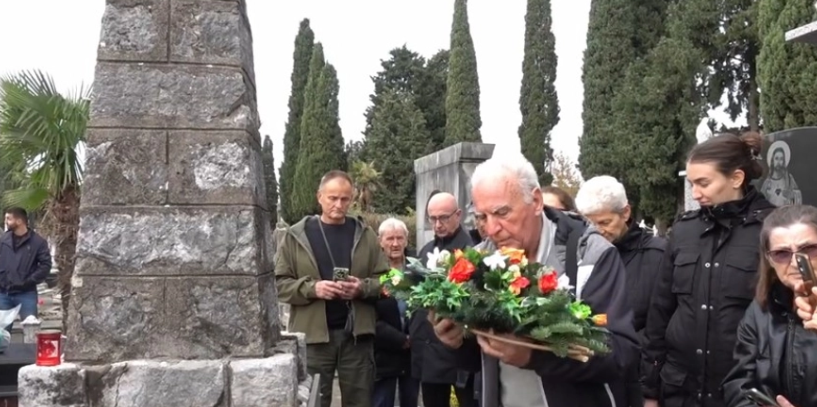
A group of visitors from Vojvodina entered the Catholic cemetery of Rrmaj and held a ceremony for 156 Serbian soldiers, describing them as victims of the “Albanian Golgotha.” The Catholic clergy say they were unaware of the visit and raise questions as to whether the soldiers were ever buried there. This scandalous event cannot pass in silence.
Who allowed them to enter? Who organized the pilgrimage? Were the authorities of Shkodra and central institutions notified? If the clergy was not informed, who opened the gate of this holy place and of Catholic memory? The silence of the institutions only adds to the questions.
No one can deny Serbs the right to commemorate their dead. But this right does not justify entering a Catholic cemetery without transparency, raising unconfirmed historical claims, or disregarding the feelings of the community that maintains that place. If the purpose was commemorative, why was the clergy not notified and why was there no prior public explanation?

The word “Golgotha” cannot be used to present history from only one side. The suffering of Serbian soldiers during the 1915 retreat does not erase the suffering that Albanians experienced at the hands of Serbo-Montenegrin armies. Historical memory requires the full truth, not one-sided interpretations that leave anger and doubt behind.
The Catholic cemetery of Rrmaj is not a stage for nationalism or for politics with Albanian history. If the visitors entered without permission, this must be investigated. If someone authorized them, the names and responsibilities must be made public. Shkodra Municipality and the government must provide answers.
The Catholic community of Shkodra deserves respect. Citizens deserve to know who allowed this ceremony and what was claimed in the name of history.
How can visitors from Serbia come and hold a ceremony that offends the feelings of Albanians, when the memory of Shkodra and Malësia e Madhe also preserves the wounds of massacres committed by Serbo-Montenegrin armies? History recognizes them as occupying armies; this past cannot be erased or relativized with a one-sided pilgrimage.