







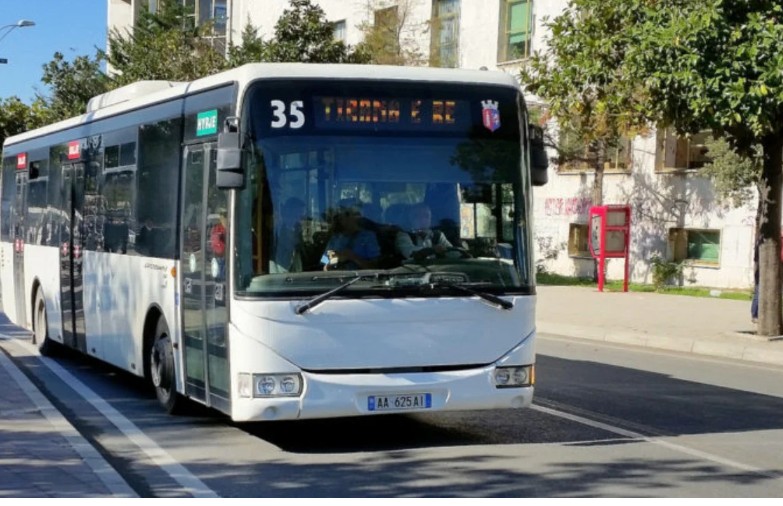
From 1 January, if the government does not apply a reduced VAT rate of 6% to public transport as well, operators warn they will begin to request increases in ticket and subscription prices.
The National Association of City Transport, in a letter addressed to the Committee on Economy, Employment and Finance, the Ministry of Finance and the Ministry of Infrastructure, asks that its request to include public transport in the reduced 6% VAT scheme be taken into account.
Full letter from the National Association of City Transport
The National Association of City Transport, representing the interests of licensed public passenger transport operators, within the parliamentary procedures for reviewing and approving the State Budget and the Fiscal Package for 2027, submits for consideration a series of requests and proposals directly related to the economic sustainability of the sector, the fiscal burden of conducting the activity, and guaranteeing an affordable public service for citizens.
We believe that fiscal policies for 2027 must take into account the special nature of public transport which, unlike ordinary commercial activities, operates under regulated tariffs, defined service obligations, and legal and administrative constraints on adjusting prices to real costs.
Public transport is not merely an economic activity, but a service of general public interest, directly linked to citizens’ mobility, access to employment, education, healthcare, and participation in economic and social life. It constitutes one of the main arteries of city life.
For this reason, the Association asks that public transport be treated, from a fiscal standpoint, in a manner similar to the basic products and services of the household basket, and submits the following requests:
Non-approval of the proposed increase of VAT to 21% and reduction of the VAT rate for public transport to 6%.
Under the 2027 Fiscal Package presented by the Government, an increase of the standard VAT rate from 20% to 21% is proposed. In the absence of a reduced rate for public transport, this measure could put pressure on the price of the daily ticket and the monthly subscription, affecting citizens, students, pensioners and those in need.
Taking into account the rising costs of fuel and living expenses, the Association considers that any additional fiscal burden on public transport should be analysed in relation to its impact on citizens and the financial capacity of operators.
The Association positively views the principle of protecting basic household consumption, but considers that this treatment should also extend to public passenger transport services. Public transport is a necessary and recurring expense in household budgets.

For many citizens, using the bus is not a consumption choice but the only economically affordable way to get to work, to school, to health institutions, or to meet daily needs. According to the Association’s preliminary estimate, public transport serves a considerable population of users, estimated at around 450,000–500,000 citizens nationwide.
A considerable share of these users belong to low- and middle-income families, students, pensioners, and persons for whom owning or using a private vehicle is economically unaffordable. For these reasons, public transport should be considered a functional part of the basic family consumption basket and benefit from reduced tax treatment.
Within the framework of the European integration process, the Association proposes that consideration be given to the tax practices of European countries that apply reduced rates for passenger transport, such as Portugal, Germany, Austria, Italy and Spain. Rates vary by state and type of service; there is no single 6% rate for all European Union countries.
COMPARISON OF PUBLIC TRANSPORT VAT WITH EUROPEAN COUNTRIES
Country VAT
Croatia 25%
Albania 20% / 21% proposed
Italy 10%
Austria 10%
Spain 10%
Germany 7%
North Macedonia 5%
Portugal 6%
Belgium 6%
Kosovo VAT exemption
Compared with Albania (20%), the 10% rate in Italy, Austria and Spain is 10 percentage points lower; the 7% rate in Germany is 13 points lower; while the 6% rate in Portugal is 14 points lower. If the standard Albanian rate rises to 21%, the difference from the proposed 6% rate for public transport would be 15 percentage points. Croatia shows that not all EU countries apply relief for this service.
Liberalization of the ticket price or the establishment of a mandatory mechanism for review and compensation of regulated tariffs.
In urban and suburban transport, ticket and subscription fares are approved by the relevant local self-government bodies, while for other services the relevant arrangements under the road transport legislation apply. As a result, operators have neither the right nor the ability to unilaterally raise the price of a ticket or subscription, even when they face:
Increases in the price of fuel and energy.
Increases in wages and contributions for staff.
Increases in maintenance costs, spare parts and vehicle insurance.
Increases in fiscal and tax obligations.
Costs for renewing and modernizing the fleet.
Obligations to operate the approved kilometres, frequencies and timetables of the service.
In this situation, an economic imbalance is created between the obligations that operators must meet and the opportunities they have to secure revenue. The increase in costs cannot be automatically reflected in the ticket price, while operators’ revenues remain limited by the approved tariffs. Consequently, any additional tax burden, without a corresponding relief or compensation mechanism, risks deepening the negative financial result, reducing investment capacity and jeopardizing the continuity of the service. The Association considers it economically unsustainable for the state, on the one hand, to administer the price of the service and, on the other hand, to increase tax obligations without providing a mechanism that guarantees coverage of the real costs of providing it.
The proposed increase of the standard VAT rate from 20% to 21% should be assessed in relation to the budgetary effect and the possible economic and social consequences for public transport users and operators.
Under these conditions, the Association proposes:
Amending Law No. 92/2014, “On Value Added Tax in the Republic of Albania”, as amended, by expressly including regular public passenger transport services, urban and suburban, in the categories benefiting from the reduced VAT rate of 6% on sales.
Assessing the extension of this rate to regular intercity transport, taking into account its role in ensuring citizens’ mobility.
Maintaining the right to credit and refund of VAT on purchases and investments related to the provision of the service, in accordance with tax legislation.
Guaranteeing that the reduction of VAT on sales effectively contributes to improving the financial balance of operators and to maintaining affordable prices for citizens.
The purpose of the proposal is not to create an unjustified tax privilege, but to align the fiscal burden with the social nature, public interest and economic constraints of the sector.
Request for reducing the fiscal burden on fuel used in public transport and exemption from the annual circulation tax for licensed buses.
As part of the Fiscal Package 2027, it has been proposed to shift the circulation tax from the price of fuel to annual vehicle taxation. The Association requests that this reform not be accompanied by the creation of a new obligation or an increase in the obligations of public transport operators. Buses used for public passenger service do not have the same function as private vehicles. They operate approved itineraries, defined frequencies and the kilometers necessary to fulfill the service obligation. For this reason, we request:
Exemption of buses registered and licensed for regular public transport from the new circulation tax obligation that may be imposed on vehicles.
Exemption from excise duty on fuel used and documented for the provision of public transport or, alternatively, the creation of an excise duty refund mechanism.
Implementation of reimbursement on a periodic basis, monthly or quarterly, based on supply invoices, licenses, vehicle registration and kilometers traveled.
At the same time, we ask that the effects of shifting the turnover tax be fully analyzed, verifying the real reduction in fuel supply costs and the impact of the new annual taxes on bus fleets.
Request to review the excise duty on natural gas used in public transport and to examine tax incentives for LNG/CNG and electricity.
Albania is crossed by the Trans Adriatic Pipeline (TAP) gas pipeline, but the infrastructure for supplying vehicles and buses with natural gas remains limited. A distinction must be made between compressed or liquefied natural gas (CNG/LNG) and liquefied petroleum gas (LPG), as these products have different technical characteristics, emissions and tax treatments.
In this context, we ask that the level of import excise, the unit of measurement and the basis for calculating tax obligations on natural gas intended for urban public transport be examined. Fiscal policy should avoid unnecessary obstacles to the use of fuels with lower emissions.
Albania is a party to the Paris Agreement on Climate, signed on 22 April 2016 and ratified by the Parliament of Albania on 21 September 2016.
In line with the objectives for reducing greenhouse gas emissions, the Association calls for fiscal policy to support the gradual modernization of the fleet through vehicles that use cleaner energy, including natural gas and electricity. Any proposal for a 0% VAT rate or an excise exemption should be considered in accordance with tax legislation and international obligations.
For this reason, we propose:
Reviewing the abolition or reduction of excise duty on natural gas used by public transport buses, once the current rates, unit of measurement and applicable legal basis have been verified.
Carrying out a comparative analysis of the tax treatment of natural gas, LPG, diesel and other fuels, for comparable units of energy and environmental impact.
Including in the 2027–2029 budget programming measures for developing natural gas supply infrastructure and alternative fuels for public transport fleets, according to technical and economic feasibility.
Creating support schemes for the gradual replacement of worn-out vehicles with buses using lower-emission technologies, including natural gas, hybrid technologies and electric vehicles.
We consider that the objectives of fiscal, energy and environmental policy should be harmonized and should not create economic obstacles to the modernization of the public transport fleet.
Taking into account the issues presented, the Association asks that the Parliamentary Committee, as part of the review of the relevant draft laws, request the Ministry of Finance to carry out a specific analysis of the impact of the 2027 Fiscal Package on the public transport sector. This analysis should assess:
a) The social and economic impact on citizens of the proposed increase of the standard VAT rate to 21%, assessing possible scenarios for ticket prices and monthly subscriptions.
b) The cumulative effect of changes in VAT, dividend tax, other tax obligations and operating costs.
c) The impact of the shift of the turnover tax and of the excise regime on public transport fleets.
ç) The financial and budgetary effects of reducing VAT to 6% for public transport, as part of its treatment as a basic service for families.
d) The real needs for subsidization and compensation of the public service.
dh) The medium-term impact of fiscal policies on fleet renewal, employment and service quality.
e) The possible consequences for the continuity and frequency of service in the absence of easing interventions.
The National Association of Urban Transport wishes to emphasize that the requests presented do not aim to avoid tax obligations, but to establish a fair balance between the obligations arising from the provision of a regulated public service and the financial resources necessary to fulfill them.
Public transport is a necessary component of the economic and social functioning of the country. Policies aimed at protecting the basic family shopping basket and supporting low- and middle-income categories cannot overlook the cost of citizens’ daily mobility. If operators are forced to bear increasingly higher tax and operating costs, without the right to adjust the price of the service and without benefiting from compensation mechanisms, the financial sustainability of public transport is put at risk.
Under these conditions, responsibility for maintaining affordable fares and guaranteeing service quality should be shared fairly between operators and public institutions.
We request an institutional review of the proposals presented, the organization of a hearing session with representatives of the Association, and a reasoned response regarding the possibility of including them in the legal and budgetary acts under review.
Thanking you for your attention and institutional cooperation, we remain available to present the economic data, supporting documentation and technical arguments necessary./Monitor