







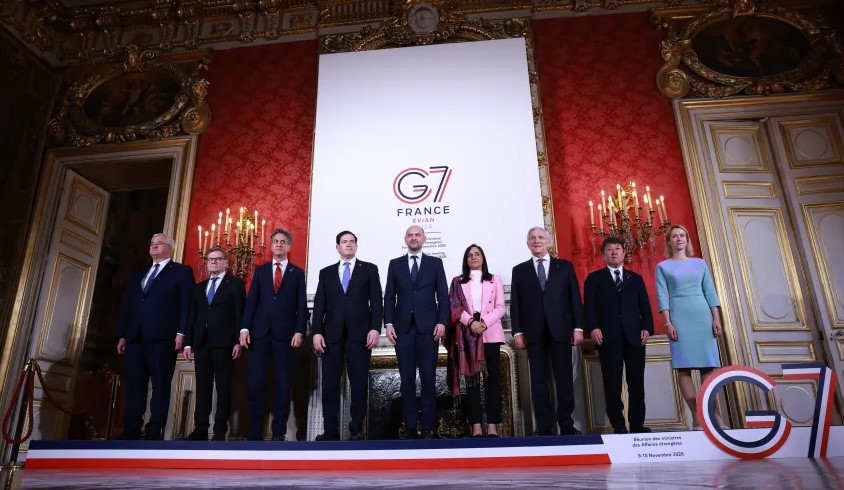
Foreign ministers of the G7 countries have warned that China’s increasingly aggressive actions in the waters east of Taiwan are threatening regional stability and freedom of navigation. In a joint statement issued late on Wednesday, after a meeting in Paris, they stressed that these activities also risk the security of international maritime transport.
This is the strongest joint reaction by the G7 so far to China’s actions off the island’s eastern coast. It follows concerns that the United States, Britain, France and Germany had previously expressed separately. According to the G7 statement, the alliance reaffirmed its opposition to any unilateral attempt to change the status quo, “especially through force or coercion, or the threat of their use”.
China considers Taiwan part of its territory. Since June, China’s activities near Taiwan have increased through regular coast guard patrols. Officials in Taiwan, which rejects Beijing’s sovereign claims, believe China is preparing for a possible naval blockade, using military, paramilitary and civilian means at the same time.

Beijing has rejected the G7 reaction. China’s Ministry of Foreign Affairs said on Thursday that the text “disregards objective facts, crudely interferes in China’s internal affairs, and deliberately slanders and smears the image of the country”. The ministry’s spokesperson, Mao Ning, said the statement “once again shows that the G7 is an ideological grouping that clings to a Cold War mentality and engages in bloc politics”.
On the other hand, Taiwan’s Presidential Office welcomed the G7 statement. Peace and stability in the Taiwan Strait and the Indo-Pacific region are essential issues for global security and prosperity, it stressed. On Thursday, Chinese President Xi Jinping called for the complete “reunification” of Taiwan with the motherland and pledged that it would be achieved peacefully. China does not recognize any claim by Taiwan to independent sovereignty.