







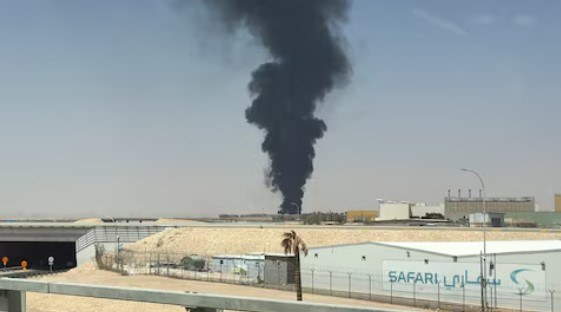
Saudi Arabia is pushing for the European Union to designate the Iran-backed Houthi movement of Yemen as a terrorist organization. According to six European officials, Riyadh has yet to overcome Brussels’ concerns that such a move could harm a future peace process.
The Saudi campaign reflects a broader effort to increase international pressure on the group. In recent weeks, the Houthis have carried out almost daily attacks on the kingdom, following the resumption of a war that began more than a decade ago. Saudi Arabia has led a military coalition against the Houthis for more than ten years, on behalf of Yemen’s internationally recognized government, which the group ousted from the capital, Sanaa, in 2014.
The Houthis are already subject to EU sanctions, including an arms embargo and asset freezes against 12 commanders. The European Union has designated Iran’s Islamic Revolutionary Guard Corps, a key backer of the Houthis, as a terrorist organization, but so far has not designated the Houthis themselves as such.

The move has been taken by other Western countries, including the United States, Australia and Canada. ## European concerns over peace and trade European countries are concerned that listing the Houthis as a terrorist group would close the limited channels of communication they maintain with the group.
Such a step could undermine any European involvement in a future peace process in Yemen, according to the six officials. Adding the Houthis to the EU’s terrorist designation list would require the unanimous support of all 27 member states. So far, support has been limited to a small number of countries, one of the officials said, declining to identify them because the discussions are private.
EU foreign policy spokesperson Anouar El Anouni said the bloc is in regular contact with Riyadh on a range of issues, including regional developments. Last month, the European Parliament adopted a resolution calling on the EU to list the Houthis as a terrorist group.
The move was seen as largely symbolic, but it signaled support within Europe for a tougher stance against the group. Joana de Deus Pereira, senior associate fellow at the Royal United Services Institute, a defence research group based in London, assessed that European states want to show solidarity with Saudi Arabia.
However, they remain hesitant about the listing, which in her view would have limited practical impact. Among the concerns she mentioned is the possibility that the Houthis could retaliate against any listing by targeting European ships near Yemen. Such a designation could also complicate the work of aid groups operating in areas controlled by the group. ## The risk of retaliation and trade disruption Another possible reason for Brussels’ caution, according to several European officials, is that an EU terrorism designation is particularly difficult to reverse.
Lifting it would again require the unanimous support of member states. Yemen’s coastline stretches along the Red Sea and the Bab el-Mandeb Strait, a critical waterway linking Europe and Asia. Any Houthi rebel attack there could further disrupt global trade, which has already been shaken by Iran’s closure of the Strait of Hormuz in response to the US and Israeli war against Iran.