







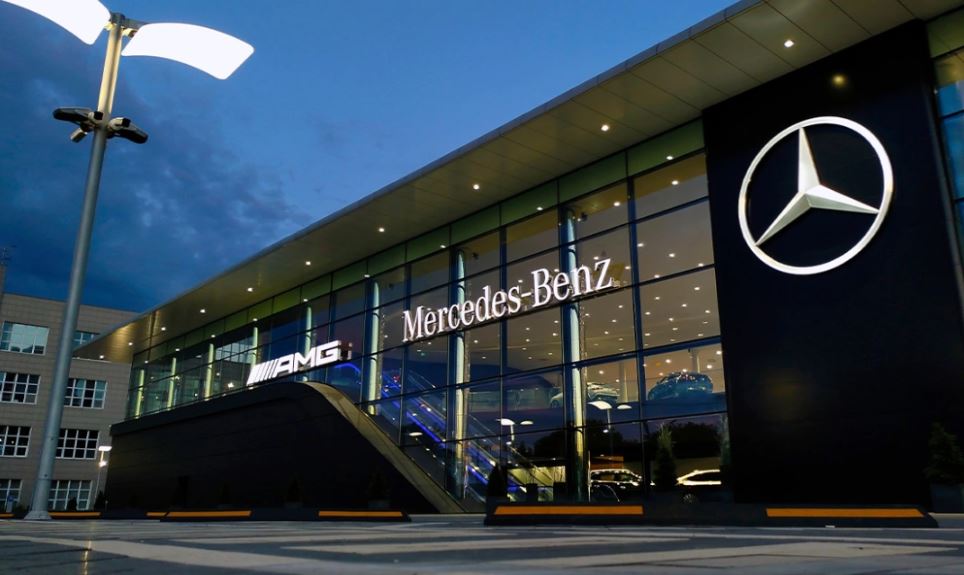
The Mercedes-Benz board of directors has decided to temporarily suspend all further investments in the company’s factories in Germany, announced HR director Britta Seeger. The decision comes amid controversy over high labor costs and growing pressure on the works council and the union IG Metall, according to the company.
The Stuttgart-based carmaker operates plants, among others, in Hamburg and Berlin. It is now seriously considering closing some of them. According to Seeger, the company wants to avoid closing factories at all costs, but “unfortunately we now have to consider this option more seriously”.
The company is required to specifically and in detail examine which factories in Germany it can still keep open, she added. Production director Michael Schiebe had previously warned that two German factories could be closed if costs are not reduced. These are an assembly plant and a transmission system factory that produces vehicle parts.

According to company figures, an hour of production in Germany costs up to five times more in some cases than in Eastern Europe. For this reason, the board of directors is seeking, among other things, longer working hours without additional pay. Special payments such as profit sharing, holiday pay and Christmas bonuses are also on the list of cuts.
Automotive expert Professor Ferdinand Dudenhöffer assessed that Mercedes’ announcement is not surprising, as the company has been stressing the difficulty of the situation in Germany for months. He criticized the union IG Metall, saying that “they are fighting for benefits that are costing employees their jobs”.
Without an adjustment to the cost structure, Dudenhöffer warned, “the automotive industry in Germany will disappear”. The Mercedes announcement comes several months after another German car giant, Volkswagen, announced factory closures and significant staff cuts.
The German economy has been in crisis for years, while the federal government forecasts a growth rate of only 1.3% for 2026, most of which is expected to come from state investment. Chancellor Friedrich Merz speaks of “good news”, but Economy Minister Katharina Reiche warns that “this is an important message, but it is only the beginning”. Without further reforms, she said, the new hope for growth could quickly vanish.