







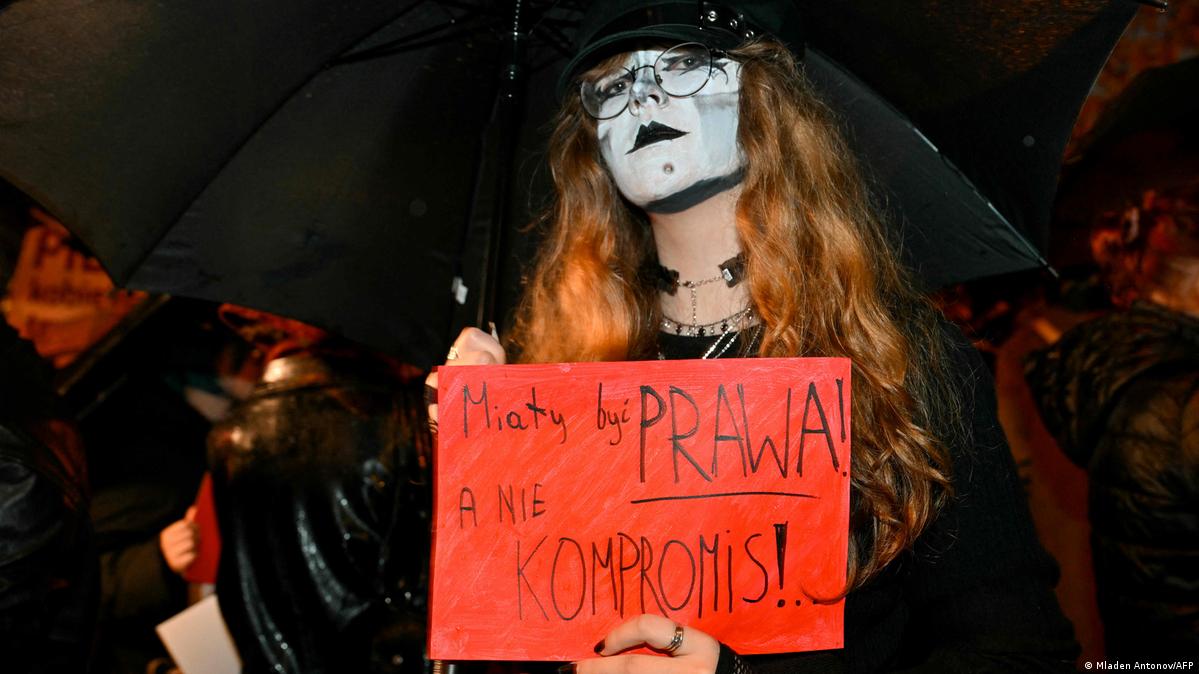
Thousands of people took part in demonstrations across Poland on Thursday in support of abortion rights, including in the capital Warsaw and more than 20 other cities. The protests highlight the ongoing struggle in the predominantly Catholic country, where abortion laws are among the strictest in Europe.
Currently, abortion is legal in Poland only when the pregnancy results from a criminal act such as rape or incest, or when it endangers the life or health of the mother. This restrictive framework means that most abortions are carried out secretly, with activists estimating that tens of thousands take place outside hospitals each year. While women who carry out secret abortions do not face criminal liability, those who assist them, including doctors and family members, can be prosecuted and sentenced to up to three years in prison.
The country’s abortion laws have undergone significant changes over time. Legal since 1993 under specific conditions, they were further tightened in 2020 under the conservative Law and Justice (PiS) government, which banned abortions in cases of severe fetal abnormalities. Protesters carried placards with slogans such as “Women’s hell continues” and “Men with quality don’t fear equality,” reflecting their deep dissatisfaction with the current situation.

Prime Minister Donald Tusk came to power in 2023 with a pledge to ease abortion restrictions in Poland. However, internal disagreements within his governing coalition have hindered efforts to change the law, leading protesters to accuse the government of failing to keep its promise.
The latest protests came just days after the Polish parliament passed two bills aimed at easing abortion restrictions. However, these bills are widely expected to be vetoed by President Karol Nawrocki, a politician backed by the conservative opposition PiS. Kinga Jelinska, director of the Women Help Women Foundation and co-founder of the Abortion Dream Team, described the measures as “breadcrumbs.” Activists expressed skepticism, saying that passing these bills one year before the next parliamentary elections was a symbolic gesture with no chance of becoming law, and accused Tusk’s liberal government of creating only the impression of action in order to secure women’s votes in the upcoming election.
Source: Deutsche Welle