







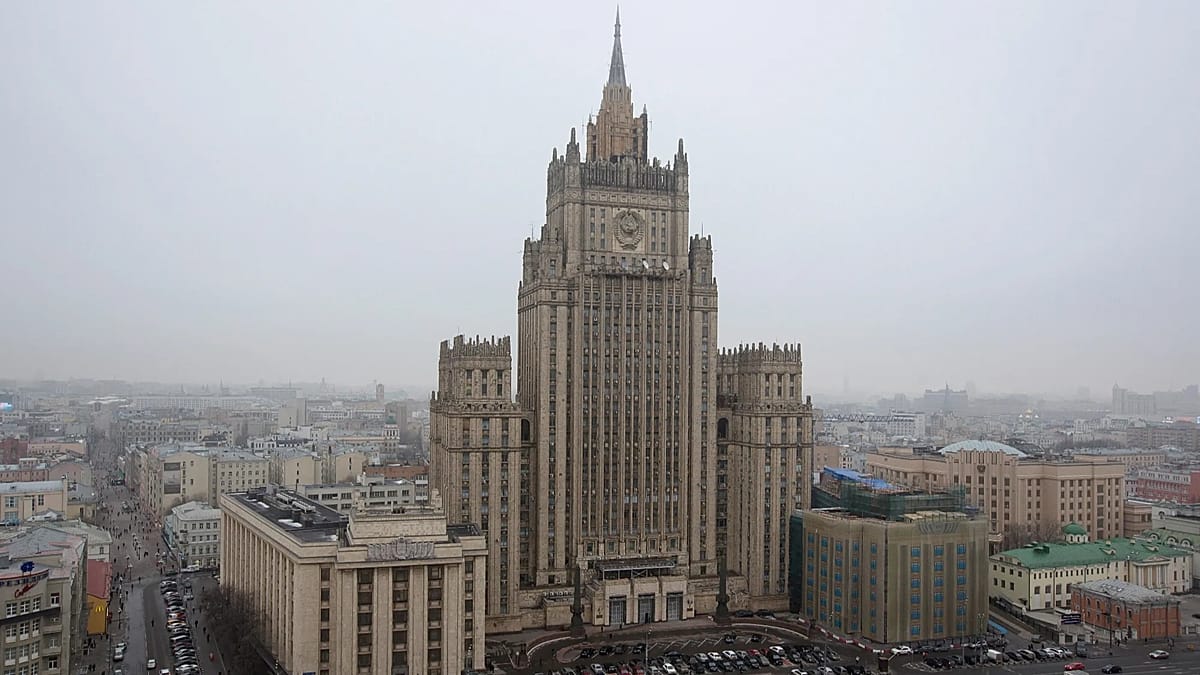
The Russian Foreign Ministry announced on Wednesday that it has banned entry into Russia for two French lawmakers and two journalists, as a retaliatory measure against France’s expulsion of pro-Kremlin commentator Xenia Fedorova. Ministry spokeswoman Maria Zakharova said at a press conference that the four persons were targeted “because of their involvement in harassing Fedorova and calls for her expulsion”.
Thus, Russia is banning French nationals who have criticized or reported on her. Their names are lawmakers Sacha Houlié and Arthur Delaporte, as well as journalists Ariane Chemin and Paul Gogo, who are barred from entering Russian territory, according to the Russian Foreign Ministry’s statement. Zakharova made the decision public during a meeting with journalists, directly linking it to Fedorova’s case. Fedorova, former head of RT France, has long been under sanctions from France and the European Union.
Fedorova, who headed RT France, is now one of the media faces of the group owned by conservative billionaire Vincent Bolloré. Since late July she has been subject to an expulsion order and an asset freeze in France, and since September she has also been under European Union sanctions.

According to a document published in the EU’s Official Journal on September 24, Fedorova is accused of having conveyed “messages in line with those promoted by Russian authorities”. The EU document notes that she has “in particular presented Western and European support for Ukraine as a factor prolonging the war, described Russia as a country seeking peace while portraying Europe as a supporter of confrontation, questioned established facts regarding the unlawful transfer and deportation of Ukrainian children, and spread messages portraying European and NATO policies as threats to European security”.
In its decision, the EU notes that since RT’s broadcasting activities were suspended, Fedorova has regularly appeared on several French media outlets, including the CNews TV channel, the Europe 1 radio station and the JDD newspaper, “through which she has continued to spread these messages to a wide audience in France”.
Among those banned is also Socialist deputy Arthur Delaporte, who in June, during a question session in parliament, challenged Interior Minister Laurent Nuñez over the renewal of Fedorova’s ten-year residence permit. He then called the prefecture’s decision “unfair and dysfunctional” and described Fedorova as a “Kremlin propagandist” and an “agent destabilizing our country”, asking: “Will you withdraw her permit and start expulsion proceedings?”.
Deputy Sacha Houlié, who chaired the National Assembly’s Law Committee from 2022 to 2024 and is a member of the parliamentary intelligence delegation, wrote in November 2023 a report on France’s vulnerability to foreign interference, which describes in detail the methods Moscow prefers to expand its influence in France and around the world.
Reacting on the platform X to the ban, Houlié called the decision “recognition of my work against foreign interference in France” and added that the sanction “invites me to continue this just commitment to defending France’s fundamental interests”. Houlié is a deputy of the Place publique party and a supporter of Raphaël Glucksmann, a candidate in the French presidential election, who has previously stated that he was targeted by Russian “destabilization” operations online.
Journalist Ariane Chemin, senior reporter at the French newspaper Le Monde and an author, published in May the book “War – These Are Unique Names”, a literary account of the consequences of Russia’s invasion of Ukraine. Journalist Paul Gogo, who works for several media outlets, lived and worked in Russia for nine years until February 2026; he moved there in 2017, after having been based in Ukraine since 2014.