







By Spiten Prulli-
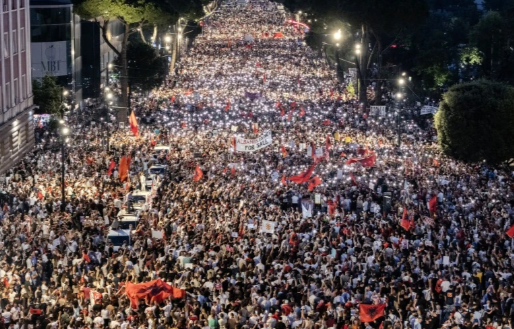
If citizens protest for months and students fill the squares for weeks, a question arises that cannot be avoided indefinitely: how will this energy be turned into power to change the country? Dissatisfaction can shake the government, but lasting change requires organization, a program and representation. Therefore, the creation of a new political force from the people engaged in these protests is an idea that deserves serious support.
Citizens cannot be asked to keep taking to the streets, facing the fatigue and costs of protest, while decisions about their future continue to be made by the same political structures. At some point, opposition must gain the opportunity to govern.
If protesters seek to change the way power is exercised, they have the right to organize to take it through the ballot.
This is the democratic path to challenge the old political system. A civic movement should not accept the permanent role of pressure from outside, waiting for existing parties to translate its demands into decisions. It can build its own representation and seek citizens’ trust directly.

Students have particular reasons to consider this option. Their concerns relate to how the country is run: the quality of education, the cost of living, employment, merit and the opportunity to build a future here. These problems require political decisions. Involvement in politics can give them the chance to shape those decisions themselves.
But a party that emerges from the protests must justify the promise of change from the outset. A new name, a young age and strong language are not enough. Albania needs an organization that selects its leaders through competition, publishes its financing, gives members the right to dissent and sets clear limits on the power of its chairman.
A force that promises to dismantle the system of lifelong party leaders must start by limiting its own leader.
This is the first test of credibility. Whoever demands transparency from the government must show who finances them. Whoever demands merit in administration must apply it when selecting candidates. Whoever denounces clientelism must give up distributing posts as a reward for personal loyalty.
Equally essential is the program. Anger gathers the square; running institutions requires solutions. A new force must show how it will improve education, how it will protect competition, how it will control public spending and how it will serve citizens without asking about their political beliefs. Promises must have deadlines, costs and people responsible for them.
A new party should emerge from an open process, where no one declares themselves the owner of the protest. Taking part in a rally does not constitute automatic authorization to create a party in the name of everyone. Those who wish to organize politically should do so openly, while the protest must also preserve space for citizens who choose to remain independent.
This separation would strengthen the initiative. It would show that its leaders understand pluralism and do not treat civic support as property.
Existing parties would thus face competition that may force them to change. A serious alternative could make it harder for them to take voters for granted and to limit choice to the same people. Its very entry into the race would have value, if it raised the standard of representation.
Therefore, a new competitive political force may emerge from the civic and student protests. It should aim for power through the vote and use it to change the rules that feed abuse, clientelism and impunity.
The square has the power to say “enough”. An organized alternative has the chance to turn that call into decisions. Albania needs this opportunity, and citizens have the right to build it themselves.