







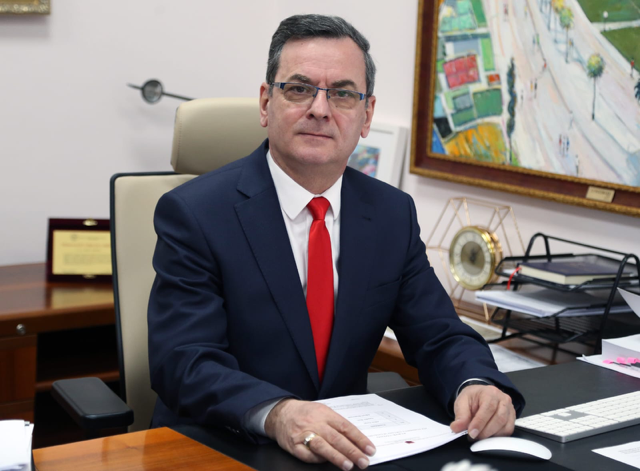
-Sokol Sadushi-
Introduction: an invitation to debate on the limits of mandates
This article aims to open a legal debate on the meaning and application of constitutional rules on mandates, especially when the election or appointment of successors is delayed. The purpose is not to question the legitimacy of officials or the activity of particular institutions.
Within this framework, several essential questions arise. When does a constitutional mandate begin and when does it end? Does the right to exercise the function end together with the mandate? Can an official remain in office after the mandate expires, even when the Constitution does not expressly provide for it? When a successor is elected late, does a full mandate begin for them, or must the constitutional cycle of renewal of the institution be respected? And, above all, can a delay in electing or appointing a successor affect the duration of the constitutional mandate and the rules for continuing to exercise the function?
These questions touch on the temporal limits of exercising power, the legitimacy of officials and institutional continuity. In some institutions, the mandate is also linked to the periodic renewal of the composition. A delay in electing a successor may extend the exercise of the function beyond the end of the mandate, affect the renewal cycle or leave vacancies.

The Constitution does not provide the same solution for every institution. In some cases it allows continuation in office until a successor is appointed, in others it provides for replacement, while for certain functions it is silent. The analysis aims to show that respecting the mandate also requires the timely election or appointment of a successor.
- The mandate and the exercise of the function: the legal distinction in their termination.
The Constitution does not follow a single model for the beginning and end of mandates. The mandate of the Assembly begins with its first sitting after the elections and ends after four years, while the Assembly continues in office until the first sitting of the new Assembly. The mandate of a deputy begins with the announcement of their election, while the exercise of the duty is linked to the oath. The mandate of the President of the Republic begins with the oath, but not before the end of the predecessor’s mandate. In the event of a vacancy, the Constitution provides for the temporary exercise of the function by the Speaker of the Assembly. The Prime Minister and ministers do not have individual mandates with a fixed term and continue in office according to constitutional rules.
These solutions show that the end of a mandate does not necessarily entail the immediate end of the exercise of the function. When the Constitution allows continuation in office, it rests on a specific constitutional basis and does not imply an extension of the mandate.
This matter carries significant weight when the election or appointment of a successor is delayed. Under the relevant constitutional provision, the official may lawfully continue in office, be temporarily replaced, or a vacancy may be created.
- Constitutional Court: periodic renewal as a constitutional obligation
Delays in appointing judges to the Constitutional Court have raised a matter of particular importance: can the delayed appointment of a successor affect the duration of an individual mandate and the constitutional cycle of the Court’s renewal? The problem arises from the need to harmonize the nine-year mandate of a judge with the renewal of one-third of the composition every three years, a mechanism designed to guarantee institutional continuity and the periodic change of the composition.
In decisions no. 84/2024, no. 60/2025 and no. 65/2025, the Constitutional Court addressed this issue, giving priority to preserving the constitutional cycle of renewal. This position deserves support, since periodic renewal requires not only the replacement of judges but also respect for the time set for it.
The importance of this standard becomes even more evident in the case of the vacancy created after a female judge resigned in September 2024. The initial ambiguity of the Assembly regarding the duration of the mandate to be filled, in relation to the constitutional cycle of renewal, brought to light the difficulties in implementing this mechanism. Meanwhile, the failure to fill the vacant seat for more than two years has led to the Court operating with an incomplete composition, creating the risk of tied votes and the inability to form the majority necessary for decision-making.
This interpretive standard is also relevant for other institutions with periodic renewal, particularly the High Judicial Council (KLGJ) and the High Prosecutorial Council (KLP), taking into account the specifics of their constitutional regulation.
- KLGJ and KLP: individual mandate versus the constitutional cycle of renewal
The issue of periodic renewal also arises in the High Judicial Council and the High Prosecutorial Council. The transitional provisions of Article 179 of the Constitution provided for initial three-year mandates for some members of each council, alongside five-year mandates, thereby creating two distinct cycles of renewal of the composition, ending respectively in December 2021 and December 2023.
In practice, the election of some successor members, especially the non-magistrate members elected by the Assembly, was carried out late. For the seats vacated in December 2021, successors were elected during 2022, while for some mandates that ended in December 2023, the election took place in July 2024. These delays raised a matter of constitutional importance: does a full five-year mandate begin for the member elected late, or must its duration be harmonized with the cycle of partial renewal of the councils?
According to one interpretation, every successor member enjoys a full five-year term, calculated from the date of commencement. According to another interpretation, the duration of the term should be harmonized with the constitutional renewal scheme, so that delays in elections do not undermine the periodicity of the renewal of the institution’s composition.
The interpretation that preserves the constitutional cycle of renewal appears more persuasive. Although the jurisprudence of the Constitutional Court has been developed with regard to its own composition, the reasoning on respecting the renewal period offers guidance for interpreting Article 179 of the Constitution, taking into account the specific features of the HJC and the HPC.
On the other hand, the constitutional provision that a member continues in office until the successor is elected guarantees institutional continuity, but does not by itself determine the duration of the latter’s term. Therefore, this guarantee of continuity should not be interpreted in such a way that delays in electing successors affect the constitutional scheme for renewing the institution.
- The Supreme Court: appointment delays, continuation in office and vacancies
Delays in the appointment of judges of the Supreme Court have created situations in which judges have continued to perform their duties for a long time after the end of their nine-year term. Unlike institutions with periodic renewal of their composition, the Constitution expressly allows this continuation until the successor is appointed. This guarantee ensures the uninterrupted functioning of the Court, without implying an extension of the constitutional term.
To avoid prolonging this situation, the initiation of replacement procedures before the end of the term is provided for. However, in practice there have been judges who have continued in office for more than three years after their term ended. The legitimacy of exercising the function in these cases is not called into question. What requires attention is the delay in fulfilling the obligation to appoint a successor.
Delays in appointments have another consequence, particularly in cases where vacancies arise due to the early termination of a term. Unlike continuation in office, an unfilled vacancy reduces the effective composition and the adjudicative capacity of the institution. Although legally distinct, both situations require the timely completion of appointment procedures. The problem does not lie in continuation in office, which the Constitution permits, but in the delays that prolong this situation or leave vacancies unfilled, thereby affecting the Court’s adjudicative capacity.
- The Prosecutor General: can continuation in office continue after the term has ended?
Delay in the election of the Prosecutor General raises a constitutional dilemma: can the need for institutional continuity justify the incumbent’s remaining in office after the end of the seven-year term, when the Constitution, unlike the case of the Supreme Court, does not expressly provide for this possibility?
According to one interpretation, the need for the uninterrupted functioning of the institution may justify the temporary continuation in office of the incumbent until a successor is elected. More convincing, however, is the interpretation that distinguishes the continuity of the institution from the personal continuation in office of the incumbent. The absence of an explicit authorization carries particular weight in the systematic interpretation of the Constitution, which has provided for such a possibility for other functions. Article 148/a provides a mechanism for avoiding a blockage of the election, stipulating that if the Assembly does not decide within thirty days of the submission of the proposals by the HJC, the first-ranked candidate is declared appointed. Following the same logic, Law No. 97/2016 requires that the selection procedure be announced at least four months before the end of the mandate. These arrangements show the aim of ensuring the timely election of a successor, without leaving institutional continuity dependent on the incumbent’s continuation in office.
The monocratic nature of the function of the Prosecutor General makes the mechanism of substitution important. Article 39 of Law No. 97/2016 provides for substitution when the post is temporarily vacant, limiting the deputy’s duties to those necessary for the functioning and representation of the prosecution office. In an interpretation aimed at respecting the constitutional limit of the mandate and the continuity of the institution, this provision may also be applied when the incumbent’s mandate ends without a successor having been elected. Substitution, however, does not mean the automatic transfer of all the incumbent’s constitutional powers to the deputy. Their scope is determined by the limits set by the Constitution and the law.
This solution, although more convincing than the personal continuation of the incumbent in office after the end of the mandate, remains temporary and cannot replace the timely election of the Prosecutor General. Delays in this process create legal uncertainty and risk the normal functioning of the institution.
- Prosecutors of the Special Prosecution Office: the nine-year mandate versus the continuity of investigations
For the prosecutors of the Special Prosecution Office, the problem does not concern the delay in appointing successors, but the termination of the mandates of a considerable number of prosecutors within a short period. This raises a question of constitutional significance: could the need to continue investigations justify a prosecutor’s special prosecutor remaining in office after the end of his mandate?
Article 148/dh of the Constitution provides for the appointment of special prosecutors for a term of nine years, with no right to reappointment. The end of this mandate does not, in itself, result in the loss of the magistrate’s status, but retaining this status is not equivalent to the right to continue exercising the function in the Special Prosecution Office. Unlike the regulation for judges of the High Court, the Constitution does not expressly provide that a special prosecutor remains in office until the appointment of a successor. For this reason, the need for continuity of investigations, however important, cannot by itself serve as a basis for extending the mandate.
In 2028, the mandates of at least 11 special prosecutors are expected to end. Transferring complex investigations to other prosecutors may make it difficult to ensure the continuity of proceedings and the admissibility of evidence. The question that arises is whether this practical need should affect the duration of the constitutional mandate, or whether the solution should be sought through another legal mechanism?
One solution worth considering is the possibility of temporarily transferring to the Special Prosecution Office those prosecutors who have completed their nine-year mandate. Article 46, point 3, of Law No. 96/2016 allows the temporary transfer of prosecutors from first-instance prosecution offices to the Special Prosecution Office to work on voluminous and complex cases. Could former special prosecutors, who continue their career as magistrates after the end of their mandate, also be included in this mechanism? Such a possibility would require not only meeting the legal conditions for transfer, but also clearly defining the competences that a former special prosecutor could exercise after the end of the mandate. The current wording of the provision does not give a direct answer to this situation. Even if the legal conditions for transfer are met, the question remains whether, and to what extent, they may continue working on earlier investigations without again exercising the competences of a special prosecutor, whose constitutional mandate has ended.
The question is whether the continuity of investigations can be guaranteed without undermining the nine-year mandate. Therefore, before the mandates end, the existing mechanisms should be examined and, if necessary, a clearer legal regulation for the transfer of cases should be adopted.
Conclusion: a debate that remains open
The constitutional mandate is a guarantee for limiting power, the legitimacy of its exercise, and the renewal of institutions. Differences between constitutional regulations require solutions that respect both the limits of the mandate and institutional continuity. The debate should also continue on the possibility of legal interventions that, in accordance with the Constitution, prevent the consequences of delays in electing or appointing successors. A fundamental question remains: Can delays by institutions in fulfilling their obligations change the time limits of mandates set by the Constitution?