







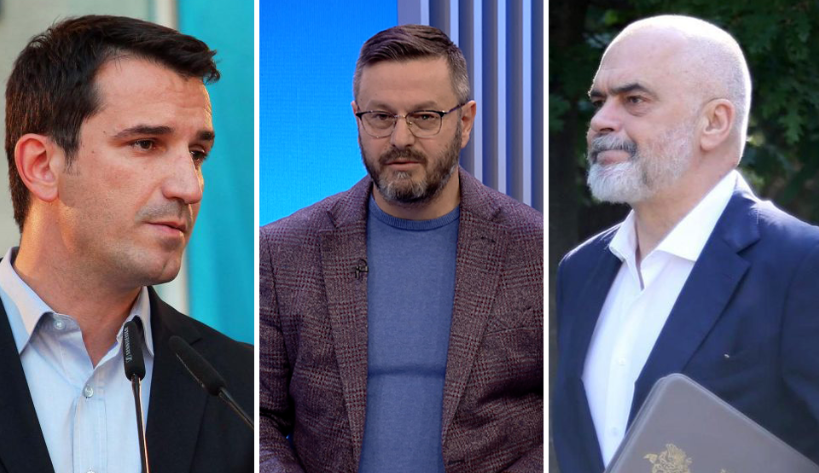
The lawyer of Erion Veliaj, Plarent Ndreca, has presented several arguments that, according to him, led the mayor of Tirana to the conclusion that the actions of the institutions against him are backed by Prime Minister Edi Rama. Ndreca mentioned criminal prosecution following an anonymous complaint, the prolonged court process, the non-implementation of Constitutional Court decisions, Veliaj’s dismissal, and his transfer to the Fier prison. According to the lawyer, these actions taken together create indications of political interference and an aim to politically neutralize Veliaj.
Rakipi: Veliaj claims that at the time of the transfer his rights were being violated. According to him, the director of this conduct is Edi Rama. Could you summarize how Veliaj reached this conclusion?
Ndreca: The situation has developed dynamically, and the conclusion is dynamic too. From the moment a mayor is prosecuted on the basis of an anonymous complaint, from the prolonged trial, from one court to another. The High Court does not implement the reasoning of the Constitutional Court. The fact that penalties for procedural violations, the eight months the Constitutional Court took to reach a decision, and the culmination with this transfer, without any explanation of why it happened, and the latest act of the Minister of Justice going to the office of the director of the Fier prison, certainly create the conclusion that there are hidden or clear aims to stop Veliaj.

Bushati: In the whole exposition, can we not say that it is Rama?
Ndreca: The Strasbourg Court itself says that there must be indications of hidden or open aims for something to be considered political persecution. Let us not forget the interference in the dismissal of Mr. Veliaj. These, in one way or another, also affect the criminal aspect. The moment you dismiss an innocent official, it is certainly called political interference. The fact that the deputy mayor had a strong separation from the mayor of the Municipality, all of these, cumulatively, lead to Mr. Veliaj being politically neutralized.
Bushati: To say there is interference by Rama, he has two ways. The first way, as head of the political force, he can interfere politically.
Ndreca: The Court said it is not allowed.
Bushati: You too are convinced. It is one thing to interfere politically, because you want to exercise the will of your political force, and another to interfere in the institutions of justice.
Ndreca: The Strasbourg Court itself says that indications are enough for interference in a process or for violating someone’s presumption of innocence.