







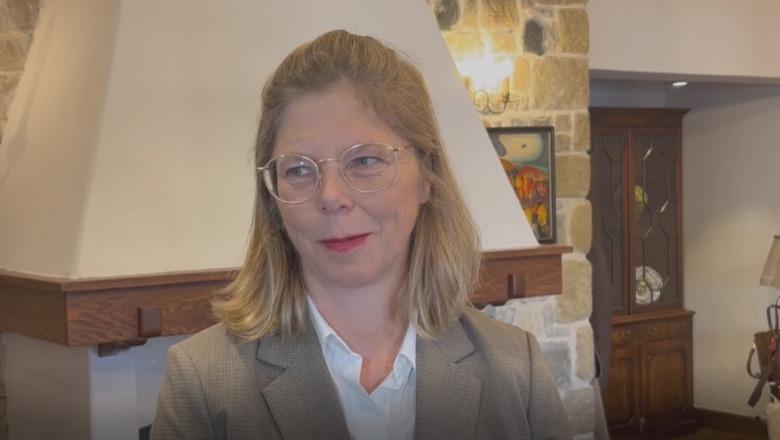
The Dutch Ambassador to Albania, Marleen Monster, has commented on the student protests in Tirana, describing them as a sign of the discontent and tensions that exist in Albanian society. During a visit to Korçë, she said that protest is a fundamental right of citizens, while the use of violence remains unacceptable. “The protests showed us that there is a certain tension in Albanian society, because otherwise people would not have come out to protest,” Monster stated, adding that the violence displayed during them was something that had “shocked and surprised” her.
Her statements also focused on the European Commission’s progress report on Albania. The ambassador praised the steps taken by the country in the process of European integration, but stressed that there are still issues that require further commitment, particularly regarding media freedom and freedom of expression.
“The report highlights many positive points in which Albania has made progress. At the same time, many issues that still require attention and work are also identified,” she said. Monster emphasized that these very issues were part of the discussions held in Korçë, with a focus on how the judicial system can contribute to guaranteeing media freedom.

Regarding the fight against corruption and the protests of students and citizens, the diplomat confirmed that the Netherlands will continue to support Albania’s European integration. She recalled that her country’s approach is based on three principles: being strict, fair and engaged. “We are trying to continue supporting Albania’s journey towards EU membership through our means, which keeps us engaged on this issue,” the ambassador stated.
Finally, Monster turned to justice reform, saying that Albania has now entered a new phase, that of consolidation. According to her, the main challenge remains moving from written commitments to the concrete implementation of reforms. “What matters is not only what is written on paper, but also its enforceability and sticking to the commitments made within the framework of these reforms until the end.”