







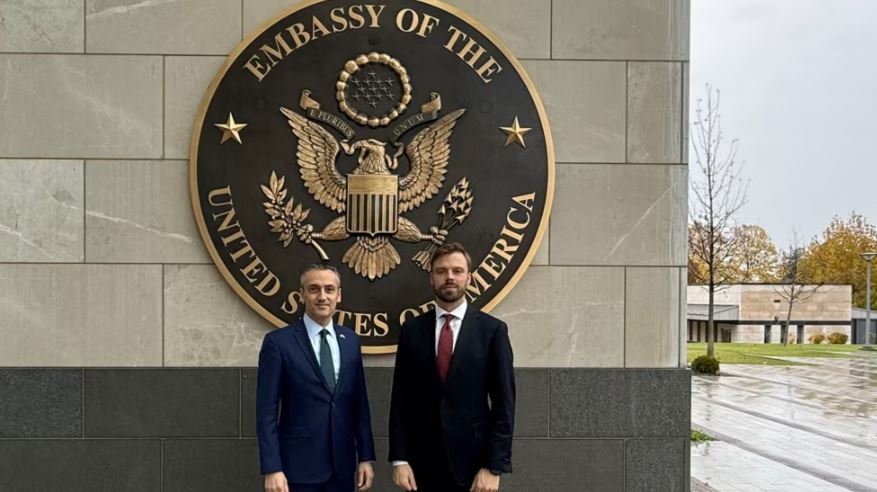
U.S. Assistant Secretary of State for European and Eurasian Affairs, Brendan Hanrahan, is in Belgrade, the U.S. Embassy in Serbia announced. According to the embassy, the visit aims at substantive discussions with Serbian partners on the country’s future and shared priorities.
Also on the agenda are new opportunities for further advancing relations between Serbia and the United States of America. The diplomatic institution did not clarify whom Hanrahan will meet during his stay in Belgrade, reports Euronews Albania, citing RFE/RL’s Balkan Service.
Representatives of the Student List – the entity that won the parliamentary elections of October 25 – announced earlier that they will meet with representatives of the U.S. Embassy and the U.S. State Department. Meetings are also planned with representatives of the Italian Embassy. The topics of discussion, they said, will be the rule of law and energy.

“We are ready to talk, to listen to different opinions and to build partnerships, but decisions about Serbia’s future we will make independently and responsibly, guided solely by the interests of its citizens. In international relations we want partnership, not subordination; we want cooperation, not blind obedience,” the Student Movement said in a statement. ## Hanrahan in Belgrade on the eve of a change of power The Hanrahan visit takes place at an important political moment for Serbia, which is preparing for a change of power following the October 25 parliamentary elections.
The Student List won 140 of the 250 seats in the Assembly, securing the majority needed to form the Government. The list led by former president Aleksandar Vučić received 103 mandates. The result ended the many-year rule of his Serbian Progressive Party, which had been in power since 2012.
The students’ victory came after a wave of protests against corruption and lack of accountability. The change of power is expected to be a test for Serbia’s foreign policy as well. Under Vučić’s leadership, it has sought to maintain relations with the West without giving up close ties with Russia and China.
The United States has supported Serbia’s European integration and the normalization of its relations with Kosovo. Relations between Washington and Belgrade have over the years also been affected by disagreements over regional policy and Serbia’s ties with Moscow.