







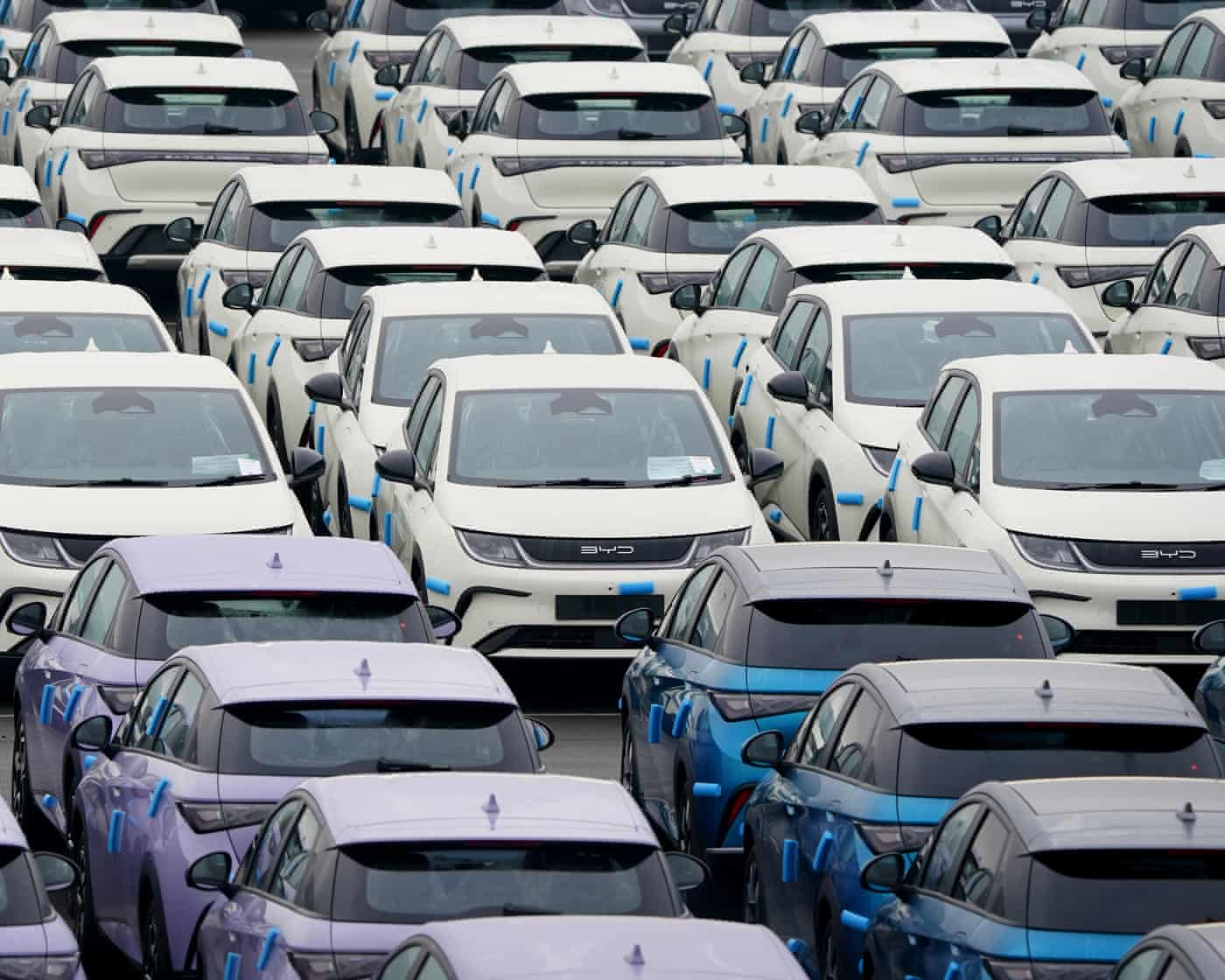
The European Union will decide next month on restrictions on the number of Chinese hybrid cars that can be imported into the bloc without facing tariffs, the European Commission has announced. These quotas, which will also apply to hybrids from Japan, Turkey, South Korea and the United Kingdom, are primarily intended to limit imports from China. The decision follows an agreement with Beijing in October that led to an increase in Chinese exports to the EU. The quotas are temporary measures, in line with World Trade Organization (WTO) rules, and will apply for 200 days starting on 1 December, during an investigation into imports of plug-in hybrid and battery vehicles. The EU is trying to reduce its large trade deficit with China.
According to the official announcement on Tuesday, the decision was taken “in light of the sensitivity of the hybrid sector, its strategic importance for the union’s economy in terms of innovation, electrification and employment, and the existence of sufficient evidence that hybrid imports threaten to cause serious harm to the union industry”. The restrictions will allow tariff-free imports of Chinese vehicles of up to 350,000 units in the first year, or around 191,000 during the 200-day period. This figure represents about half the number of Chinese hybrids expected to be imported into the EU over the next 12 months.
The first-year quotas are set at 310,000 for Japan, 230,000 for Turkey, 105,000 for South Korea and 190,000 for the United Kingdom, which last year exported 166,000 hybrids to the EU. The safeguard measures, which should apply to all major hybrid car exporters to the EU, also include South Korea, Mexico, Morocco, Serbia and the US, although they are more restrictive for China.

Published figures show that Chinese electric vehicle (EV) imports rose sharply from 21,000 units in 2020 to 438,000 in 2024, when tariffs were imposed. After tariffs were imposed, EV imports began to “stabilise”, with a “clear shift” from EVs to hybrids from China. China’s global hybrid exports rose from 191,000 vehicles in 2023 to 1.124 million in 2025, according to EU data. To prevent “the possibility of a substantial increase in imports into the union”, the EU is now imposing these quotas.
Industry reports indicate that non-EU countries, including the United Kingdom, have questioned the allocation of quotas. At a WTO goods council meeting last week, South Korea raised questions about the fairness and transparency of the investigation. Japan, the United Kingdom, Switzerland and Turkey also stressed the importance of transparency and due process. China’s Ministry of Commerce expressed hope that the EU would adhere to the consensus reached between the two sides and stressed that it reserves all rights to firmly protect the legitimate interests of Chinese industries.
The European Commission stressed that imports from China are not only harming EU production but also eroding the market shares of other exporters such as Japan and South Korea. Meanwhile, the United Kingdom continues to fight against a 10% tariff on all EV exports to China, which is expected to take effect on 1 January under the 2020 Brexit trade and cooperation agreement. This issue is closely linked to Andy Burnham’s efforts to classify the United Kingdom as a European producer in the EU’s “Made in Europe” scheme, which has not yet been finalised and aims to protect against cheap Chinese imports.
Source: The Guardian UK