







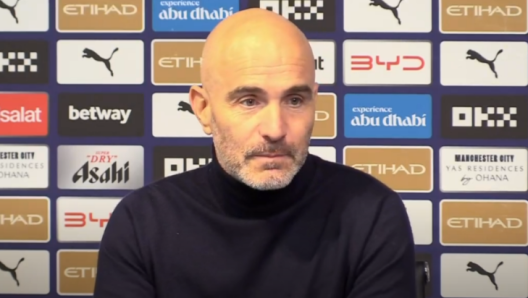
Enzo Maresca, the Manchester City coach, has disputed Massimiliano Allegri’s statements that the match against Napoli in the Champions League is impossible to win, emphasizing that the three points are equally important for both teams. He expects a strong Napoli, as he has seen in the matches against Torino and Lazio, and predicts a difficult challenge, typical of the Champions League and matchups with Italian teams.
City comes into this match with three wins in four Champions League matches, with their only defeat against PSG. However, the team has a run of four matches without a win in the Premier League, after an excellent start with seven consecutive wins. Maresca stresses the need to “restore the balance we had in the first 10 competitive matches and that we have now somewhat lost.” He explains that the statistics show a high creation of chances in attack and few chances allowed in defense. In the four Premier League matches without a win, City has created almost 8 expected goals and allowed about 3.5, but has scored only 4 goals and conceded 7, making the team’s problem clear.
For the match against Napoli, Maresca will have Matheus Nunes available in defense, while he must manage player rotations. He says he would prefer to always play with the same 11, but the large number of matches makes this impossible. The coach stresses that the team is going through a period of change after 10 years with the same coach, seeking to find a new balance. Maresca also spoke about De Bruyne, calling him one of the most important players in City’s history, a fantastic footballer and person, expressing surprise at why he is not performing to the maximum at Napoli.

The coach expects a game from Allegri’s team that both waits and proposes, considering it dangerous because of the strong attacking players it has when recovering the ball, such as McTominay, De Bruyne, Hojlund, Olivera and Lang. Finally, Maresca shared a sharp analysis of Italian football, emphasizing the need for change and courage. He believes Italy must give more opportunities to young people, since the problem is not a lack of talent but poor management of them. According to him, failure to qualify for the World Cup was an opportunity for change, but nothing changed.
Source: La Gazzetta dello Sport