







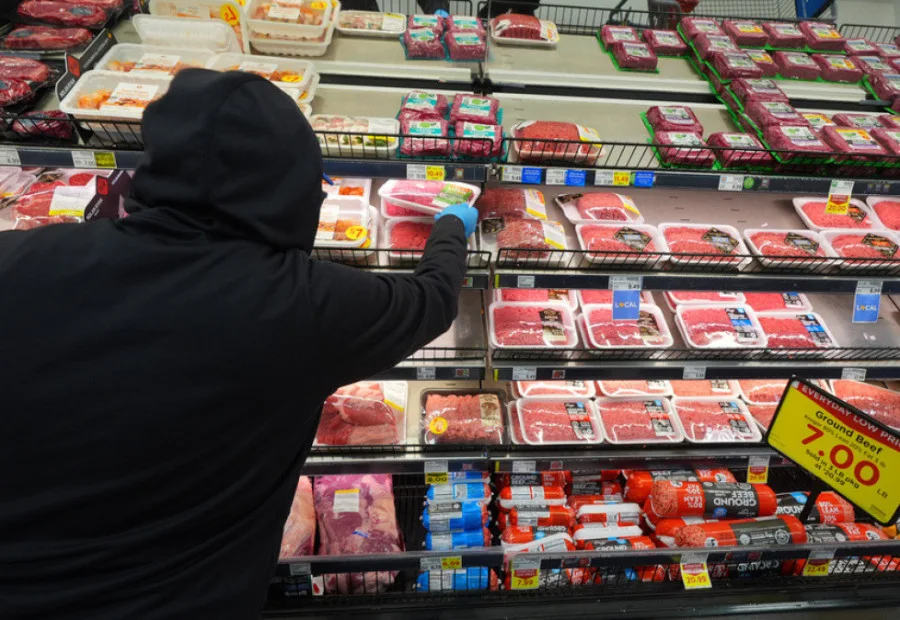
A panic-driven wave of buying is spreading across the United States after a series of technological failures that have affected Microsoft, banks, airlines and the National Security Agency, Newsmax Balkans reports. Fearing further disruptions to critical services, more and more Americans are stocking up on food, essential goods and emergency equipment.
This development represents a clear case of panic buying in the U.S., which is significantly affecting sales at major retail chains, according to data and estimates from investment firm Mizuho Securities. According to Mizuho’s analysis, the change in consumer behavior began to be felt as early as late October, with demand for generators reaching its peak.
In the last week of the month, comparable sales at Costco in the U.S., excluding fuel, rose by 11% to 12%, compared with a growth rate of 6% to 7% recorded in the previous three weeks. For all of October, Costco reported an 8.1% increase in sales.

According to Mizuho, the upward trend is continuing in November, as consumers buy larger quantities of food and basic goods, as well as equipment that could be useful in the event of new service disruptions. By Sunday evening, 21 of the 26 most expensive generators that Mizuho tracked on Costco’s website were out of stock.
Mizuho analyst David Bellinger directly linked this development to consumer anxiety. “Consumer anxiety after the Microsoft Outlook outage, the suspension of all U.S. airline flights and… the latest end-of-the-world fear spreading on social media has contributed to increased sales of emergency supplies at Costco,” Bellinger’s report said.
The wave of concern began last Thursday, when Microsoft’s Outlook and Teams services malfunctioned, causing access and communication problems for users. The next day, the U.S. Federal Aviation Administration ordered a temporary suspension of aircraft departures nationwide, causing serious disruptions to air transport.
On Monday, technical problems at JPMorgan Chase followed, causing delays in bank transactions, while a malfunction in an information system at United Airlines resulted in further flight delays. Concern peaked on Tuesday, when the National Security Agency announced that its communications network had been temporarily out of service.
The agencies involved attributed the incidents to technical defects, maintenance or software upgrades. However, the timing of the problems was enough to fuel speculation about a broader cyber threat. Fear spread quickly on social media, with posts on TikTok and other platforms urging Americans to stock up on food, water and other essentials.
The messages resonate with consumers worried about their daily dependence on digital infrastructure, although no evidence has so far been presented to establish a link between the incidents. In an effort to reduce concern, U.S. Secretary of State Marco Rubio reiterated that there is “absolutely no evidence” suggesting a coordinated attack.
“The Microsoft incident has nothing at all to do with what we saw at the FAA. The FAA has nothing at all to do with what we saw at the banks a few days ago. These problems, technically, are completely independent of one another,” he said during a press conference in the Philippines.
According to reports, some of the malfunctions may be linked to efforts by companies and organizations to fix software vulnerabilities identified with the help of artificial intelligence tools. This particular version remains under investigation and is not a confirmed common cause of the problems.
U.S. authorities insist there is no reason for panic, as there have been no signs of an organized cyberattack. Even though turnover at major retail chains continues to reflect consumer concern, fear of technological disruptions remains present. ## Panic buying in the U.S. and authorities’ response to fears of technological disruptions