







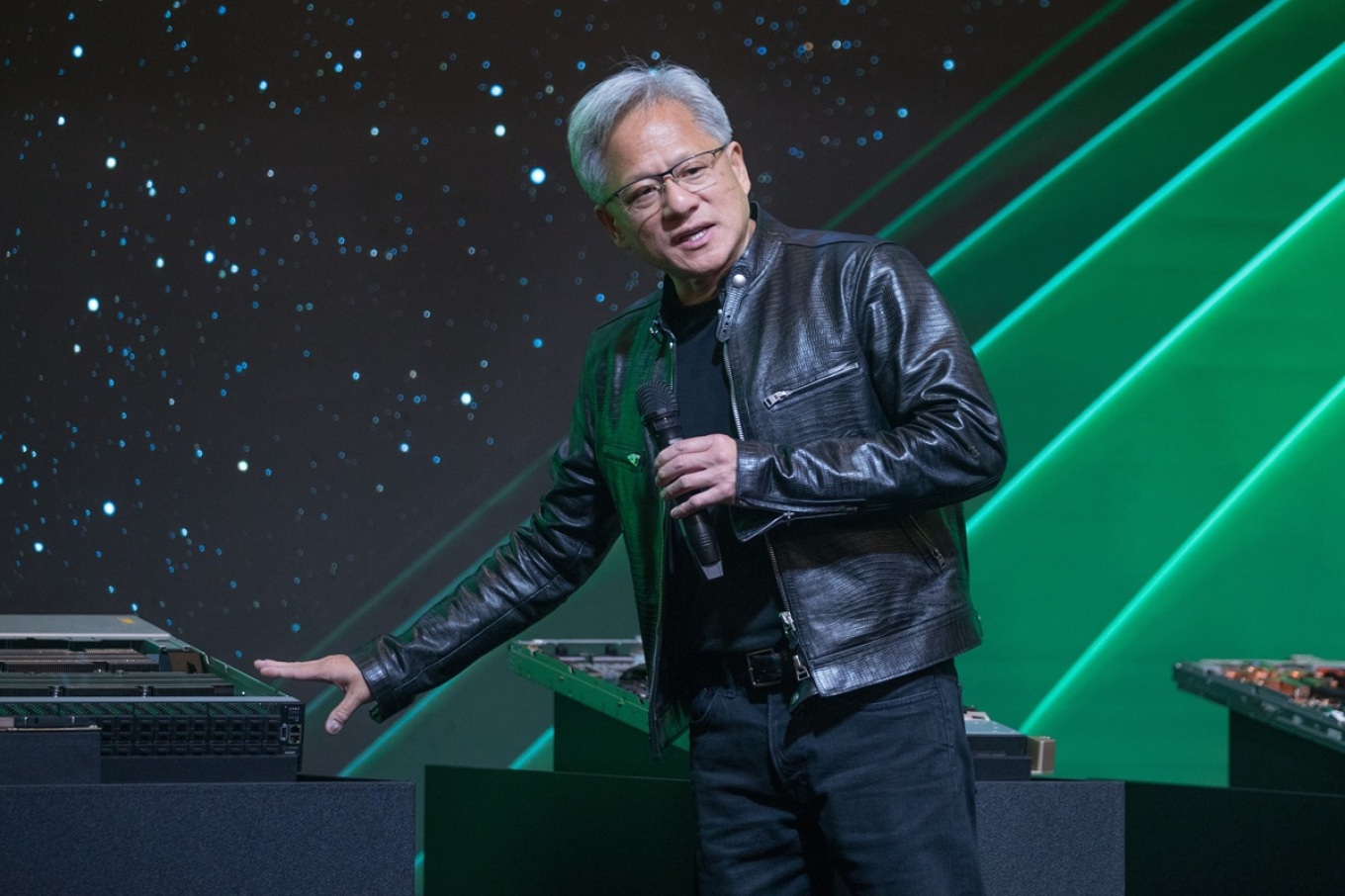
Jensen Huang has resigned with immediate effect from his posts as chief executive, president and board member of Nvidia, after reports of a second extramarital affair, the company’s board officially confirmed. The departure of the co-founder of the computer chip maker comes after a turbulent period for one of the largest companies in the world, valued at around $4 trillion.
Chief Financial Officer Colette Kress has been appointed interim chief executive, until a new leader is chosen, while Harvey C. Jones, former head of Synopsys, will become Nvidia’s first chair of the board, according to the company’s official statement. Huang, 63, co-founded Nvidia in 1993 and led it for more than three decades, transforming it from a maker of graphics processors for video games into the company that dominates the market for artificial intelligence chips.
His resignation marks a turning point for the company and for the executive who led it for so long. He had already acknowledged that he had an extramarital affair, without saying with whom, and had publicly apologized for the marital infidelity, but has denied that he compromised U.S. national security or Nvidia’s trade secrets.

According to reports by the Financial Times, U.S. intelligence officials suspect that the woman in question, businesswoman Alice Huang, linked to the company Megaspeed, a客户 of Nvidia, may have ties to Chinese intelligence services. The second suspected affair was with Kimberly Powell, Nvidia’s vice president of the healthcare sector, who reported directly to Huang, according to The New York Times. The board has retained the law firm Wachtell Lipton to investigate the claims related to Chinese intelligence. Doubts about circumvention of U.S. export controls, through companies based in Singapore and Malaysia, are also in focus.
Claims of espionage and security breaches have not been proven. On Sunday, the board had expressed confidence in Huang and his leadership team, before the situation escalated. Under the company’s bylaws, Huang can be dismissed “with or without cause” by a majority vote of the directors. ## Share sell-off and investigations The market reaction was immediate.
Nvidia shares fell by more than 10% in pre-market trading on Thursday, and the company had already lost more than 20% of its share value over the past month. After the first affair was acknowledged over the weekend, the shares had fallen by nearly 14%. This decline represents a loss of more than $600 billion, or about 452 billion pounds, in the company’s value. Meanwhile, Nvidia has launched investigations into the matter acknowledged by Huang. According to reports, the Federal Bureau of Investigation (FBI) is also reviewing the case.
Investment bank Bernstein halved its price target for Nvidia shares, from $400 to $200. “Jensen is Nvidia. He is the visionary,” said Stacy Rasgon, senior analyst at Bernstein, stressing that the company’s current success rests on the strategic decisions Huang made a decade ago. According to him, it remains unclear who can make the right decisions for the next ten years. The matter has also prompted reactions at the diplomatic level. Beijing has warned the United States not to use espionage accusations as a justification for imposing new restrictions on sales of American technology to China.
Huang’s departure leaves a major void at the company he co-founded, at a delicate moment. Huang had built close relations with U.S. President Donald Trump and had exerted influence over American artificial intelligence policy, particularly on the issue of chip exports to China. “He is the king of artificial intelligence. He speaks on behalf of the industry,” said Jeff Christian, head of the executive search firm Christian and Timbers. The turmoil comes a few days before investors hear the company’s financial performance and outlook, with quarterly results expected to be published on November 17.