







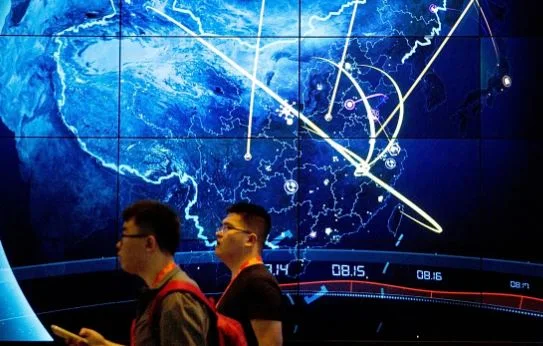
The European Commission suspects that the large-scale cyberattack that continues to spread through its IT systems is the work of a network of China-backed threat actors. Within the EU executive, the suspected perpetrators are known by the code name “Panda,” according to information circulating in the cybersecurity community.
This is one of the cyberattacks in Europe that have affected EU institutions this year. According to the same circle, the animal name is used to loosely link threat actors to their state sponsors, in this case China.
The suspicion of a link to Chinese security services is based on the sophistication of the attack and the use of ARTEX, a cyber tool developed in China that uses artificial intelligence to discover vulnerabilities that hackers can then exploit. China-backed hackers used ARTEX to find vulnerabilities in the Commission’s systems, according to the same circle.

This tool enabled them to identify weak points before launching the attack. The cyberattack on the European Commission continues to be investigated by the European executive’s cybersecurity experts. The investigation aims to determine the full extent of the incident and the measures needed to protect the institution’s other systems.
EU authorities are cooperating with international security agencies to trace the attack and prevent its further spread. Meanwhile, Commission staff have been warned to be vigilant about suspicious emails and to report any unusual activity in their systems.
This incident has prompted a review of cybersecurity measures within EU institutions, with a focus on strengthening protection against sophisticated state-sponsored attacks. Experts stress that such attacks require a coordinated response and sustained investment in security technology.
The European Commission has confirmed a data leak, including the names and email addresses of affected users. Users are being warned about possible follow-up actions by the attacker, such as “phishing” campaigns based on their personal data. This is the first major consequence of the incident, according to the Commission.
For other IT systems, EU cyber experts have not confirmed the theft of data affecting Commission staff. Some internal applications were taken offline as a precaution and some remain unavailable. According to the current threat assessment, the China-linked actor was not targeting specific systems or individuals, which would have required a less visible attack.
It wanted to test more broadly how far it could compromise the Commission’s IT networks. Leading cybersecurity firms such as Microsoft and CrowdStrike have attributed the Storm-0940 and Panda Vapor attacks to China-linked groups, using ARTEX for global AI-driven espionage campaigns targeting hundreds of organizations worldwide.
The Commission has been hit by two other cyberattacks this year: one on the cloud infrastructure hosting its Europa.eu website and one on its mobile infrastructure in January. Both are also considered to stem from China’s cyber threat landscape, but from different groups, and neither has ever been officially attributed.
The Chinese government has repeatedly denied sponsoring, directing or supporting hacker groups accused of carrying out cyberattacks on foreign governments and institutions. Since the cyberattack became public last week, the Commission’s main staff union has strongly criticized the handling of the incident, particularly the fact that it left civil servants to learn about it from the press.
A Commission official rejected this criticism, stressing that public communication is not envisaged in such cases, because it would show the malicious actor that mitigation measures are being taken.