







By Ben Blushi
Yesterday I watched a documentary about Qazim Mulleti, the former prefect and mayor of Tirana during the years of the fascist occupation. Tirana has had nearly 40 mayors and as many prefects, but Qazim Mulleti must be by far the most famous of them, and for a reason that did not depend on him at all. Qazim Mulleti is remembered not for the deeds he performed but for a comedy that someone wrote without his permission. The comedy The Prefect, published in 1948, portrayed Qazim Mulleti as an Anatolian bureaucrat—fat, greedy, ignorant, corrupt and vengeful—who quarreled with his wife and was mocked by his son.
But besides being mocked by the residents of Tirana as a ridiculous tyrant, Qazim Mulleti was also described as a man who had imprisoned communists by spying on them for the Germans. Masterfully played by Robert Ndrenika, the comedy turned into a traveling variety show. For 50 years it made people laugh every Sunday evening, at a time when there were no weekends or cars and all Albanians stayed at home for lack of anything better to do.
There is no child who grew up under communism and did not see dozens of times The Prefect, written by Besim Levonja, whose jokes were used as ideological margarine in those times poor in food but rich in black humor. No official of any era has been mocked more than Qazim Mulleti. This is the fatal power of literature.
Literature can destroy a good man just as it can turn a bad man into a myth. Qazim Mulleti had the misfortune to suffer the merciless violence of art, which is sometimes also used as a whip. The people who knew him did not have the courage to say that the real Prefect was not the one played by Robert Ndrenika, that he was not ignorant but knew some eight languages, that he had studied in Vienna, that he was not a reactionary but a Fan Noli supporter, that he had fought against Ahmet Zog, that he had lived in exile as a political opponent and that in some cases he had saved communists from prison.
The version of The Prefect by Besim Levonja was protected by the state, which naturally allowed no correction of his image. It is as if today a writer were to make a vengeful portrait of the prefect of Tirana, according to which he imprisoned Flamencos, and tomorrow’s government of protesters were to decide that apart from that satirical pamphlet nothing else should be written about him.
Even worse, those who knew the prefect are not allowed to say that he was not what he is said to have been. This is what happened to Qazim Mulleti, who fled and never saw the devastating comedy. There was no YouTube then, and Albanian television could not be received in Italy, where he lived until he died. If he had had the chance, he would surely have chosen to be shot rather than mocked in that way. But the mockery cost his wife and son more, as they remained in Albania and spent their lives in internment.
Shiti and Hajria suffered even worse than Qazim the public contempt caused by the comedy. The two of them are the greatest victims of the comedy The Prefect and undoubtedly the greatest victims of Albanian art of all time. Hajria was a beautiful woman from Tirana, while Reshiti was a small blond boy who did not resemble at all Shiti of the comedy, who used to throw shoes at his father’s head. I have created hundreds of characters but I cannot get into the drama of Reshit Mulleti, who lived mocked, ridiculed and trampled by a heartless comedy that caused so much laughter while shedding so many tears.
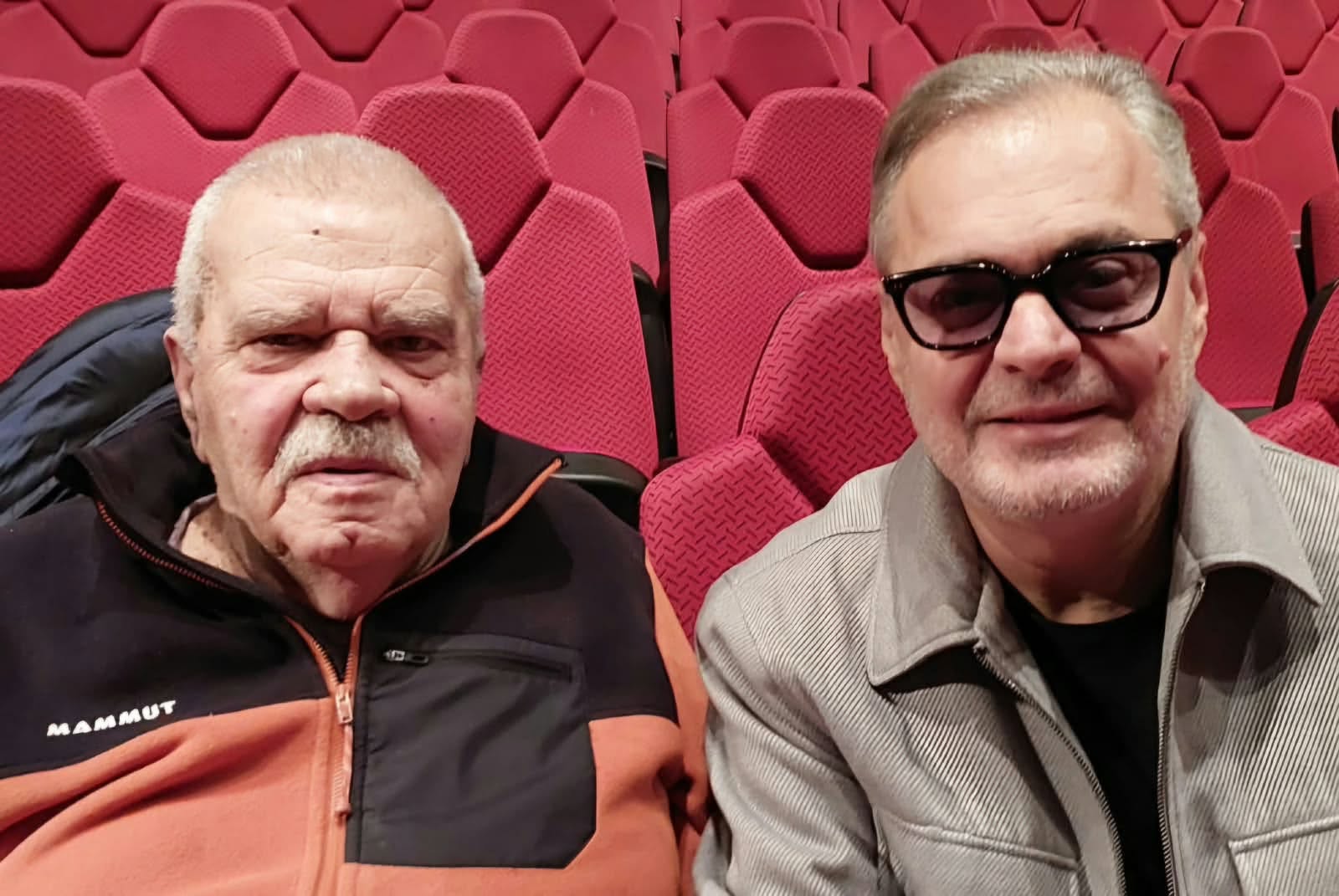
Precisely to undo the merciless comedy The Prefect, a group of Tirana authors led by Shkëlqim Hajdari, the prefect who brought together the two prefects, and Ylli Pepo created the documentary The Real Qazim Mulleti and invited me to watch it. But of all the truths of Qazim Mulleti’s life listed during the documentary, only one had value. The arrival of Robert Ndrenika. Or more precisely, Qazim Mulleti’s meeting with the actor who turned him into an artistic myth. With his knightly elegance, Robert Ndrenika apologized to Qazim Mulleti’s family even though he himself bears no blame. Robert Ndrenika played a role he did not write himself. He shone as an actor in that role, which may be one of the best in Albanian cinema. However, the relationship between Robert Ndrenika and Qazim Mulleti would deserve more than a documentary.
It would deserve a film of its own, which could become a global hit. With a laugh, the actor apologizes to the character whose life he destroyed. Through The Prefect, Robert Ndrenika trained for The Subprefect, which is his greatest role. But despite all the care of the documentary’s makers to reconcile the two, the battle between Prefect Qazim Mulleti and Prefect Robert Ndrenika will still continue forever. The actor would never have been so great without The Prefect, and Qazim Mulleti would never have been so famous without Robert Ndrenika. Each shone in his role. One as a victim and the other as a master. I was glad to take part in the reconciliation of Qazim Mulleti with Robert Ndrenika. I hope it is eternal.