







A small space object has reopened the debate over the fate of the Soviet probe Phobos 1, which lost communication with Earth in 1988 during its journey to Mars. Some researchers suggest that the object known as 1998 KY26 could be precisely this probe, although the connection remains unconfirmed.
The hypothesis was examined by researchers Adam Hibberd, Adam Crowl and Harvard astrophysicist Abraham Loeb in a preliminary study published on the scientific platform arXiv. They compared observations of the object with models of the probe, looking for matches in the variation of brightness and in its movement. According to the authors, a simplified model of Phobos 1 matches eight light-curve variations. This makes the hypothesis worthy of further investigation, but does not prove the object’s identity.
Observations show that 1998 KY26 has an estimated diameter of about 11 meters and rotates on its axis in approximately 5.35 minutes. These characteristics are supported by a study published in the journal Nature Communications, which treats the object as an asteroid and does not confirm an artificial origin.

Researchers’ interest has also been increased by its acceleration, which is not explained by gravity alone. The absence of discernible traces of gas and dust has prompted its classification as a “dark comet.” The authors of the probe hypothesis consider solar radiation pressure as a possible explanation for the object’s movement.
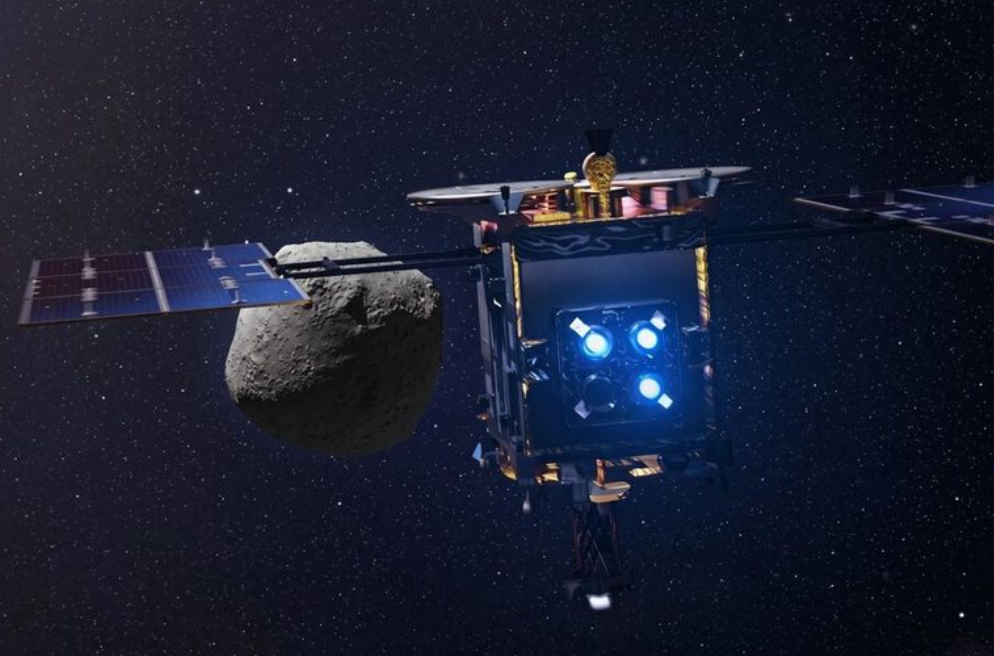
Clearer data are expected from the Japanese mission Hayabusa2, which is planned to meet 1998 KY26 in July 2031. Close-up study could help determine its composition and nature.