







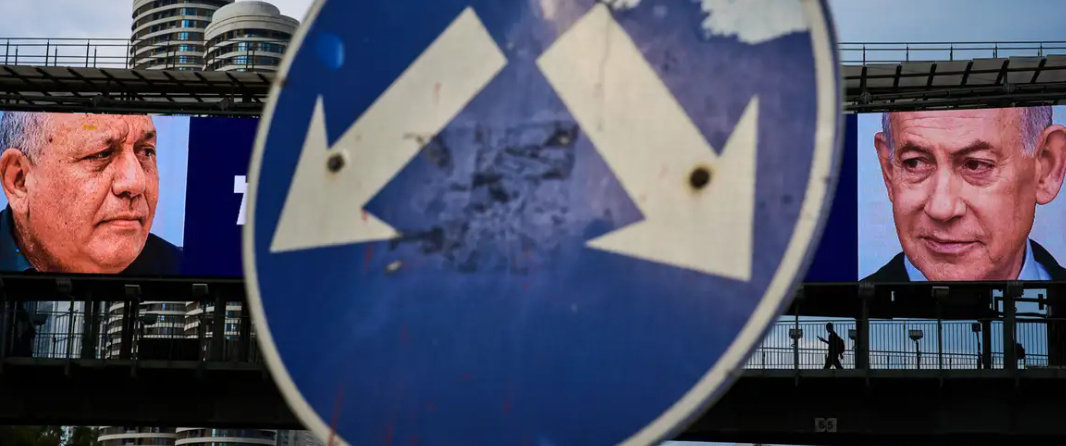
With Israel’s election results still partial, the race for a parliamentary majority is tight. Both Eisenkot and Netanyahu have announced that they want to form the government.
In Israel’s parliamentary elections, according to official data after about half of the votes were counted, the right-wing conservative bloc of Prime Minister Benjamin Netanyahu is leading over the opposition bloc.
According to Israel’s Central Elections Committee, Netanyahu’s Likud party and its allies, after 52 percent of the votes were counted, have secured 55 of the 120 seats in parliament. Meanwhile, the opposition alliance led by Gadi Eisenkot has so far won 49 seats. But the results may change.

On the other hand, parties representing Israel’s Arab citizens have achieved a significantly better result than expected and, according to current results, have secured 16 seats. This result could theoretically open the way for the opposition to form a government, if the Arab citizens’ parties decide to cooperate with it.
Still, Eisenkot has not yet publicly said whether he would cooperate with parties representing mainly the Arab population.
Current results may change considerably as the remaining votes are counted, but the trend is that neither Israeli bloc will have the required majority to form a government.
Both camps aim to form the government
Israeli opposition leader Gadi Eisenkot stated that he aims to form a new government. Addressing supporters in Tel Aviv in the early hours of Wednesday, he said Israeli citizens had voted for “change” and that he would work to create a new executive.
According to him, Netanyahu’s coalition has lost the “trust of the people”. He also warned the current prime minister not to “use Israel’s security for political purposes”.
Benjamin Netanyahu, for his part, stated that he aims to form a strong right-wing government. Addressing his supporters, he said Likud “remains the largest party in Israel” and that the right-wing bloc enjoys a clear majority among the Jewish population.
Netanyahu gave his speech around 03:00 local time. Unlike his previous appearances, he was more restrained and did not declare himself the winner of the elections. However, he stressed that Likud is very likely to remain the largest political force in parliament. He also spoke out against any government that would depend on the support of Arab parties in Israel.
Highest turnout in over two decades
By the closing of polling stations at 21:00, turnout had reached 77.7 percent, the highest level in more than 20 years. In total, 5,695,682 citizens voted.
The initial projections are based on exit polls conducted with voters immediately after they left polling stations. Final results are expected to be published in the coming days and may differ from these preliminary estimates.