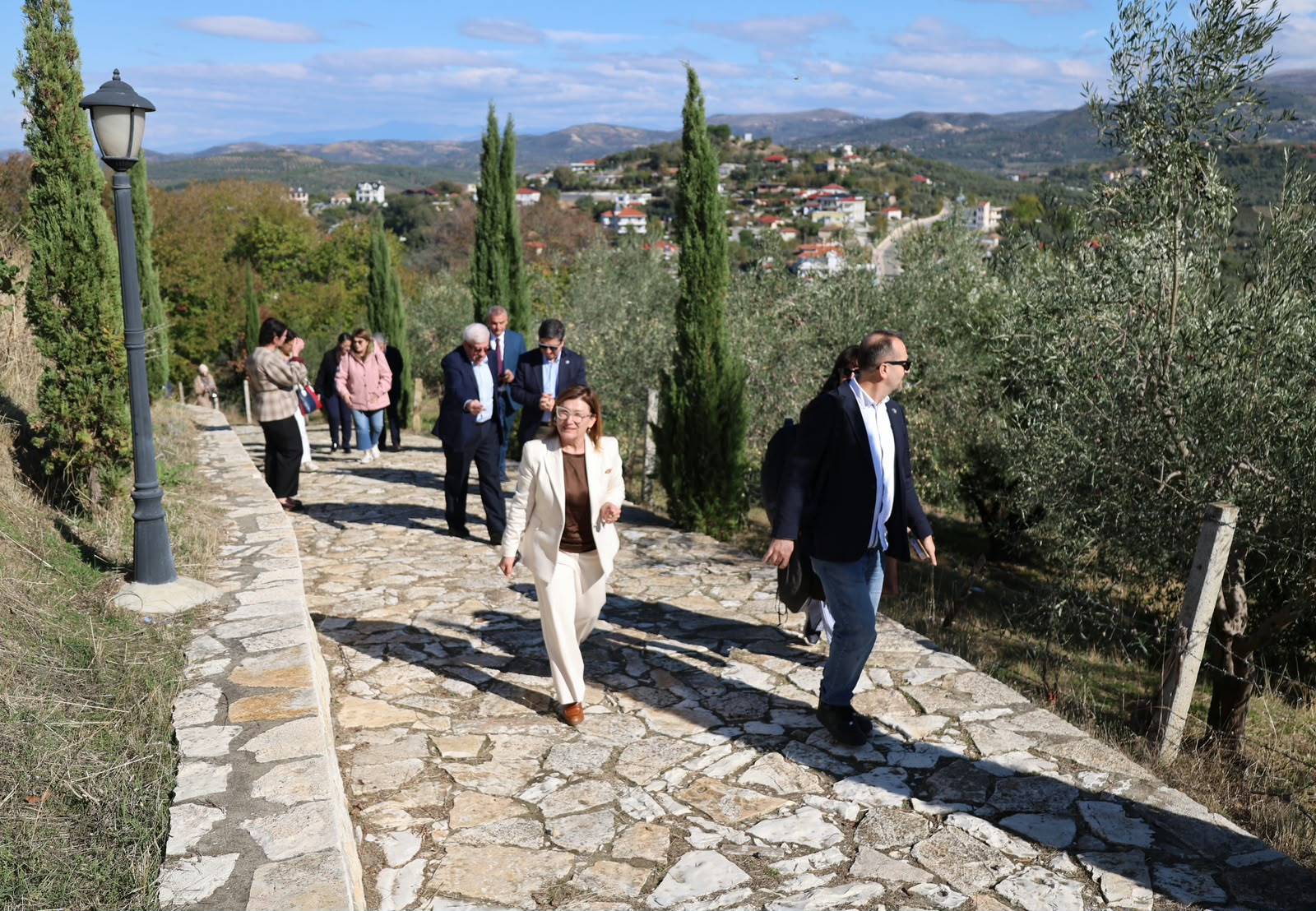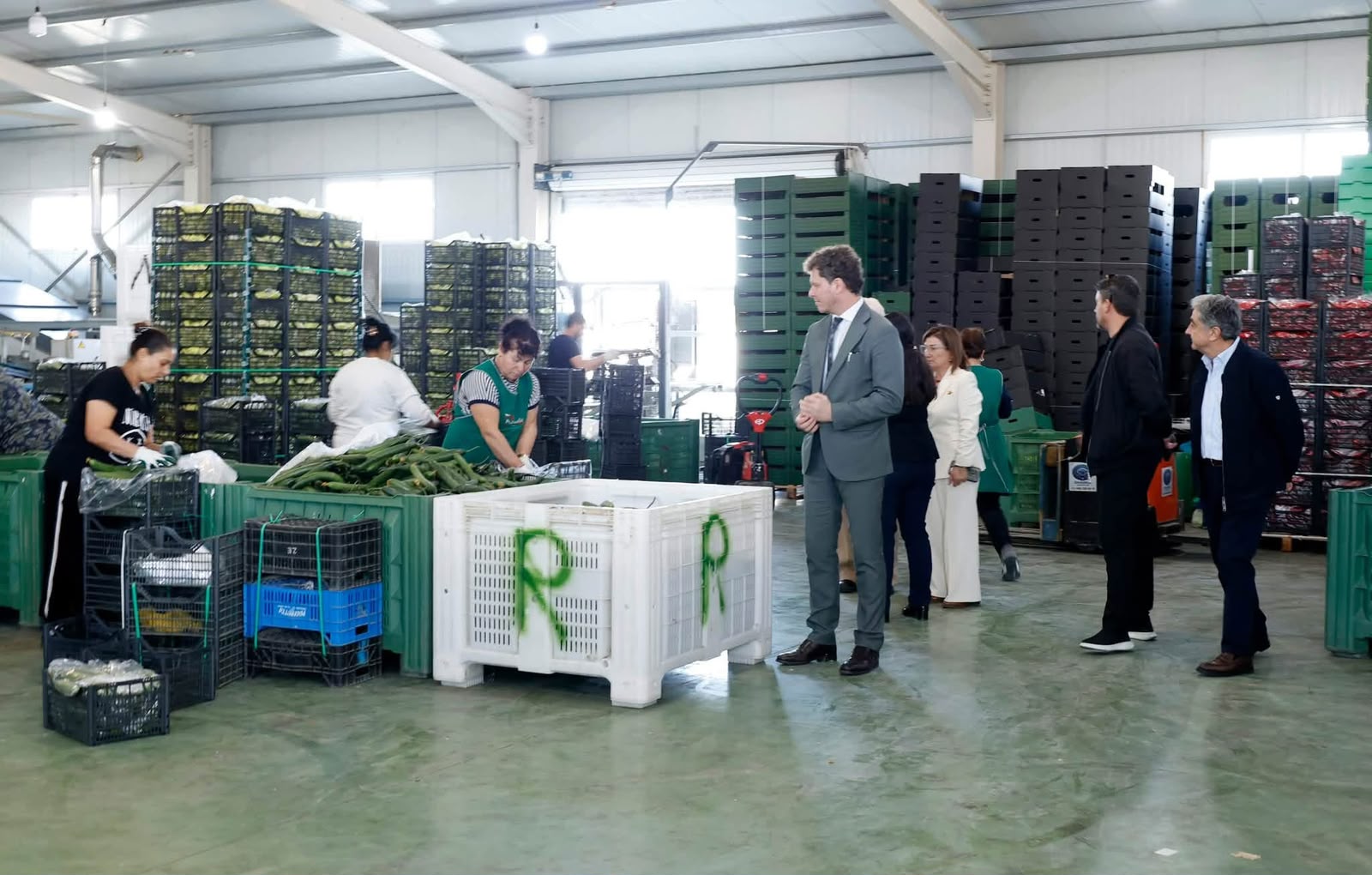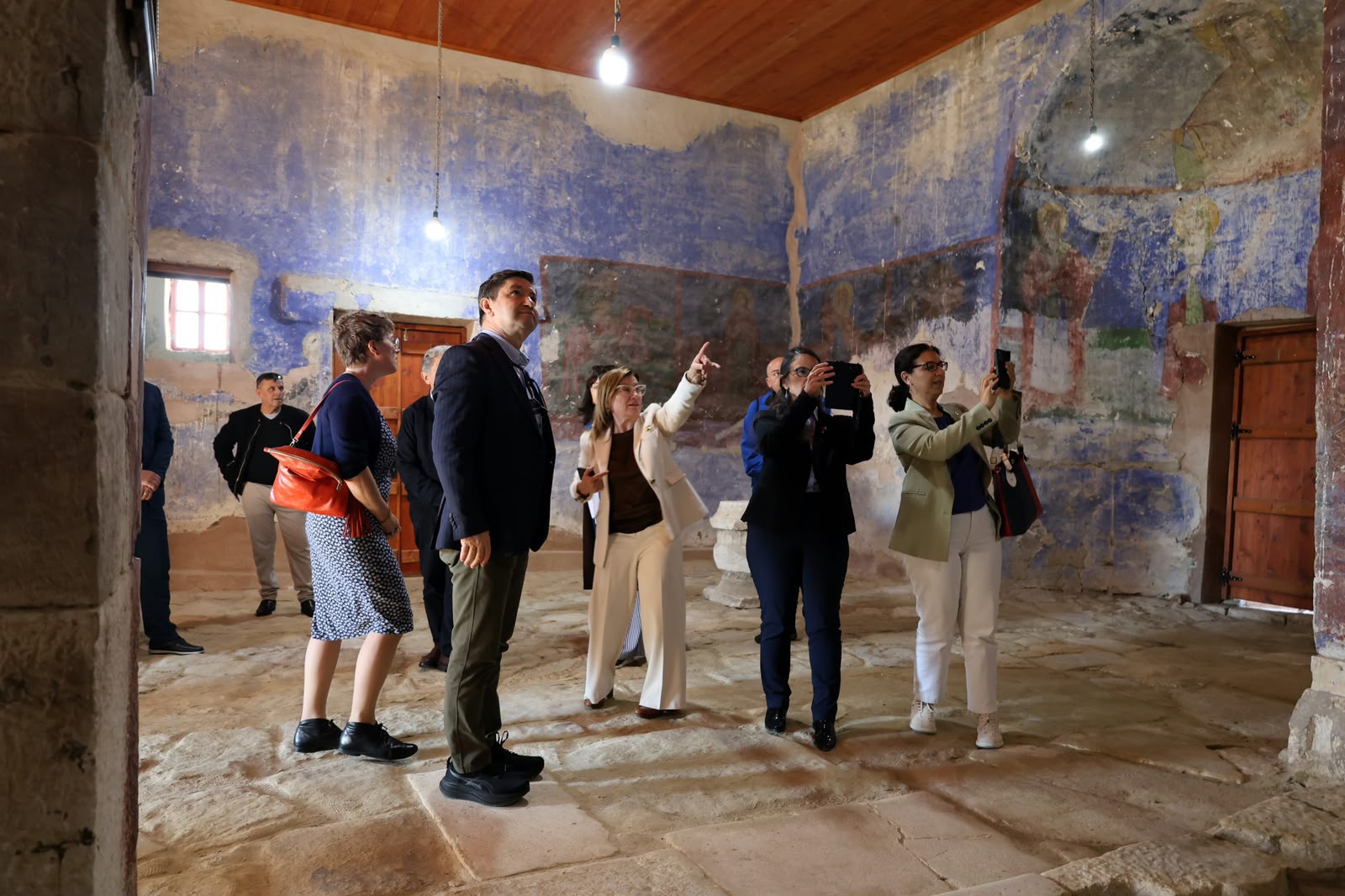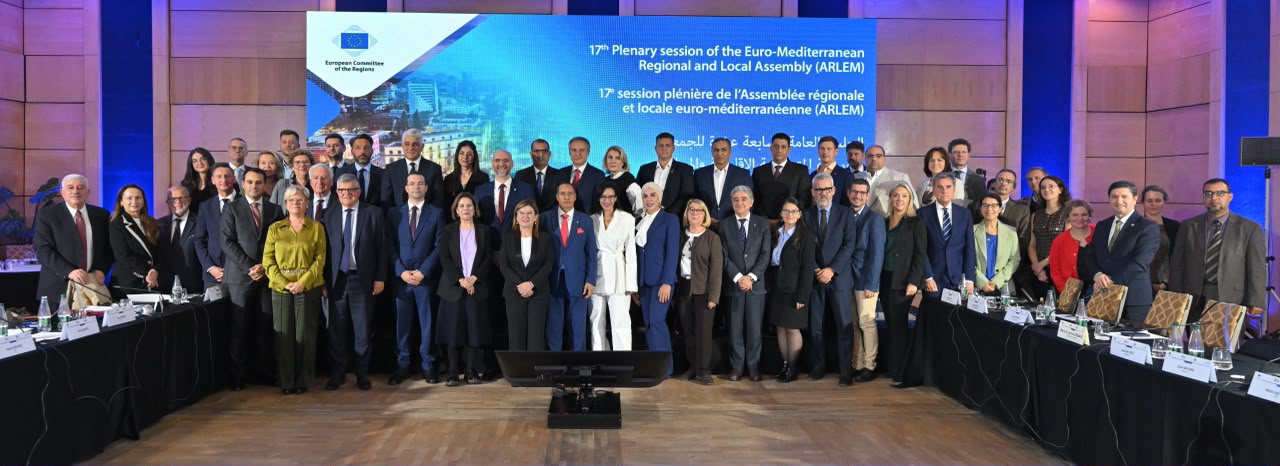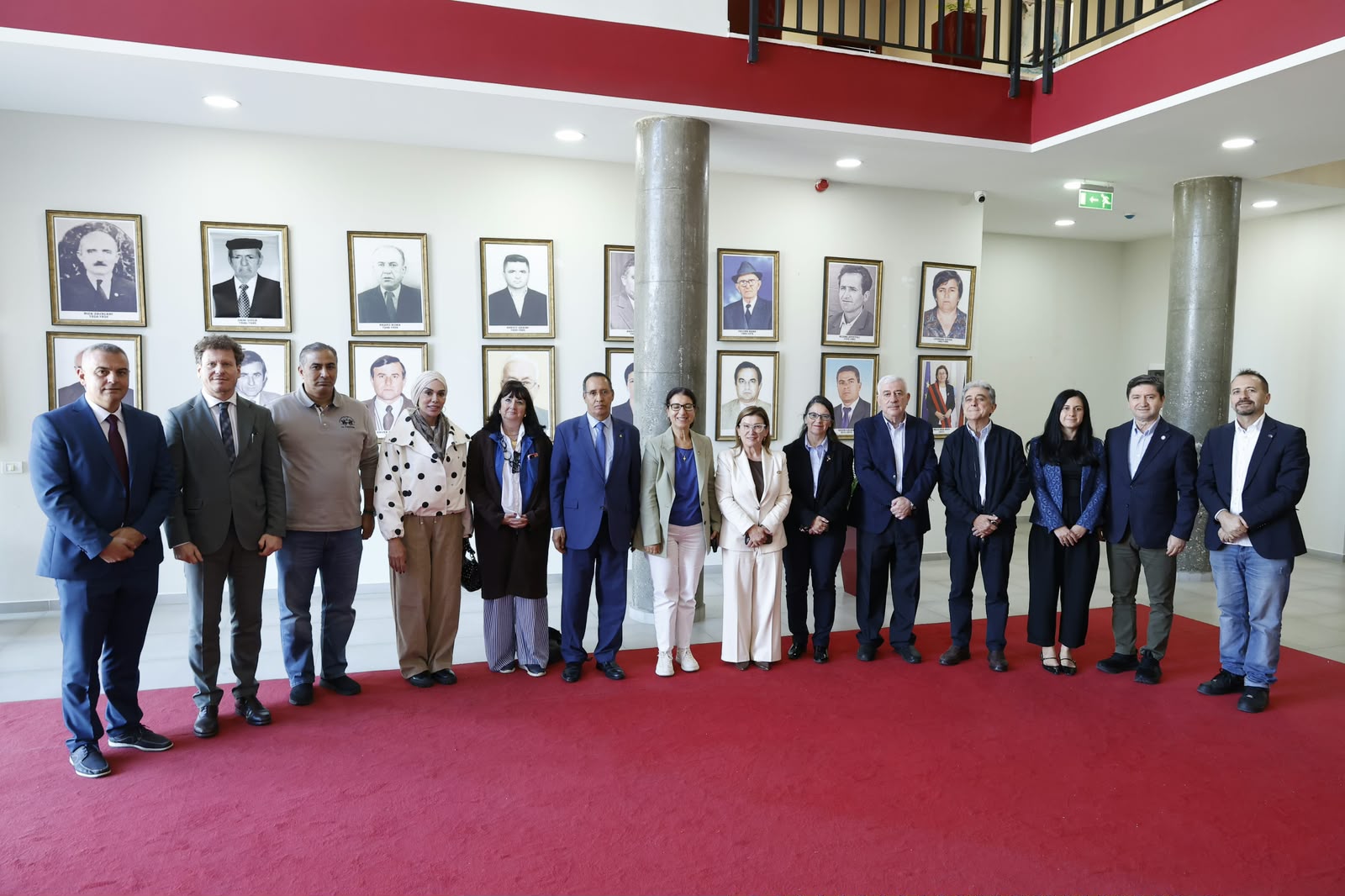
Roskovec welcomed local and regional representatives from European Union countries and the Mediterranean region, as part of their visit following the 17th session of the Euro-Mediterranean Regional and Local Assembly (ARLEM), held in Tirana. The meeting served as an opportunity to exchange experiences, strengthen cooperation and establish new partnerships. Mayors and regional presidents, members of municipal councils from Brussels, France, Spain, Italy, Jordan, Morocco and Mauritania, as well as representatives of European institutions, city networks and partner organizations, gathered at the Roskovec Municipality, where they discussed opportunities for cooperation and shared their experiences at the local and regional levels.
The visit continued beyond the municipal premises, where the mayor of Roskovec Municipality, Majlinda Bufi, presented to the guests the values and potential of the town, the natural beauty of the area and Albanian traditions of hospitality. The guests also had the opportunity to taste local products, getting to know the culture and gastronomic richness of the area more closely. A visit that combined institutional cooperation with the promotion of the identity, traditions and potential of Roskovec.
Policies for Young People
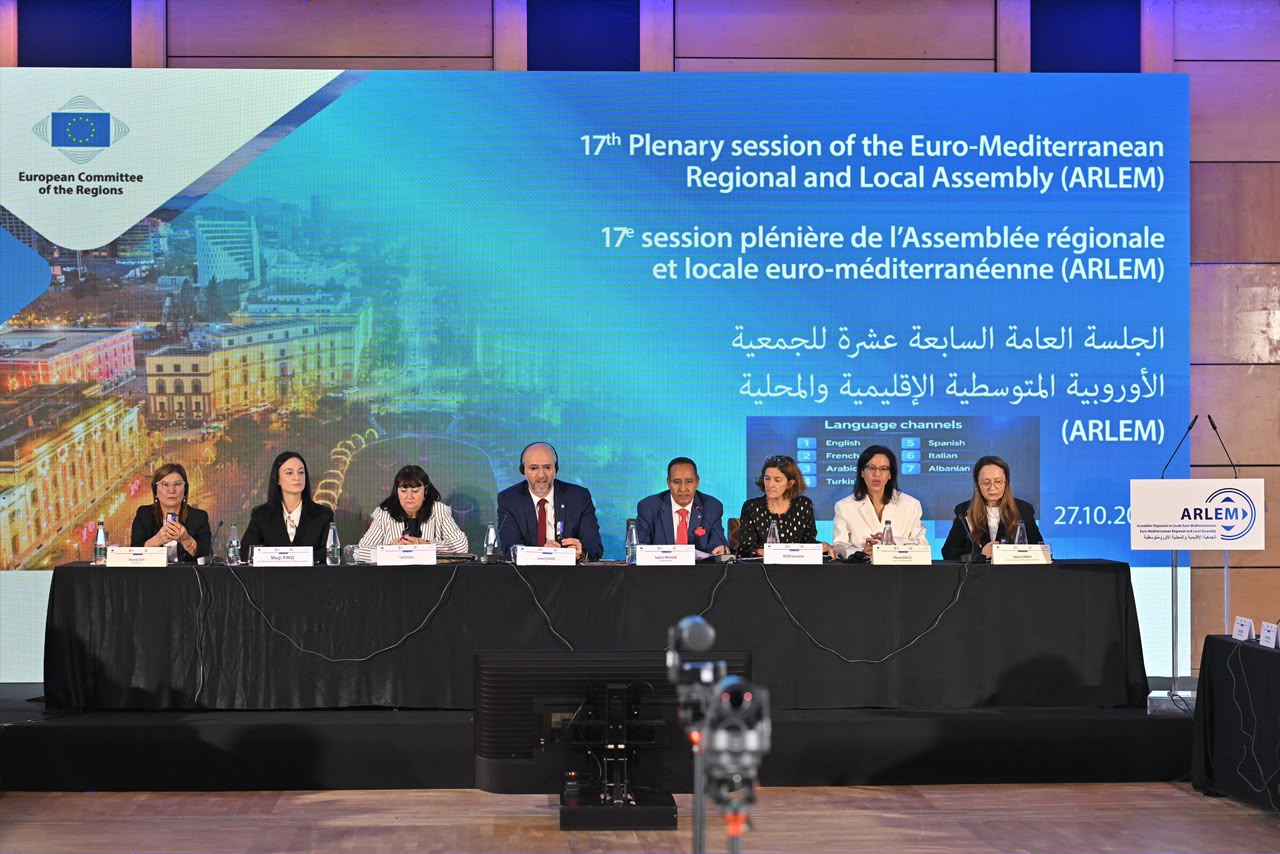
Concrete policies for youth employment and support, strengthening cooperation among countries of the region, and increasing the role of local authorities in implementing the EU Pact for the Mediterranean were the focus of the 17th plenary session of the Euro-Mediterranean Regional and Local Assembly (ARLEM), held for the first time in Tirana. Representatives of local and regional authorities from the European Union and Mediterranean partner countries discussed common challenges and opportunities for developing policies that create more opportunities for citizens, especially young people, aiming at employment, entrepreneurship and creating conditions to build the future in their countries.

Mayor of Roskovec Municipality, Majlinda Bufi, stressed the importance of the commitment of local and central institutions in drafting concrete policies for young people, underlining that cooperation and initiatives tailored to the needs of communities can contribute to curbing emigration. She made it known that support for young people will be one of the main themes of ARLEM’s work in the next mandate, with a focus on initiatives that strengthen local democracy and create real opportunities for their development.
“If every country, every municipality, local or central institution, firmly adheres to this important criterion of the Mediterranean Pact to work as well as possible, as closely as possible, and to create real policies for young people, to support them, I am very confident that we will see a decrease in the flow and pace of youth emigration abroad, and certainly also of this phenomenon in Albania,” she stressed.
Deputy Minister for Europe and Foreign Affairs, Megi Fino, noted that today’s challenges, including the green and digital transition, energy security, water management, economic competitiveness and demographic changes, require cooperation beyond national borders.
“”Europe, while facing today, as shared challenges, the green and digital transition, energy security, water management, economic competitiveness, demographic changes and technological transformation, without forgetting the social unrest in some of our capitals and cities. None of these challenges stops at the border. We are working to build connections that strengthen Europe’s autonomy and strategic resilience: work on renewable energy, transport infrastructure, logistics and digital links”, said Fino.
Adelina Farrici, Executive Director of the Albanian Association of Municipalities, meanwhile stressed the need to strengthen the capacities of Albanian municipalities, especially in the context of administrative and territorial reforms. She underlined the importance of exchanging experiences and expanding cooperation with European partners and other actors in the Mediterranean region.
Pact for the Mediterranean
During the plenary session, ARLEM presented the report “Implementation of the Pact for the Mediterranean with local and regional authorities”, calling for these authorities to play a central role in implementing the Pact’s initiatives and policies. In a special video message, EU Commissioner for the Mediterranean Dubravka Šuica praised the contribution of local and regional authorities which, thanks to their direct knowledge of community needs, can help identify challenges and adapt policies to local realities.
In this framework, concrete Euro-Mediterranean cooperation projects were also presented in areas such as support for young people and gender equality, green transition and civil protection. These initiatives can serve as models for the Pact’s future action plans, through scaling up, replicating successful practices and involving new partners. The plenary session held in Tirana concluded with the award of the ARLEM 2026 Prize for New Local Entrepreneurship in the Mediterranean, which was granted to Nada Ghammem, founder of the Tunisian medical technology company Bionic Soul, as well as to the institution that supported her initiative, Caisse des dépôts et consignations de Tunisie.
“We want to give hope to 65 million people with amputated limbs around the world. Every 30 seconds, someone loses a lower limb, yet the vast majority still cannot access affordable prostheses in the Middle East, North Africa and the rest of Africa. Our goal is to produce smarter and more affordable prostheses, while creating jobs in Tunisia and expertise across the entire region. Social impact and economic opportunities can go hand in hand”, said Nada Ghammem in a video message.
Through this session, ARLEM reaffirmed the importance of cooperation between local and regional authorities, European institutions and Mediterranean partner countries, with the aim of turning shared priorities into policies and concrete projects serving citizens.