







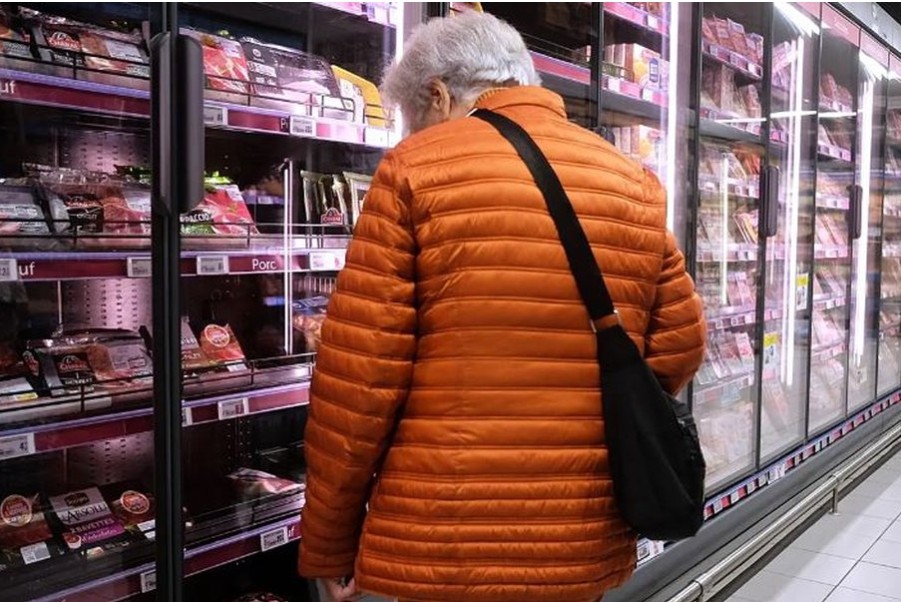
Food prices across Europe have risen moderately this year, but fresh produce is becoming increasingly expensive. According to the latest data, in October prices of unprocessed food in the Eurozone rose by 4.6% compared with a year earlier, up from 2.7% in August. In France, fresh products became 8% more expensive.
Italy is one of the most striking cases of this trend. In October, prices of unprocessed food rose by 7.5% year on year. The situation was worsened by the blockade of roads and ports in the south of the country for about two weeks, by truck drivers protesting against the cost of fuel. This caused supply disruptions and emptied shelves of meat, fresh milk, fruit and bottled water in several regions.
At the European Union level, September data, which cover all member states, show that Cyprus leads the increase in prices of food and non-alcoholic beverages with 4%. It is followed by Spain with 2.7%, Romania with 2.6%, Malta with 2.5% and Portugal with 2.4%.

On the other hand, in 14 of the 27 EU countries, food was cheaper than a year earlier. The largest decrease was recorded in Sweden, at 6.3%, following the halving of the VAT on food from 12% to 6%, a measure that took effect on 1 April and will apply until the end of 2027. Decreases were also recorded in Latvia, Hungary and Czechia.
However, compared with September 2021, food in the European Union has become about one-third more expensive. In Hungary the increase has exceeded 50%, while in Bulgaria, Estonia and Romania it is also above this level.
Economists predict that inflation will continue to rise in the coming months. According to Pantheon Macroeconomics, inflation in the Eurozone could peak at 4.5% in January, while the European Central Bank is expected to raise interest rates in December. Rising food prices are expected to weigh further on household budgets, at a time when families also face higher heating bills during the winter.