







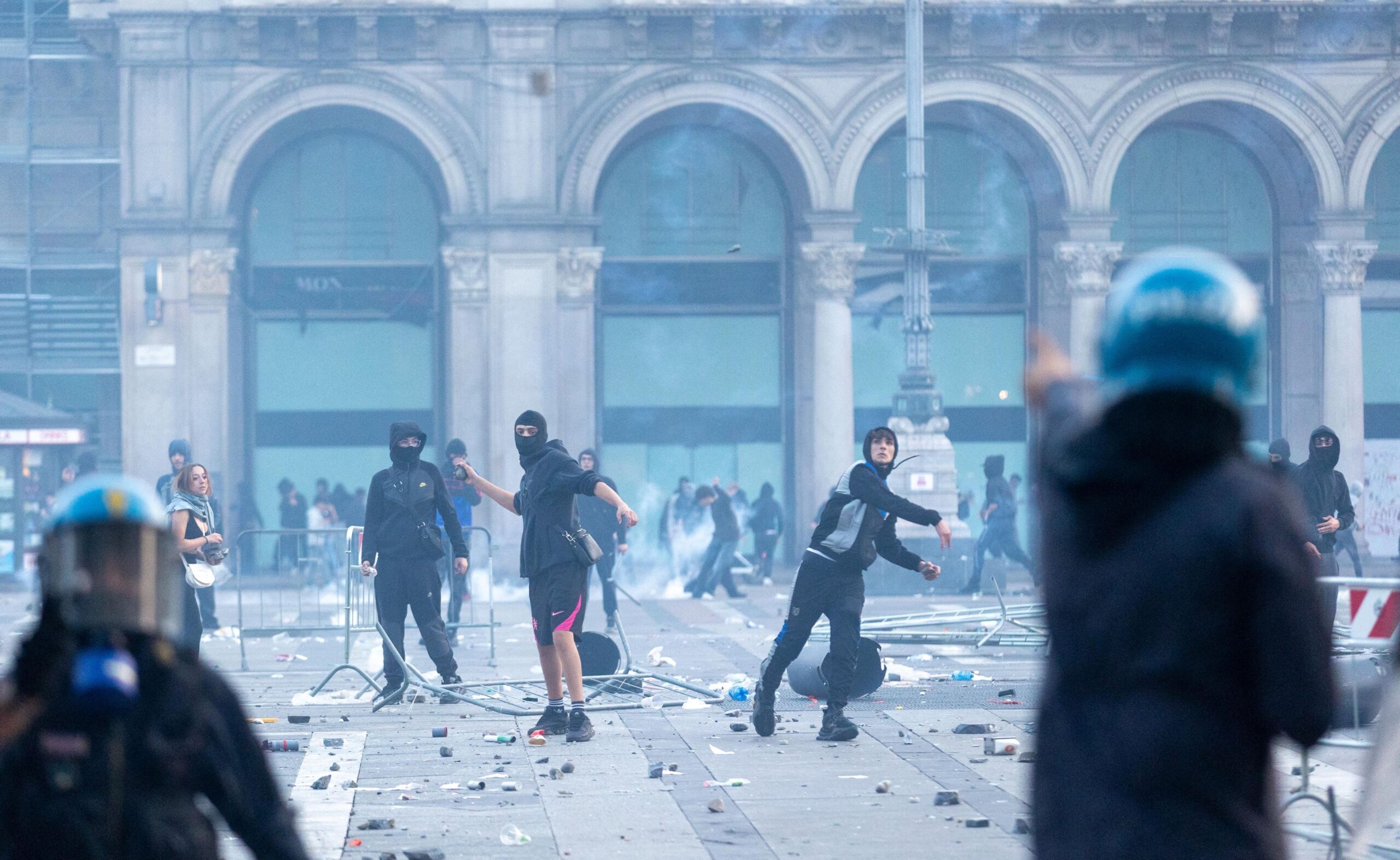
Italy was hit this Friday by a wave of protests against the government of Prime Minister Giorgia Meloni, with rallies announced in nearly 50 cities across the country.
Students, pupils and workers from various sectors are expected to take part in the demonstrations. The USB union has called for strikes in urban and intercity public transport, as well as in the health sector. Among the main demands of students is increased funding for schools and universities.
Ahead of the protests, Transport Minister Matteo Salvini issued an order banning strikes in the transport sector, linking the decision to the approaching All Saints’ Day, which is observed on 1 November. However, the USB union has opposed the decision, stating that the strike will go ahead regardless of the ban.
Meanwhile, Italian authorities have increased security measures in several of the main cities to prevent the situation from escalating and clashes between protesters and police.
In Rome, controls have been reinforced in the area around the Colosseum, while in Milan special protective measures have been put in place near the city’s cathedral.
Security concerns are also linked to previous protests, which in some cases began peacefully but ended in clashes and acts of violence, particularly in Milan.