







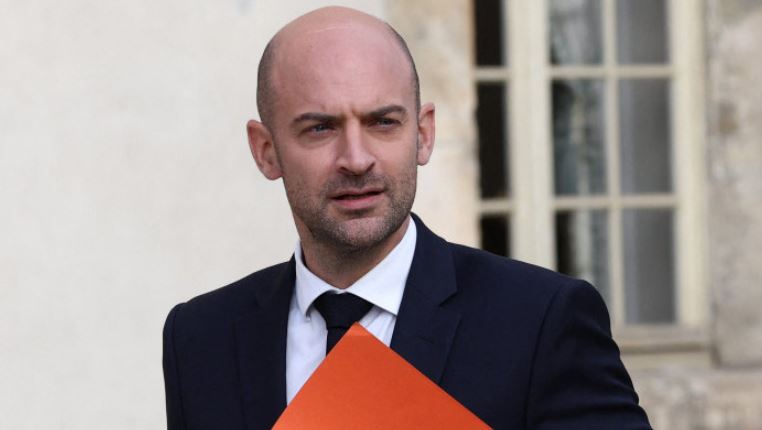
France has asked the European Union to approve within one month sanctions against individuals and organizations responsible for the cyberattack on around 700 French supermarkets, which Paris blames on Iran’s Revolutionary Guard. The request was announced by French Minister for Europe and Foreign Affairs Jean-Noël Barrot.
According to him, evidence against those responsible has already been presented to European partners and the support of an overwhelming majority of member states has been secured. The statement was made ahead of the meeting of the EU Foreign Affairs Council in Brussels. There, Barrot expressed hope that the measures will be approved at the next meeting of EU foreign ministers, on December 14.
According to the French minister, France was chosen as a target because of its support for the Iranian people, whom he described as exposed to “brutal repression” by Iran’s Islamic Revolutionary Guard Corps (IRGC). He also announced that on November 25 an event dedicated to Iranian voices and support for Iranian citizens will be held in Paris.

In the same statement, Barrot welcomed the adoption of new EU sanctions against 145 individuals and entities linked to Moscow, including the head of the Russian e-commerce company Wildberries, whom he called the richest woman in Russia, as well as an oil terminal in St Petersburg.
The French minister announced that he will advocate for the adoption of the 22nd package of sanctions against Russia, especially measures targeting companies that export gasoline to that country. For December 4, he announced an international conference in Paris on the repression of the so-called Russian shadow fleet, which is used to transport oil and bypass Western sanctions.
Speaking about European security, Barrot emphasized that Europeans must decide independently about their security and must not allow others to decide their future. He recalled that last Thursday in Dublin, representatives of 42 countries, which together have around 600 million inhabitants, from Portugal to Finland and from the Atlantic to the Black Sea, agreed on a common charter on the principles of European security.
According to the French minister, Russia cannot define Europe’s security architecture, and the first step toward talks on future security is the end of the war in Ukraine. To achieve a sustainable peace, Barrot emphasized, it is necessary for Russian President Vladimir Putin to accept the ceasefire proposals, together with security guarantees that would prevent new aggression.
France believes that every country and its people have the right to decide independently about their security and political orientation, including membership in the European Union or NATO, added the head of French diplomacy.