







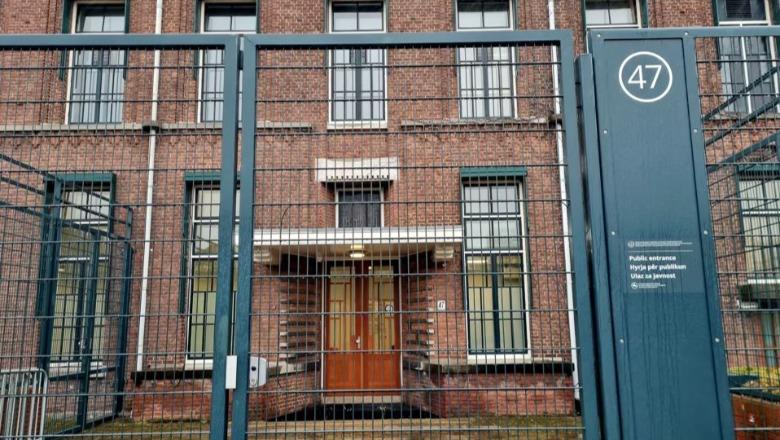
Kosovo will launch a new initiative to amend the Law on the Specialized Chambers and the Specialized Prosecutor’s Office, based in The Hague, after the current amendments to this 2015 law were not adopted amid strong objections from international officials. Kosovo Prime Minister Albin Kurti and the opposition Democratic Party of Kosovo (PDK) agreed on a new initiative on Thursday, the day when the vote on the proposed amendments to this law, which would limit the powers of this court based in The Hague, was postponed for the second time in days.
The amendments adopted in October were returned to the Assembly for reconsideration by the country’s president, Justina Shiroka Pula, at the request of the initiator itself, the PDK. They were adopted a few weeks after this court convicted at first instance four former leaders of the Kosovo Liberation Army. Kurti met earlier in the day with the acting chair of the PDK, Vlora Çitaku, to discuss the issue, after he had expressed reluctance to allow a law that prompted objections from international officials to enter into force.
The PDK had insisted that the amendments be adopted and then the law be amended in the two weeks after entry into force, to address international concerns, but in the end it dropped this request. Kurti said during the session that he does not doubt the PDK’s “good intention” to amend the Law, but added that “this alone is not enough, we must succeed, we must emerge victorious.”
“For this we need a law that is not reversed, not annulled, but a law that has an effect in reality, in practice afterwards,” Kurti said. Çitaku, speaking later at a press conference, said that she and the prime minister had agreed on the content of the law and the changes that should be made to it. “The differences were in the parliamentary procedure. As a result, today we also agreed on the path we will follow. The new legal initiative immediately next week, with our concrete proposals and with the experts’ proposals,” Çitaku said. Kurti stressed that he expects a new draft for the law on the Special Court to be submitted next week, the content of which should be put to discussion and then to a vote. He called for the new content to be in line with Kosovo’s constitutionality and legality, “so as to help justice.”

The amendments that did not pass
The main amendments, which ultimately failed to pass, aimed to narrow the jurisdiction of the Special Court, limiting it mainly to allegations of organ trafficking and to murders, torture and ill-treatment directly related to these allegations. Likewise, the temporal jurisdiction would be limited from 1 July 1999 to 31 December 2000, while the territorial one only to the territory of Kosovo. The draft law provided for limiting the maximum sentence to 15 years in prison, as well as the possibility for convicts to serve their sentences in Kosovo and benefit from a presidential pardon.
Cases that would remain outside the new jurisdiction would be transferred to Kosovo’s justice system, along with the relevant evidence and files. Meanwhile, cases in progress would continue on appeal in The Hague, while the changes would not mean the automatic annulment of existing judgments or the release of convicted persons. The aim of passing these changes prompted reactions from international officials, with the European Union saying they violated Kosovo’s international commitments. Kosovo risked violating the commitments made through the exchange of letters in April 2014 between then president Atifete Jahjaga and EU chief Catherine Ashton.
Through them, Kosovo had committed to consulting with the European Union on any legal change affecting the mandate or procedures of the Specialist Chambers, as well as to guaranteeing the continuation of the work of the Court and the Office of the Specialist Prosecutor until the completion of the relevant investigations and proceedings. These commitments are also linked to Article 162 of Kosovo’s Constitution, which sets out the constitutional basis of the Specialist Chambers and the exclusive jurisdiction of the Specialist Chamber of the Constitutional Court for matters related to them.
The new changes
Çitaku stressed that the new changes would be built on the foundations of the text with the changes that the Assembly had approved in two readings in October, before they were reversed by the president. She did not explain further about the new changes. “On that text we will make the necessary changes to make the law more legally sound and to give our liberators concrete state support,” said Çitaku.
Çitaku said she accepts criticism of how PDK had handled this issue from day one. She pledged that this process “will be seen through to the end,” adding that “we will draft the bill and bring it to the Assembly for a vote, more complete, more legally sound, more practically applicable.” Meanwhile, Kurti said he believes that the “correction” of the September 16 conviction should happen at the second instance, namely at the Appeals Court in The Hague.
He warned that the Working Group for the State Strategy for the Appeal in The Hague, established by the Government in October, would bring next week the first draft of the state strategy to help the former KLA quartet in appealing the prison sentences for war crimes. The group is led by Glauk Konjufca, first deputy prime minister and foreign minister. Hashim Thaçi, Kadri Veseli, Jakup Krasniqi and Rexhep Selimi – who led the KLA during its war against Serbian forces in 1998-99 – were found guilty on September 16 on war crimes charges.
Former president Thaçi and former parliament speaker Krasniqi were each sentenced to 25 years in prison, while former parliament speaker Veseli was sentenced to 18 years, and former MP Selimi to 13 years. All four have denied the charges and will appeal the first-instance judgment at the Specialist Appeals Chamber./REL/