







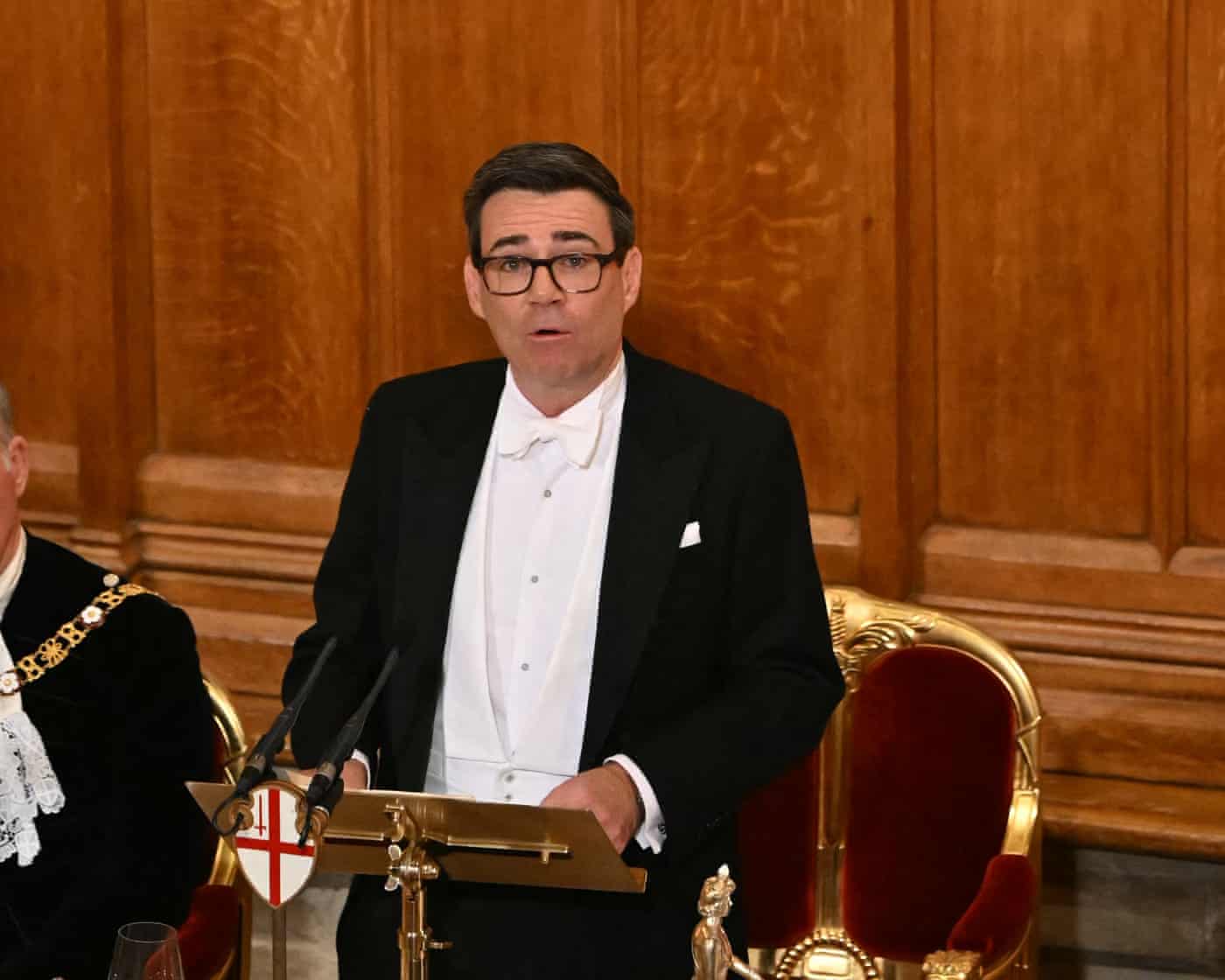
Andy Burnham has declared that Britain’s global position has faded significantly in the decade since Brexit, signalling again that the Labour Party may drop its ‘red lines’ on Europe in the next manifesto. In a foreign policy speech, Burnham stressed that after a major summit in Brussels this week, he would launch new discussions with the EU on options for ‘our long-term relationship’. However, the prime minister warned that this process would take time and, amid concerns from some cabinet ministers, insisted that ‘at every stage the British people will be the boss’.
Burnham is expected to set out broad options for a closer relationship, including a customs union, the single market and full rejoining. He will stress that Labour will not cross its red lines before the next election, while sources from Downing Street said he wanted to ‘frame the debate’ rather than rush, although he had expressed his personal preference for rejoining. Brexit supporters have founded campaign groups against rejoining, while former prime ministers Boris Johnson and David Cameron also warned against this step.
Burnham will meet European leaders at the Brussels summit on Friday to secure agreements that he says could increase GDP by 0.4% – around £17 billion – including those on food and agriculture, emissions trading and a youth mobility scheme. He repeated that the existing agreement with the EU had not been sufficient, comparing it to ‘the emperor’s new clothes’. He stressed that after the summit, he would start a discussion with EU partners on options for the long-term relationship, acknowledging changes on both sides.

In his speech, the prime minister accused previous governments of treating allies with ‘insufficient care’ that had damaged the country’s international position. He added that in the decade since Brexit, Britain’s position in the world had faded. The United Kingdom had failed to invest in the Commonwealth and had had unstable relations with China. He also criticised the approach to Israel, stressing that while Britain condemned Hamas, the response to what followed in Gaza left many people questioning the country’s moral compass, creating the impression that Britain had changed.
Meanwhile, Sandro Gozi, chair of the EU-UK parliamentary delegation, said the United Kingdom would not be ‘in the room’ to help draft new European legislation on food and drink and would remain a ‘rule-taker’ until it joined the single market. Gozi stressed that Britain chose to leave decision-making with Brexit and could not be at the table for drawing up standards, as this is reserved for member states. He suggested that the UK could take a ‘consultative role’ like Switzerland, but stressed that the status quo has concrete limitations that can only be overcome by giving up ‘red lines’.
Taken from The Guardian UK