







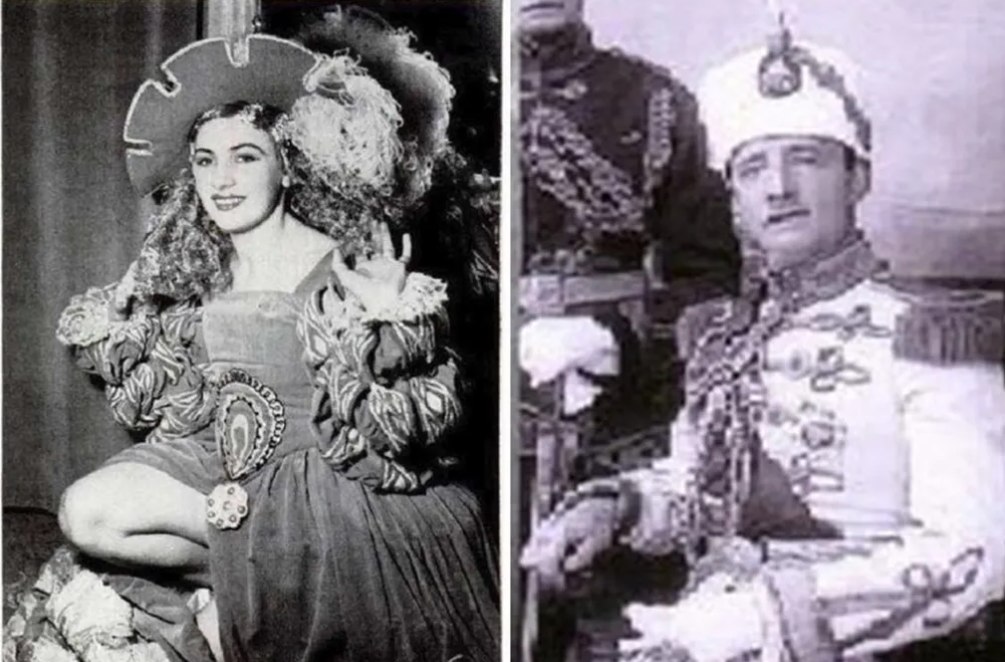
Tania Visirova, the Parisian ballerina who lived in the shadow of King Zog: Secret love, royal gifts, land in Xhafzotaj and the attempt to obtain a pension from the Albanian state.
The story of Tania Visirova is one of the least known, yet most intriguing, episodes in the private life of King Ahmet Zogu I.
A woman who began life as a poor emigrant in Paris, became part of the famous French cabaret scene, ended up in Albania in the late 1920s and, according to her memoirs, lived for several years in a special love relationship with the Albanian king.
But her story does not end with her departure from Albania. Decades later, in 1977, she would appear at the Albanian diplomatic representation in France, seeking a pension from the Albanian state and inquiring about a property that she claimed Ahmet Zog had given her.
This is a story involving love, power, luxury, life at the Albanian royal court, emigration, personal memories and a property issue that appears never to have been resolved.
Who was Tania Visirova?
Tania Visirova, the stage name of Tatiana Fomova-Stonovskaya, was born in 1908 in Bessarabia, a territory now included in Moldova.
Some sources mention the city of Kishinev, today Chișinău, while others give different versions of her birthplace.
She came from a family of mixed origin. According to her French biography, her father was of Russian-Polish origin, while her mother was Romanian-Moldavian. A paternal grandmother of Chinese origin is also mentioned in her family.
Her early life was disrupted by the turmoil and aftermath of the Bolshevik Revolution. The family faced hardship, separations and uncertainty, while Tania and her mother eventually headed for France.

In 1927, Tania arrived in Paris. She was young, without wealth and in need of securing a living. She initially posed for artists and photographers before entering the world of entertainment and cabarets.
French sources describe her as a woman of extraordinary beauty, who very quickly became a well-known figure on the Parisian scene.
From a poor emigrant to one of the figures of Parisian cabaret
In Paris, Tania Visirova became involved in the world of entertainment, where she worked as a model and later as a dancer.
She became part of the Folies-Bergère, one of the most famous entertainment institutions in Paris, known for its musical revues, dance, extravagant costumes and performances that attracted the elite audiences of the time.
During that period, Tania became known by the nickname “La Visirova” and, according to the French press, was considered one of the most beautiful women on the Parisian stage.
An article in the newspaper Le Monde, published on 19 December 1980, brought her back to the attention of the French public. The article, entitled “La Vierge des Folies-Bergère”, described Visirova as a woman who had once been beautiful, famous and wealthy, but who in old age lived alone and in modest conditions.
The French newspaper emphasized that she had an extraordinary memory and that she had recounted her life to the journalist Maria Craipeau.
This article is an important source, because it shows that Visirova’s story is not merely a narrative repeated by the Albanian media. She was also a figure who was interviewed and documented in France at the end of her life.
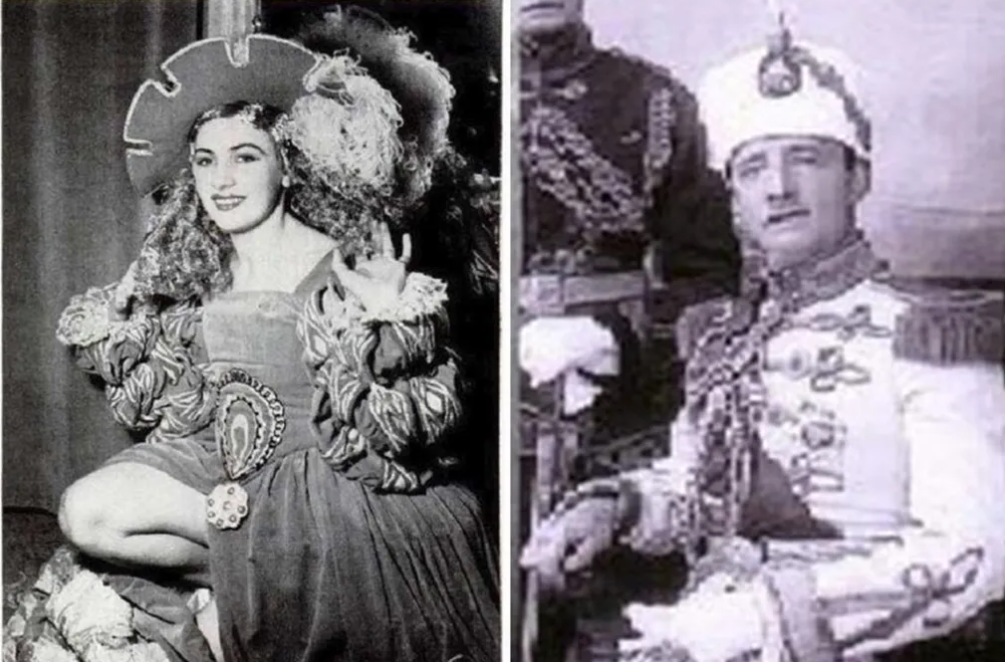
How did Tania Visirova end up in Albania?
According to her account, in 1929 Tania received an offer to come to Albania.
She thought she had been contracted to dance at a theater in Tirana, as part of activities organized for the Albanian kingdom.
In some versions of the story, it is mentioned that the contract was for a limited period, while the payment was very high for the time.
Tania accepted the offer.
She arrived in Albania in August 1929. According to an account published by a diplomat, her arrival was linked to a contract signed for an artistic engagement, but the situation changed quickly.
Instead of completing her engagement as a dancer and returning to Paris, Tania settled in Albania and became part of the private life of King Ahmet Zogu.
In some sources it is said that she was kept in a residence in Durrës, where the king visited her and where, according to her account, the love affair between them developed gradually.
A relationship that lasted several years
Tania Visirova and Ahmet Zogu, according to her own accounts, “lived in a love relationship that lasted from 1929 to 1932 or 1933.”
Sources are not entirely consistent in determining the duration. Some speak of three years, while others of four years.
This discrepancy may be related to how the period is calculated: from her arrival in Albania, from the beginning of cohabitation, or until her final departure.
However, it seems the relationship was not a short episode. It lasted for a considerable period and, according to sources, Tania became one of the women closest to the king during this period.
However, she did not become queen.
The relationship was not formalized with an official marriage.
“We made love on a schedule” – Visirova’s personal account
One of the most distinctive parts of Tania Visirova’s story is her account of the intimate relationship with King Zog. In an interview and account published many years later, she described the relationship as a liaison in which, according to her, even intimacy was influenced by protocol and the routine of royal life. In one account, she says that “Protocol also dictated our hours of love.”
She described the meetings, walks, lunches and time she spent with the king, but also expressed dissatisfaction with the way the relationship and meetings were organized.
In another part of the account, she says that Zog had a great weakness for her, but that protocol and the duties of the royal role often dominated their private life.
It is important to emphasize that these are Visirova’s personal testimonies, recorded and published many years after the events. They are not official documents of the royal court.
However, they constitute an important source for understanding how she remembered and interpreted her relationship with the king.
Why did she not become the official wife of King Zog?
One of the most interesting questions of this story is why Tania Visirova, despite her long relationship with the king, did not become his official spouse.
In the published accounts, it is mentioned that King Zog’s family, especially his mother, did not accept the possibility that he would marry a woman who was not Muslim.
In some versions, Tania says that the king had promised that he would not marry her as long as his mother was alive.
This factor, according to her accounts, was one of the reasons the relationship was not formalized.
Here we must be careful: because we do not have this from the sources we have reviewed, or from any official royal document that could prove such a promise. This element comes from Visirova’s later accounts in her book.
The King’s Gifts: Jewelry, money and a property in Xhafzotaj
One of the most important aspects of the story is the issue of the gifts that Tania Visirova claimed to have received from Ahmet Zogu.
According to some sources, she received: precious jewelry; money; personal gifts; a diamond ring; a property in Albania. In Visirova’s French biography, a diamond ring of about 7.5 carats is mentioned, said to have been given to her by Zogu for her 21st birthday.
Another element repeated in the sources of the time is the donation of 10,000 square meters of land in Xhafzotaj, in the Durrës area.
In some articles, the area is described as 10 hectares, but here there is an important discrepancy: 10,000 square meters = 1 hectare; 10 hectares = 100,000 square meters.
So, the sources that mention 10,000 m² and those that mention 10 ha are not giving the same area.
This is a discrepancy that should be clarified through ownership documents, if they exist.
It should not automatically be presented as a proven fact that Tania owned 10 hectares of land. What can be said is that in her accounts and in later articles a land gift in Xhafzotaj is mentioned, but the area varies according to the source.
For more, read: