







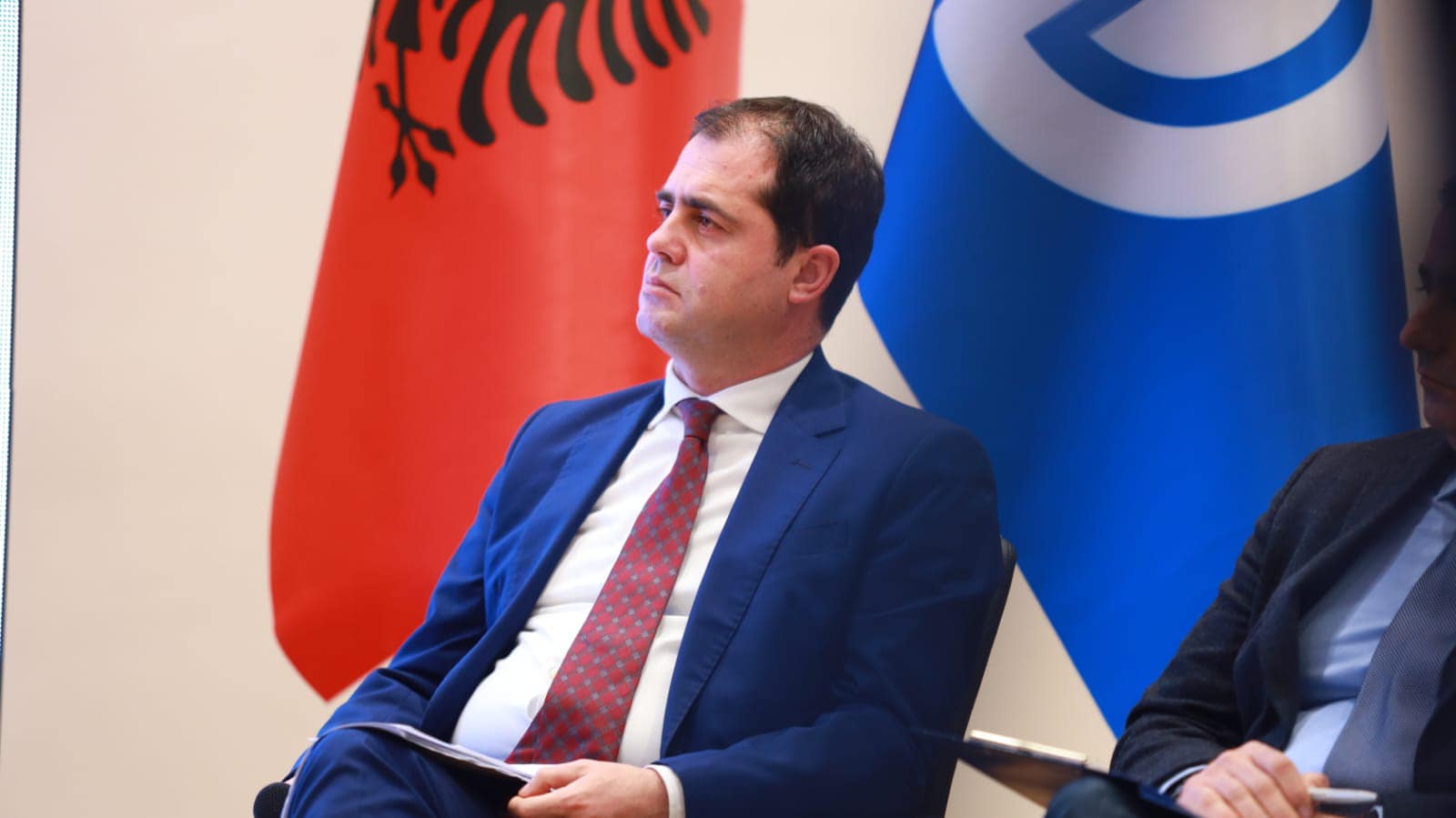
Democratic Party MP Oerd Bylykbashi calls for the overthrow of Edi Rama’s regime and a profound constitutional, institutional and political transformation. He proposes reforming the electoral system, democratizing parties, ensuring judicial independence, and fighting the capture of the state by crime and oligarchy. Bylykbashi stresses that changing the government is not enough without reforms that guarantee the separation of powers, free elections and Albania’s fastest possible integration into the EU.
The full post
Student protests are breaking the last dam of the transition, which has turned the free flow of democracy into the swamp of autocracy. Edi Rama’s regime and anti-constitutional system must certainly be overthrown! But changing the government is not enough. The constitutional, legal and institutional system must change, but also the political reality that allows power to be concentrated in the hands of one person, institutions to be weakened, and the state to be placed in the service of the party in power.

Albania needs a constitutional, institutional and political transformation that radically changes the way power is won, exercised, controlled and lost. It must be made impossible for the Prime Minister, the President or any ONE person to capture the powers. To this end, the separation of powers and the constitutional checks and balances mechanisms must be redesigned, so that the government cannot impose itself on other powers and independent institutions. No individual and no party should be able to concentrate political power, state institutions and the mechanisms that should control it in their own hands.
The functioning of political parties must be radically democratized. Collegiality must dominate over the power of the ONE. Party leaders must have limited mandates and be held accountable for their political actions and failures. The outdated concept of the leader with a mission who is irreplaceable must end and be replaced by that of the chairman with a mandate and accountability. Democratic rotation in the leadership of political parties must be guaranteed, ensuring synergy between experience and the renewal of leadership.
Political parties have a constitutional role in shaping policies and political representation, so they must be required by law to guarantee genuine, transparent and verifiable democratic mechanisms for electing their governing bodies and selecting candidates for elections, while protecting their internal autonomy from state interference. Democracy cannot function in a state if it is absent within the parties that aim to govern.
The 2020 parliamentary electoral system, which Rama made together with the “Kërpërata” of those who held opposition mandates in 2019, must be repealed. The new system must be designed from scratch, with consensus and transparency, not as a modification of the existing one, as was done in 2024. It must ensure national proportionality in the distribution of seats and, within this principle, integrate the personalized election of MPs directly by citizens, either through single-member district races or through open lists.
The system must guarantee pluralism in Parliament and establish political and constitutional checks and balances over the Prime Minister, preventing the creation of artificial parliamentary majorities that enable the concentration of executive and legislative power, as well as the control of independent bodies by a single party. Parliamentary oversight and the role of the opposition in this oversight must be effective and guaranteed. Parliament should not be a rubber stamp for the government. A law cannot be passed in the blink of an eye (even when it has over 200 articles). The legislative process must be careful, transparent and inclusive of interest groups. The role and weight of the MP elected by the people in the legislative process must be strengthened, both vis-à-vis the government and vis-à-vis their own party.
An MP must represent citizens and not merely carry out the orders of the party leader or parliamentary group. The Constitution prohibits the imperative mandate. The current legal framework for referendums, unilaterally approved by the PS in 2000, which in practice has prevented the effective exercise of direct democracy, must be radically reformed. Since the adoption of the Constitution in 1998, Albania has not held a single popular referendum. The organization of referendums must be radically simplified and the right of popular initiative must be strengthened. The government and Parliament must understand that sovereignty belongs to the people, not just in words.
Citizens must have a real opportunity to decide, through referendum, on important matters of public interest or to repeal the laws of the parliamentary majority, without being dependent on the political will of the government or Parliament. Decisions taken by referendum must have legal effects clearly defined in the Constitution and in law, respecting the competences of institutions and the guarantees of representative democracy. This right must be exercised within the constitutional guarantees that protect fundamental rights and freedoms and the rights of minorities.
In this way, politics will be forced to be measured more before citizens. The system for electing mayors must be changed. The system in which a candidate is elected mayor with merely more votes than rivals, even when he receives only 30–35% of them, must not continue. The mayor of a municipality must be elected with more than 50% of the votes. He must be the mayor of the citizens of the municipality, not merely the representative of the party that received the most votes.
The system for electing municipal councillors must be changed. Closed lists must be replaced with open lists, where councillors are elected as the candidates who receive the most votes from citizens. The municipal council must be strengthened to effectively oversee the mayor and to curb abuse of power, under the pretext that he was directly elected by the people. Decentralization of power must be restored and subsidiarity strengthened (power should be exercised as close as possible to voters), dismantling the current centralization, while opening the prospect of regional development according to the European model. Local democracy is a balancing and stabilizing factor for democratic functioning.
Free and fair elections must be guaranteed. For this, the state must be separated from the party in power and from crime. The state must serve the public in a neutral way, not those who are in power or the political class. Political patronage of citizens through the state must be prohibited by law, and the abuse of power by the ruling party must be punished:
* with the public administration, which must be radically depoliticized;
* with the power to pass laws that favor it;
* with the power to distribute the public budget through tenders, PPPs and other mechanisms;
* with the power to offer or condition public services;
* with the power to use inspectorates for punishment or favoritism;
* with the power to use citizens’ state data to profile and target them politically;
* with the power to conduct government propaganda with public money.
There must be full transparency in political financing and lobbying. Corruption and illegal oligarchic or criminal financing of political parties are like metastases in the lymphatic system of democracy: they infect the entire body of the state and society.
The state must be separated from crime. This cannot be achieved without separating the state from the party and eliminating the capture of the state by a single hand. The time has come for Decriminalization 2.0. Not only persons convicted of crimes, but also those who have proven ties to organized crime, who are supported by it or seek its support, must not be allowed to be elected or appointed to constitutional or public institutions. Restrictions must be based on clear legal criteria, verifiable evidence, proportionality, guarantees of due process and judicial review.
Parliament and deputies must be examples of integrity, knowledge, ethics and public commitment, not of ignorance, servile sycophancy, or simply of a vote obtained without moral or legal scruples. The uncontrolled concentration of power is the gateway that opens the way for crime to the highest levels of the state. It also creates opportunities for hostile powers, through corruption and organized crime, to undermine the national security of Albania and the security of NATO. Justice must be genuinely independent of the government and of any political influence. Courts must be independent of any influence from the government, the prosecution and other political or institutional actors. The prosecution must exercise its functions independently of the government and any political influence.
No one should enjoy legal or de facto immunity because of the power they hold or the pressure they may exert over justice. Civil courts must deliver swift, professional, impartial and uncorrupted justice. After ten years of justice reform, it cannot be accepted that a court case which, before the reform, took 3–4 years, now takes up to 16 years to conclude. The State Police must be thoroughly cleansed, from top to bottom, of leaders and officers who are politicized or involved in criminal activities, and of those who have violated citizens’ rights during protests for political interests or have protected crime.
This vetting must be carried out through legal mechanisms, investigation, verification and individual accountability. The State Police must be transformed from a police of the Prime Minister and of power into a police of the citizen and the community. The state must be fair to the citizen. A professional administration must resolve problems and provide impartial public services, without forcing citizens to clash with the state in long court disputes. This is the alpha of the fight against corruption. SPAK must be the last link and instrument of criminal response, not a substitute for a state that must function with law, professionalism and integrity at every level.
Private property must be genuinely guaranteed against state power and oligarchic interests. A private owner should not live in fear of the state or of the oligarch declared a “strategic investor”. Property must acquire full legal security so that it becomes a powerful instrument of economic development. Moral and legal debts must be paid without delay to:
* Former political persecutees. Justice for the crimes of communism cannot be considered a closed matter. The perpetrators of crimes against humanity, where legal conditions and evidence exist, must face justice.
* Owners expropriated by the communist regime. Property must be returned to them or fully compensated, in a just and effective manner.
Economic freedom, freedom of enterprise, equality and genuine free competition must be guaranteed. The threads of economic control and privileged influence over state decision-making must be cut for oligarchs. The economy must not be the privilege of those who have connections with power. Education, health care and social protection are pillars of sustainable development and of a just society. Investment in them strengthens human capital, social cohesion and the future of Albania, while social protection and decent pensions guarantee security and dignity for every generation.
Reform is needed so that the media gain real editorial independence, protected from the influence of the economic interests of owners in their relations with the government. Journalists must have legal, professional and economic guarantees that protect them from pressure, censorship and self-censorship. Without a free media there can be no democratic control of power. A new legal and institutional framework for the Diaspora is needed, one that enables the attraction of knowledge, experience, human capital and investment from Albanians abroad.
The Diaspora, which makes up nearly half of the roughly 4.7 million Albanian citizens registered in the National Civil Status Register, is one of the greatest “assets” and national strengths. Albania must offer opportunities for Albanians to return to the homeland willingly. The vote of the Diaspora must be guaranteed, free and protected from manipulation, its political representation must be safeguarded, as must the opportunity to contribute and invest in the Albanian economy, with equal access, fair competition, and without corruption, obstacles or discrimination. Albania does not need merely a change of government. It needs a constitutional and political order in which no individual, party or interest group can capture the state; where the sovereignty of the people is real power and not a formal declaration; where institutions serve the citizen regardless of who wins the elections.
Note: This is not an exhaustive list. It is a creed and a personal public, political and civic stance. I do not claim these changes are easy. But I am convinced that without them, changing governments will not be enough in the long term to change the way the state functions. In any case, this transformation begins with removing the autocratic regime of Edi Rama, through elections that ensure the legitimacy of Parliament and a spirit of compromise for implementing the greatest national project: integration into the EU as soon as possible.