







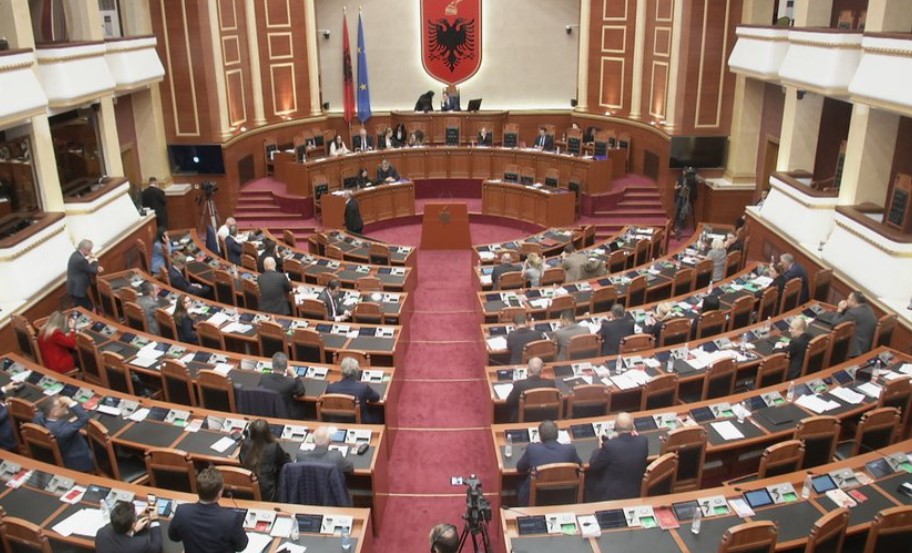
After heated debates and marathon discussions, the plenary session approved in principle the draft law “On the 2027 Budget” with 80 votes in favor, 0 abstentions and 25 against, as well as the five financial draft laws directly related to it.
The 2027 budget was presented by Prime Minister Edi Rama, who outlined the main points of this draft budget, which he called a historic budget, as for the first time the figure reaches the ceiling of 10 billion euros.
The plenary session in the Assembly was accompanied by numerous debates and exchanges between MPs of the majority and the opposition, with the focus on the draft budget, the distribution of public funds and the government’s economic and social policies.
The majority described the budget as historic, emphasizing the increase in public investments, the doubling of the monthly bonus for pensioners, and the reduction of VAT from 20% to 6% for 54 food products. According to its representatives, additional funding is also envisaged for key sectors such as education, health, agriculture and defense.
The opposition’s stance was entirely different, opposing the draft budget and raising questions about the level of social support and the effects that fiscal policies will have on citizens and businesses. Government critics also pointed to the lack of consultation with business representatives on the fiscal package, while expressing concerns about the impact of tax changes on the tourism sector and self-employed professionals.
The political clashes were accompanied by accusations of corruption and criticism of the management of public finances, turning the discussion of the draft budget into a broad debate on the country’s economic and social priorities.
At the end of the discussions, the draft budget received approval in principle in the Assembly. It will now return for review to parliamentary committees, where it will be analyzed article by article and may undergo changes before being put to a final vote.
