







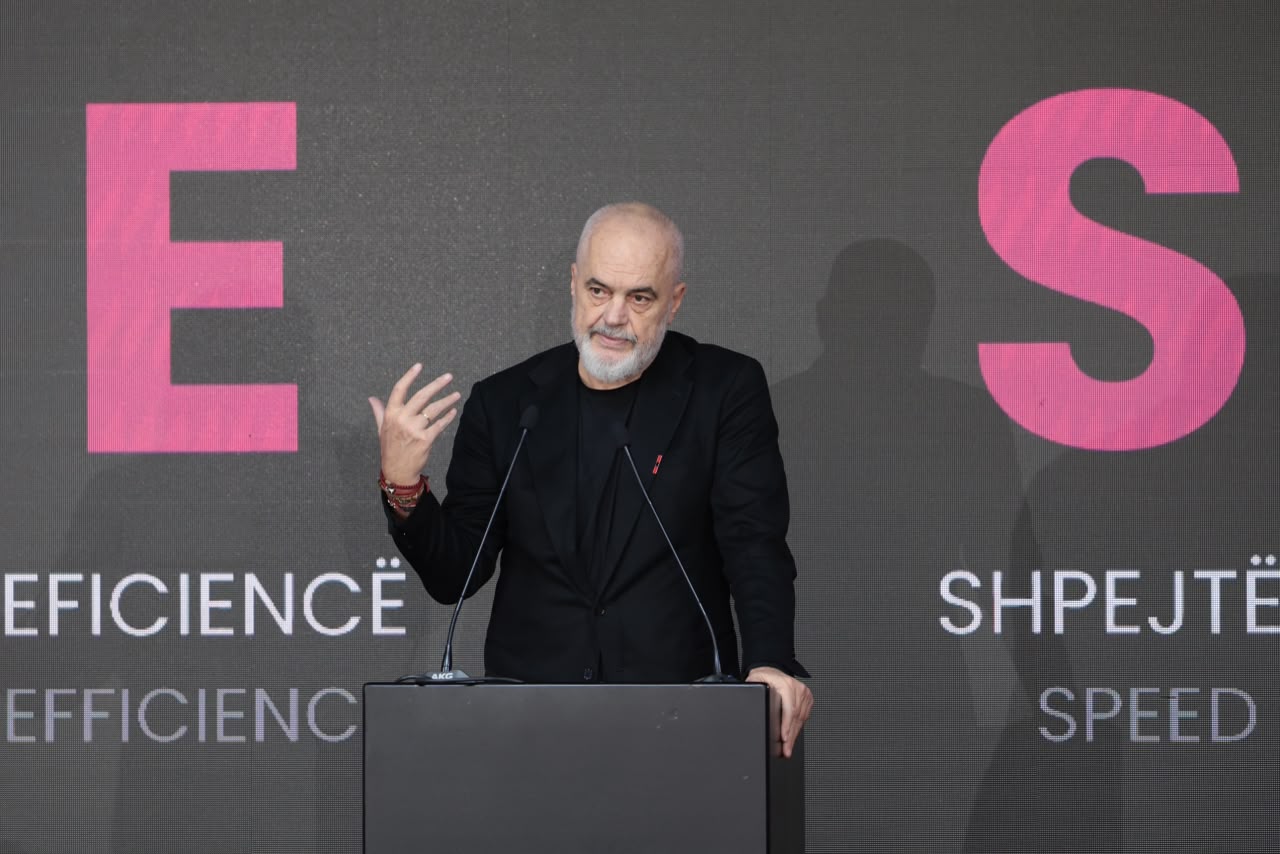
Prime Minister Edi Rama has presented the new Centralized Procurement model, a mechanism aimed at changing the way public tenders are planned and implemented in Albania. At the heart of the reform will be the establishment of a unified electronic platform, where Artificial Intelligence will also be used for risk analysis.
During the presentation, the head of government announced that the new system will be included for the first time in the budget discussion process for next year, giving institutions the opportunity to plan better and carry out procurement procedures on time. “We are here today at a moment where, for the first time, the new procurement system is included in the phase of discussing next year’s budget. It will now serve as the mechanism available to central ministries, but not only, to plan and carry out public procurement on time”, Rama declared.
According to the Prime Minister, the changes are intended not only to improve administrative procedures, but also to align the Albanian system with European practices and standards. “This is a key transformation regarding the efficiency of public procurement. It is a structure that is being integrated into the European procurement system and is receiving high-level expertise from similar institutions”, he said.

One of the project’s main innovations is the use of Artificial Intelligence, which is expected to facilitate access to procurement procedures and help identify risks. “Today we are ready to start work on establishing the new electronic system, which is a unique system not only in Albania, but far beyond, where artificial intelligence will speak the language of every interest group whose work is related to access to public procurement”, the Prime Minister stressed.
Rama also highlighted the ambition for Albania to go beyond meeting the requirements of the European Union in this sector, aiming for an innovative model of public procurement. According to the head of government, the implementation of the new system is expected to bring faster procedures, lower costs, less bureaucracy and greater transparency for institutions and economic operators.