







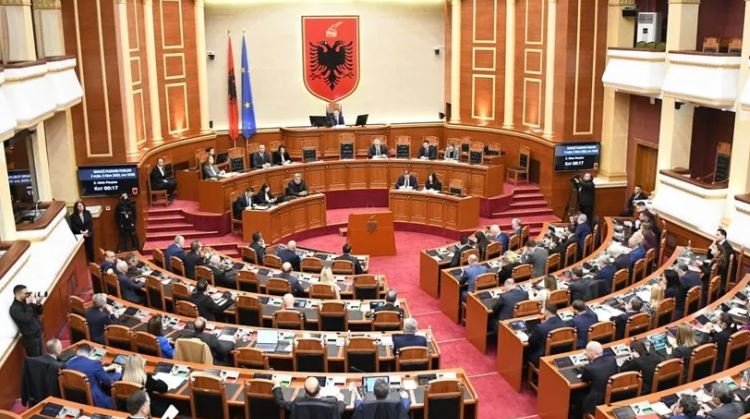
The Parliament of Albania will convene today in a plenary session, expected to begin at 10:00, with a packed agenda of 11 items. At the center of MPs’ attention will be the approval of the draft state budget for 2027, a key document that sets the allocation of financial resources for the coming year. Along with the budget, the accompanying fiscal package, which contains substantive changes to tax legislation, will also be reviewed and voted on.
After detailed discussions in parliamentary committees, MPs are expected to give the green light to the country’s most important financial document. The fiscal package accompanying the budget includes a series of draft laws aimed at modifying the tax system. These changes affect the law “On Income Tax,” the law “On Value Added Tax (VAT),” the law “On Tax Procedures in the Republic of Albania,” the law “On National Taxes,” and the law “On Excise Duties in the Republic of Albania.” These reforms are expected to have a direct impact on the economy and public finances.
Another particularly important item on the agenda is the review of two normative acts, approved by the government on October 28, 2026, which are directly related to public gatherings. Normative Act No. 5 provides for several additions and amendments to the existing law “On Gatherings,” aiming to regulate them. Normative Act No. 6 is titled “On Compensation for Civil Damage Caused to Entities Affected by Violent Acts During Gatherings and the Regulation of Consequences.” The review of these two acts comes in a tense context, just two days before a nationwide protest announced for November 28, and while daily protests against the Rama government in the capital have entered their 179th day, highlighting the urgency of addressing these issues.

In addition, the agenda includes the draft law on accepting the adapted amendments of May 30, 2025, to the Paris Memorandum of Understanding, which concerns port state control. This plenary session, which will begin with the approval of the minutes of the previous session of November 18, 2026, and various announcements, marks a crucial moment for legislative decision-making in the country. It will address issues with wide-ranging impact, from the financial stability of the state to the regulation of the right to assembly and the management of the consequences of protests, holding great importance for future political and social developments.