







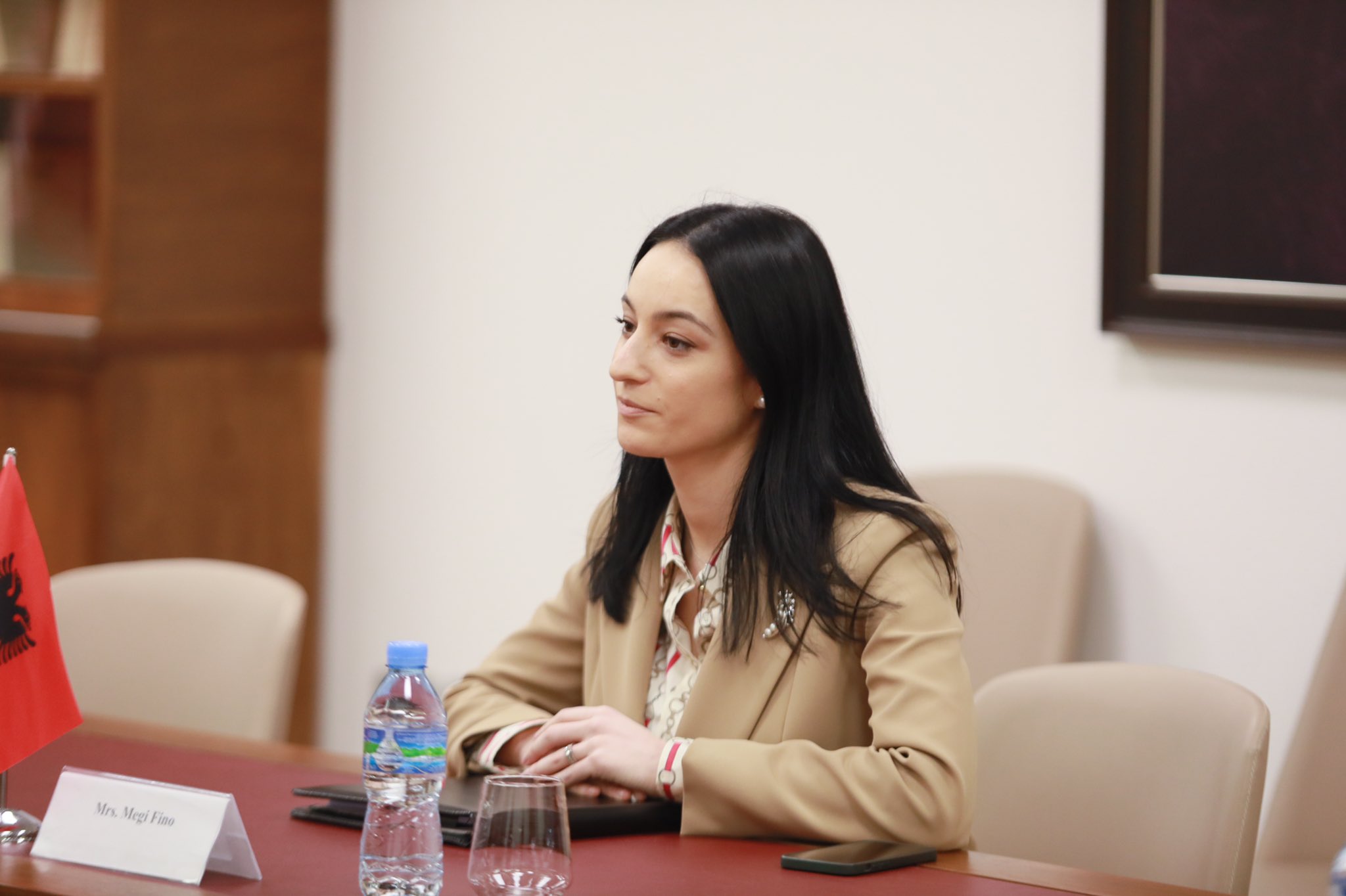
The Growth Plan Summit brought good news for Albania. The EU Commissioner for Enlargement, Marta Kos, made it known that our country has fulfilled 80% of the reforms required by the European Commission and, in recognition of the work, the European Union provided a substantial fund as a gift for the country’s development.
Deputy Minister of Foreign Affairs Megi Fino explains how the plan’s benefits will be translated for Albanian citizens and businesses, focusing on integration into the European common market, investments, SEPA and the reduction of roaming charges.
Fino announced that Albania and Montenegro will benefit from 15% additional financing from funds unused by other countries. She also clarified that gradual integration aims to give citizens and businesses the opportunity to benefit from the European common market before Albania’s full membership.
It was announced that Albania’s benefit from this Growth Plan will be more than 185 million euros. How will these funds be concretely translated in Albania? How is it envisaged? What is expected?
Fino: In fact, I wanted to start by placing today’s summit precisely in the broader context of developments in recent days, which have been extremely intensive in terms of Albania’s European agenda, but also that of the Western Balkans. Within this week we have had several very important developments. First of all, it is worth mentioning the annual EU-Western Balkans Summit in Brussels, yesterday the second high-level EU-Western Balkans investment forum in Tirana, and today the Summit of Western Balkans leaders on the Growth Plan. All three are interconnected, which is why I mention them, because the Brussels summit certainly reaffirmed the political perspective of accession, while yesterday’s investment forum, we saw, highlighted the economic potential of our region. And today it was shown how these political commitments and reforms are in fact being translated precisely into concrete economic and financial results for our country as well. So Tirana has been the center of discussions on the European and economic future of the Western Balkans.
What are these concrete economic benefits? 185 million euros. Where are they envisaged to be implemented? In what projects, or how will people and Albanian families benefit?
Fino: I wanted in fact to focus on the four areas that today’s discussions addressed: First of all, reforms, reforms that strengthen the rule of law, improve governance, and create a more competitive environment for business. Second, gradual integration into the European common market. So, again we are talking about the economy. Citizens and businesses should no longer wait for accession day to start benefiting from economic integration with the European Union. Third, investment and innovation, linking this somewhat also to yesterday’s forum. Finally, regional and European connectivity through transport corridors, energy connections and digital networks, that is, all investments that increase the competitiveness of our economies.
Specifically, the positive news for Albania: Albania has implemented 80% of the reforms assessed under the growth plan, meaning it is expected to receive 185.6 million euros in the fourth payment. A very important piece of news from this summit was also the fact that Albania, together with Montenegro, as the two frontrunners in the integration process, will also receive 15% additional funding from the growth plan through the mechanism for redistributing funds that other countries were unable to absorb, which very concretely demonstrates the functioning of the ‘merit-based process’. First and foremost, when we talk about concrete benefits, I want to mention SEPA as the single euro payments area.
It was also mentioned today at the press conference that in just 11 months since SEPA became effective, 788,000 transactions worth 8.7 billion euros have been processed. The fact that Albanian citizens and businesses have already saved these amounts, while the savings potential reaches up to 71 million euros per year. Another example is the discussion regarding roaming; negotiations for inclusion in the European roaming regime began in October and the aim is that throughout the coming year, that is throughout 2027, Albanian citizens will benefit from reduced tariffs when communicating with EU countries, something we already have with the Western Balkan countries. Another important step was the expansion of the Discover EU program, which creates new opportunities for young Albanians too, namely to travel and get to know Europe, and all of this is linked to what I mentioned regarding gradual integration.
What does the term gradual integration mean and especially how can businesses in Albania understand it? Is it related to business development? Specifically, how will they be impacted by gradual integration?
Fino: Gradual integration is in fact related to every field and every sector. So for business certainly, but in fact it is something we are pushing forward for all 33 negotiation chapters, which of course translate into sectors of our social life. Today we heard one of the most important messages from Commissioner Marta Kos: the European Commission intends to further expand gradual integration by opening more sectors of the European single market to candidate countries, including the energy, transport and digital technology sectors. The possibility of our earlier participation in various mechanisms, in EU institutions, in those areas where candidate countries have made more advanced progress, is being discussed. To clarify, gradual integration is not a replacement for full membership, absolutely not. It is simply an instrument to accelerate it even more, to make the accession process more tangible for countries, specifically for Albania and candidate countries, but in fact also for European Union countries, to become even more familiar with the benefits and implications of having enlargement. /Vizion Plus/