







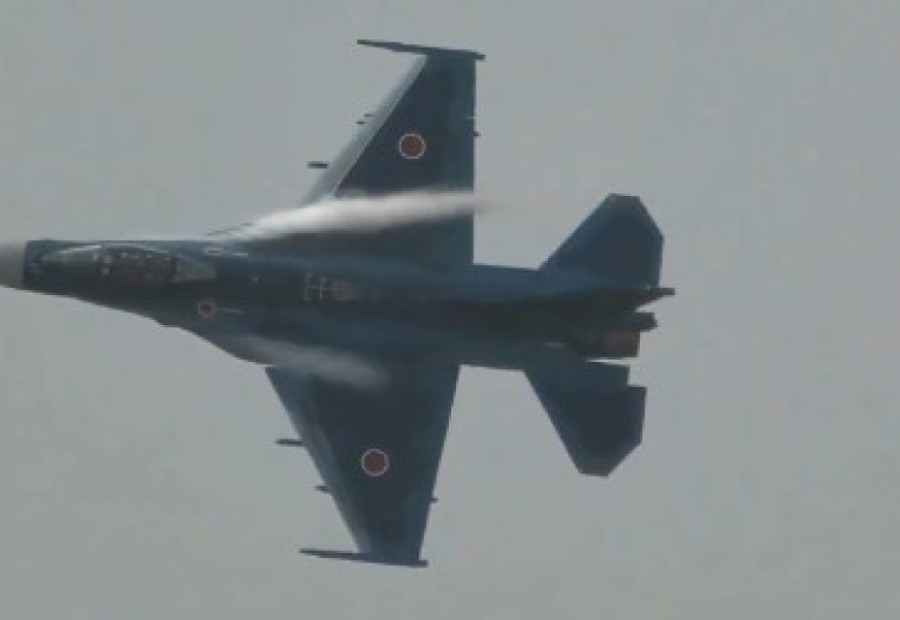
Russian military aircraft have flown in airspace near Japan, South Korea and Taiwan, and Tokyo has formally protested to Moscow over these flights. The news comes at a time when geopolitical tensions in East Asia remain high and Japan’s allies, including the United States, are closely monitoring movements of Russian air forces near their borders.
Japanese authorities have not provided further details on the number of aircraft or the exact flight route, but the protest to Moscow has been confirmed as Tokyo’s official position. South Korea and Taiwan have not so far published specific reactions to the case, according to the same source.
The event comes in a broad context of tensions, in which several other international developments have drawn the attention of global diplomacy in recent days. In this framework, China has officially confirmed the first trilateral meeting among Chinese President Xi Jinping, U.S. President Donald Trump and Russian President Vladimir Putin.

The three leaders will meet on November 19 in the southern Chinese city of Shenzhen, within the summit of leaders of the Asia-Pacific Economic Cooperation (APEC). This meeting is expected to be an important moment for relations among the three major powers and for the course of security issues in the region.
In parallel, Finnish President Alexander Stubb has called for Europe to prepare for talks with Russia on the continent’s security after the end of the war in Ukraine. According to Stubb, European countries must take responsibility for future relations with Moscow, without leaving this role solely to Washington.
The Finnish president’s request signals a growing debate within Europe over its role in the future security architecture. Meanwhile, Ukrainian President Volodymyr Zelensky has warned of a new wave of Russian attacks, calling on citizens to be careful and not to ignore air raid alerts.
The warning comes at a time when diplomatic efforts to end the war continue, with the involvement of the United States and European countries. These developments show that tensions between Russia and the West remain present on several fronts simultaneously, from East Asian airspace to the European continent.
In another area, the United States and nine partner countries have signed a declaration on protecting artificial intelligence technologies and infrastructure. The agreement aims to ensure the supply of chips and critical minerals, while Washington seeks to reduce technological dependence on China.
This move adds another dimension to competition among major powers: technology and supply chains. In its report published on November 17, the EBRD warns that developing countries risk failing to benefit from investments in artificial intelligence and the defense industry.
According to the bank, lack of financing, energy infrastructure and production capacities could deepen the economic gap with developed countries. The report also touches on the European economy, where some EU countries risk losing billions of euros from the post-pandemic recovery fund, as they have not met the required reforms and investments.
Romania could lose about 3 billion euros, while Spain hundreds of millions of euros. These figures illustrate the concrete consequences of governments failing to meet commitments made to Brussels. On the international stage, attention has also been drawn to Pope Leo XIV’s visit to Peru, where the Holy Father was struck near his right eye by a rosary thrown by the crowd of believers in Lima.
The incident occurred during greetings to citizens, but the Pope did not suffer serious injuries and continued with planned activities. Other events have marked recent days, including a decision by the Special Court in The Hague that weighs on former Kosovo President Hashim Thaçi, sentenced to 17 months in prison in the case related to obstruction of justice.
In the United States, thousands of bank customers have reported problems accessing their bank accounts, in an outage that mainly affected JPMorgan Chase services. U.S. Vice President JD Vance has not yet decided whether to run for president in the 2028 elections, stating that he will make the decision during the coming year.
And seven years after Jeffrey Epstein’s death in a federal prison in New York, a well-known forensic medicine expert has questioned the official autopsy conclusion, claiming that the American financier did not take his own life but was killed. These developments, different in nature, reflect a busy international agenda in which security, economic and justice issues are constantly intertwined.