





Skip to content
Koha Jone Logo
  • Latest
  • News
  • Trending
  • WebTV
  • Region
  • World
  • Politics
  • Kosovo
  • Economy
  • Showbiz
  • Sports
  • Shqip
  • English
Read in app
  • Shqip
  • English
  • Latest
  • News
  • Trending
  • WebTV
  • Region
  • World
  • Politics
  • Kosovo
  • Economy
  • Showbiz
  • Sports
  • News
  • Trending
  • Politics
  • Forum
  • WebTV
  • Editorial
  • Kosovo
  • Region
  • World
  • Sports
  • Economy
  • Showbiz
  • Culture
  • Health
  • Technology
  • Interview
  • Chronicle
  • Tourism
  • Social
  • History
Latest news

Newspaper "KOHA JONË" founded as an independent publication on 11 May 1991
Publisher: Nikoll LESI. Editorial office address: Rruga "Sami Frasheri", Pallatet e Aviacionit të Vjetër Nr. 2, TIRANA - ALBANIA

Site by

View options

Preview Tuesday, 24 November 2026, 11:13 Nuclear explosion in space: what satellites risk A nuclear explosion in space would not cause widespread damage on Earth, but it could disable the satellites we use every day. The 1962…
Black and white preview
Text size
  • Trending
  • Erion Veliaj
  • Crisis in the PS
  • Berisha
  • Real Madrid
  • Elections
  • Protest
  • NATO
  • ICE
Latest news
Trending
  • Erion Veliaj
  • Crisis in the PS
  • Berisha
  • Real Madrid
  • Elections
  • Protest
  • NATO
  • ICE
KOHA JONË Latest news, always with you
Install

Nuclear explosion in space: what satellites risk

World Tuesday, 24 November 2026 11:13
Nuclear explosion in space: what satellites risk
Add to preferred sources

Share

Facebook WhatsApp Email X

A nuclear explosion in space is not expected to cause widespread injuries on Earth, but it could damage satellites that provide everyday services, including some that save lives. This is explained by a DW analysis of the possible consequences of such an explosion. Earth’s atmosphere provides protection from a nuclear explosion in space, while satellites are far more exposed to radiation.

The effects could last for a long time and protection against them is limited, DW writes, Koha Jonë reports. In the United States, satellite failure could make communication harder for emergency teams in remote areas. If GPS also fails, drivers and pilots could lose navigation guidance, while financial networks could lose an accurate time source.

Advertisement Complaint in Koha Jonë

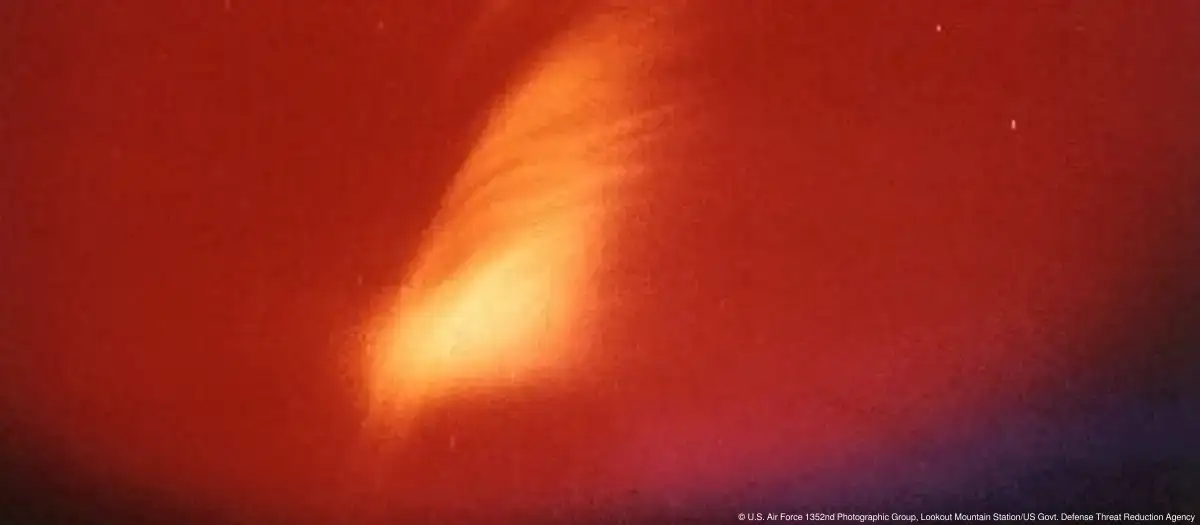
Such a risk is not merely hypothetical. On the evening of July 8, 1962, people in Hawaii organized parties to watch the explosion and followed the countdown on shortwave radio. Then the night sky lit up.

AdvertisementSwiss DigitalComplaint in Koha Jonë

The United States had detonated a nuclear weapon about 400 kilometers above the Pacific, in a test called Starfish Prime. An electromagnetic pulse caused some streetlights in Hawaii to go out, and some radio links in the Pacific temporarily went down. The glow faded within minutes, but some satellites failed months later.

You might be interested in

Guterres calls for AI safety within a year

Guterres calls for AI safety within a year

1 hour ago
Five years of war: over 700,000 Russian soldiers have died in Ukraine

Five years of war: over 700,000 Russian soldiers have died in Ukraine

1 hour ago
Patriot missiles for Ukraine: Pentagon has not approved delivery of 60 missiles

Patriot missiles for Ukraine: Pentagon has not approved delivery of 60 missiles

3 hours ago

The air was too thin for a conventional fireball or a destructive blast wave to form and reach the ground. Charged particles made the denser air below glow, creating an artificial aurora. The atmosphere also absorbed most of the initial radiation.

Satellites are especially vulnerable because they orbit above most of the atmosphere that protects people on the ground from initial radiation. In orbit, the initial X-ray burst can damage spacecraft immediately. Earth’s magnetic field can also trap electrons released after the explosion, as happened after Starfish Prime.

Satellites receive another dose each time they pass through the radiation belt that is created. Over time, this exposure can damage electronics and solar panels.

Satellites and the risk of space debris. The consequences depend on the location of the explosion and on the satellites that pass through the radiation belt. GPS satellites send signals that help phones, aircraft and ships determine their position. They orbit about 20,200 kilometers above Earth and may continue to work even if satellites closer to Earth fail.

But satellites perform different tasks. An emergency device on a ship could use GPS to determine its location and then send it to rescuers through another satellite network. If part of that network fails, the alert could be delayed.

The 1967 Outer Space Treaty prohibits parties from placing nuclear weapons in orbit. The 1963 Limited Test Ban Treaty prohibits parties from carrying out nuclear explosions in space. The Outer Space Treaty does not have a special system for verifying what spacecraft carry.

An explosion is easier to detect, because American satellite sensors are designed to pick up the signals it emits. Shielding can help protect satellite electronics, while backups can keep some services running. During a GPS outage, pilots over the continental United States can use ground-based navigation tools.

Operators can launch replacement satellites, but they may still face radiation or space debris. Radiation can leave many satellites intact but unable to orient themselves. If two objects collide, fragments can hit other satellites, creating more debris and causing further collisions.

If debris accumulates enough for the chain reaction to sustain itself, it could continue even without launching new satellites. This phenomenon is known as Kessler syndrome. It is not known for certain whether an explosion would cause such a cascade.

If it did, debris could endanger replacement satellites for years. Some radioactive particles could enter the atmosphere and eventually settle on the ground. But an explosion in space is too far away to lift the soil and water that carry radioactive fallout from a surface explosion.

As the particles disperse, their radioactivity decreases over time. Concentrated local fallout that could expose people near a ground explosion to high doses is not expected in this case.

Related tags

GPSspaceradiationsatellitesnuclear explosionStarfish PrimeOuter Space Treaty
Add to preferred sources

Share

Facebook WhatsApp Email X

Latest

Nuclear explosion in space: what satellites risk
4 minutes ago

Nuclear explosion in space: what satellites risk

Champions League returns with 9 matches, the Arsenal-Dortmund clash stands out
9 minutes ago

Champions League returns with 9 matches, the Arsenal-Dortmund clash stands out

Elisa Spiropali also expelled from the PS parliamentary group
31 minutes ago

Elisa Spiropali also expelled from the PS parliamentary group

Road Police operation on the streets of Tirana! Over 5,000 fines issued, luxury vehicles impounded
32 minutes ago

Road Police operation on the streets of Tirana! Over 5,000 fines issued, luxury vehicles impounded

Most read

1 Rama expels Erion Veliaj’s friends, Veliaj dismisses pro-Rama directors!
14 hours ago

Rama expels Erion Veliaj’s friends, Veliaj dismisses pro-Rama directors!

2 Daily horoscope, November 24: Moon in Taurus and full moon
5 hours ago

Daily horoscope, November 24: Moon in Taurus and full moon

3 Who is giving up their MP mandate? The names being mentioned as Democratic Party candidates for the main municipalities
16 hours ago

Who is giving up their MP mandate? The names being mentioned as Democratic Party candidates for the ma...

4 Myslim Murrizi: Erion Veliaj may run again for mayor of Tirana
13 hours ago

Myslim Murrizi: Erion Veliaj may run again for mayor of Tirana

Koha Jone Logo

Daily, independent

  • Latest
  • News
  • Trending
  • WebTV
  • Region
  • World
  • Sports
  • Showbiz
  • Politics
  • Forum
  • Culture
  • Health
  • Editorial
  • Chronicle
  • Technology
  • Economy
  • Tourism
  • Social
  • Complaint in Koha Jonë
  • Contact
  • Privacy Policy
Download on the App Store Get it on Google Play

Newspaper "KOHA JONË" founded as an independent publication on 11 May 1991
Publisher: Nikoll LESI. Editorial office address: Rruga "Sami Frasheri", Pallatet e Aviacionit të Vjetër Nr. 2, TIRANA - ALBANIA

Site by
  • PUBLISHER & DIRECTOR: Nikoll LESI
  • EDITOR-IN-CHIEF: Daniel MUÇAKU
  • DEPUTY EDITOR-IN-CHIEF: Redjon SHTYLLA
  • BOARD: Elsa KAMBERI, KRYETARE
  • NIPT: J71425013C

© 2026 KOHA JONE. All rights reserved.