







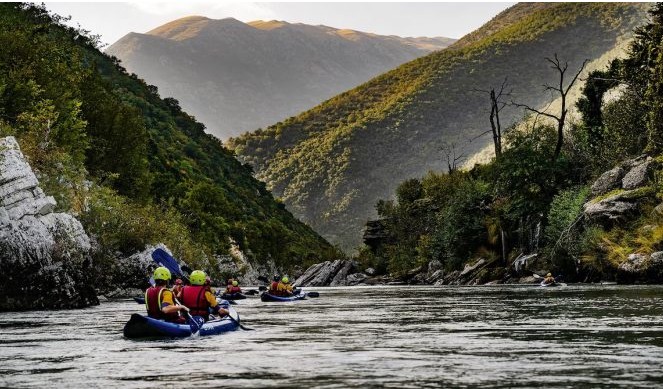
The Vjosa and its distinctive landscapes, biodiversity and the opportunities it creates for local communities are at the center of a feature by the prestigious “National Geographic,” which follows a journey from the river’s source to its mouth at the sea.
National Geographic explorer Nick St. Oegger brings the natural beauty and ecological values of the Vjosa River through a feature report.
The feature reflects the natural beauty of the Vjosa, which runs more than 250 kilometers through Albanian territory, preserving its free-flowing, dam-free course, as well as the important role it plays in the lives of the area’s residents.
“The first time I saw the Vjosa, I didn’t realize I was looking at one of Europe’s last wild rivers. To follow the Vjosa through Albania means getting close to something rare, a river that flows by its own rules. A wild, dam-free river that continually reshapes the land and the people around it. The Vjosa makes its way, traveling over 250 kilometers from source to sea. When you’re behind the wheel, you’re in control.
Everything works in harmony, but the Vjosa flows free.
And always another bend appears, another gorge, another landscape. After the town of Përmet, the valley narrows and the Vjosa picks up speed, flowing toward Këlcyra Gorge. Here I meet Zamon and Alma, local entrepreneurs who have set up a rafting business, making use of the Vjosa’s changing currents.

“The Vjosa is extremely important for the residents of the area. Its tourism potential creates opportunities for many families. Around 400 families earn income from activities such as rafting and kayaking on the Vjosa,” says Zamo.
You cannot control the Vjosa, because you have to know how to read the current and adapt to its free nature. The longer you travel along the Vjosa, the more you notice that the same craftsmanship runs through the entire valley – knowledge and traditions passed down through generations, with a craft rooted in heritage, created by people’s hands with precision and dedication.
After a few more bends, the Vjosa meets the sea. I have arrived at Narta Lagoon, in the Vjosa delta. Here the landscape is calmer, wetlands and water areas formed by the meeting of land and sea. At the lagoon I meet Joni, a local ecologist who knows this place in every detail.
“The Vjosa River changes along its course, bringing sediments, and they accumulate here and create this whole magnificent environment. The most special part is the birds. More than 200 species of birds are counted here. When people came here, they could see thousands of flamingos flying over their heads,” says Joni.
When I began my journey, I was following the course of a mountain river. Since then, I have seen it take many forms, passing through broken gorges, fields with braided channels and wide wetland areas.
When you are on the road, you are in control. But as soon as you get out of the car, the landscape takes the lead – immediately reminding you what “wild” really means, says National Geographic explorer Nick St. Oegger. They