







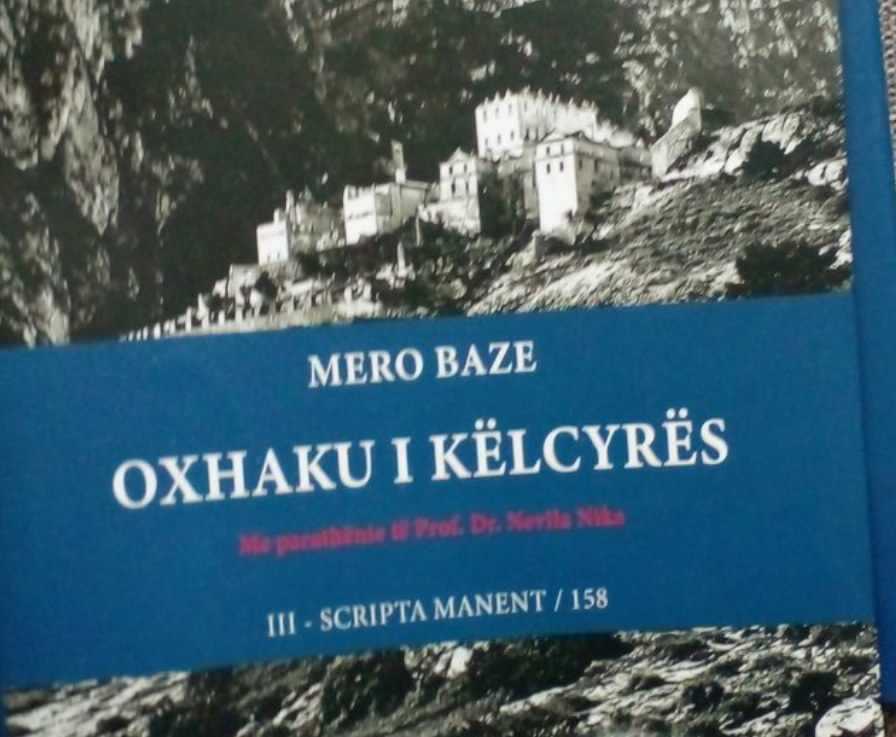
In a Facebook post, the poet, writer and educator Sadik Bejko shared some impressions after reading the book “The Hearth of Këlcyra.” Here is what he writes:
I read it immediately.
For the clearing away of so much phantom and fog that had been blowing into my head for years. These are my places: the castles of Tepelena, Këlcyra, and Berat. Like that infant who wipes the whole house with his body before standing up, so I have trodden these castles, touched them with my eyes, heard about them, sung polyphony, but they have also frightened me, oppressed me, with the damp darkness of historical-fantastical murk, and with the crows and owls in the chambers of ruins and the howling embrasures.
I liked the historian who, through the dusk of the ages, observes the extent of Turkish rule, the conversion and adoption of the Byzantine elites into Islam, the practice of distributing the sultan’s power of timars down to the finest local structures on the basis of three criteria: keep order, collect taxes, provide troops.
Further, the formation of the Albanian clan system, the murderous rivalries and the often blood-soaked marriage alliances.
I liked the typification of the Albanian bey: one of our aristocrats… but also of his own kind, with features of the European aristocracy … like Konica, like Eqerem Bey, Ali Këlcyra, etc.
The book has analyses, unpackings of oral traditions, decoding of legends, correction of historical misconceptions. A cool, doubting mind that brings things down to earth, into the palm of the hand, as far as possible.

“The Hearth…” has another dimension too, more intimate; at times the author is both participant and witness.
In the final chapters, through the portraits and the story of two women, the last women of the dynasty, the historian’s analytical narrative turns into detailed testimony, into emotionally coloured facts, into illuminated sequences like almost cinematic scenes.
Here history is exchanged for literature.
Very restrained, but a pen dipped in tragedy. Tragedies lived by many, many people who did not have the fortune to have their literary or cinematic equivalent in Albania.
I read quickly, without giving myself time to think or even write. These impressions are jotted down as they are, in the act of writing.
Congratulations to the author on this book.