







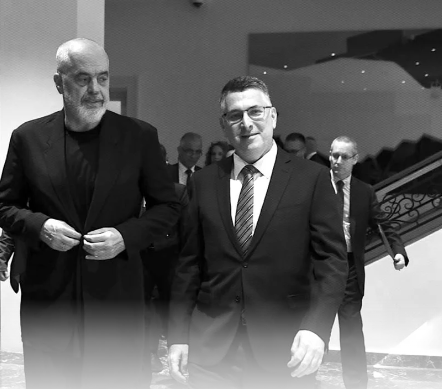
On 12 October, Israeli Foreign Minister Gideon Sa’ar met Prime Minister Edi Rama in Tirana. A day later, on 13 October, the protests escalated into violent clashes. The closeness of these dates raises a question: is this merely a coincidence? The chronology is documented; a link between the two events remains unproven, The Times of Israel writes. In Israel, it is believed that the hand of Turkish President Erdogan lies behind the protests, who has already damaged relations with Prime Minister Rama over the latter’s open affection for Israel.
The question makes sense against the backdrop of the sharp political clash between Ankara and the Israeli government. Turkey has publicly opposed Israel’s policies, describing them as a source of tension and regional instability.
Meanwhile, Tirana’s rapprochement with Israel is public: the cooperation includes cyber defence and other fields of state importance. It is reasonable to analyse how these relations affect Albania’s diplomatic balance.

Turkey sees its partnership with Albania as strategic, and it apparently does not like President Erdogan that Israel has become so deeply involved in Tirana. The latter has also invested in Kosovo’s stability in relation to Serbia. Turkish interests are therefore strong in the Western Balkans.
Apparently, the Rama-Erdogan communication has died, and the fact that journalist Berat Buzhala publicly states that he personally saw people from the Great Mosque in Tirana at the protest, a mosque that is directly financed by Turkey and does not recognise the authority of the Albanian Muslim Community, presents this as a suspicion.
In Albanians’ eyes, Turkey remains a major ally, naturally after the USA.
Yet it is equally necessary not to forget that the protests had begun months before Sa’ar’s visit. Dissatisfaction over education, corruption and coastal projects had been voiced earlier.
If the government has evidence of foreign interference, it must present it and the institutions must investigate. Vague statements about “foreign hands” are not enough. Albanians have the right to know whether someone is trying to exploit their anger, just as they have the right to demand answers from the government about the problems that bring them onto the streets.
The government initially feared the massive protests, but later neglected and forgot them, and the anger subsided until the mountain of violence erupted.
But now the protesters have burned Tirana. There is now a need for a solution to the situation, because if it worsens, it will be worse for the country.