







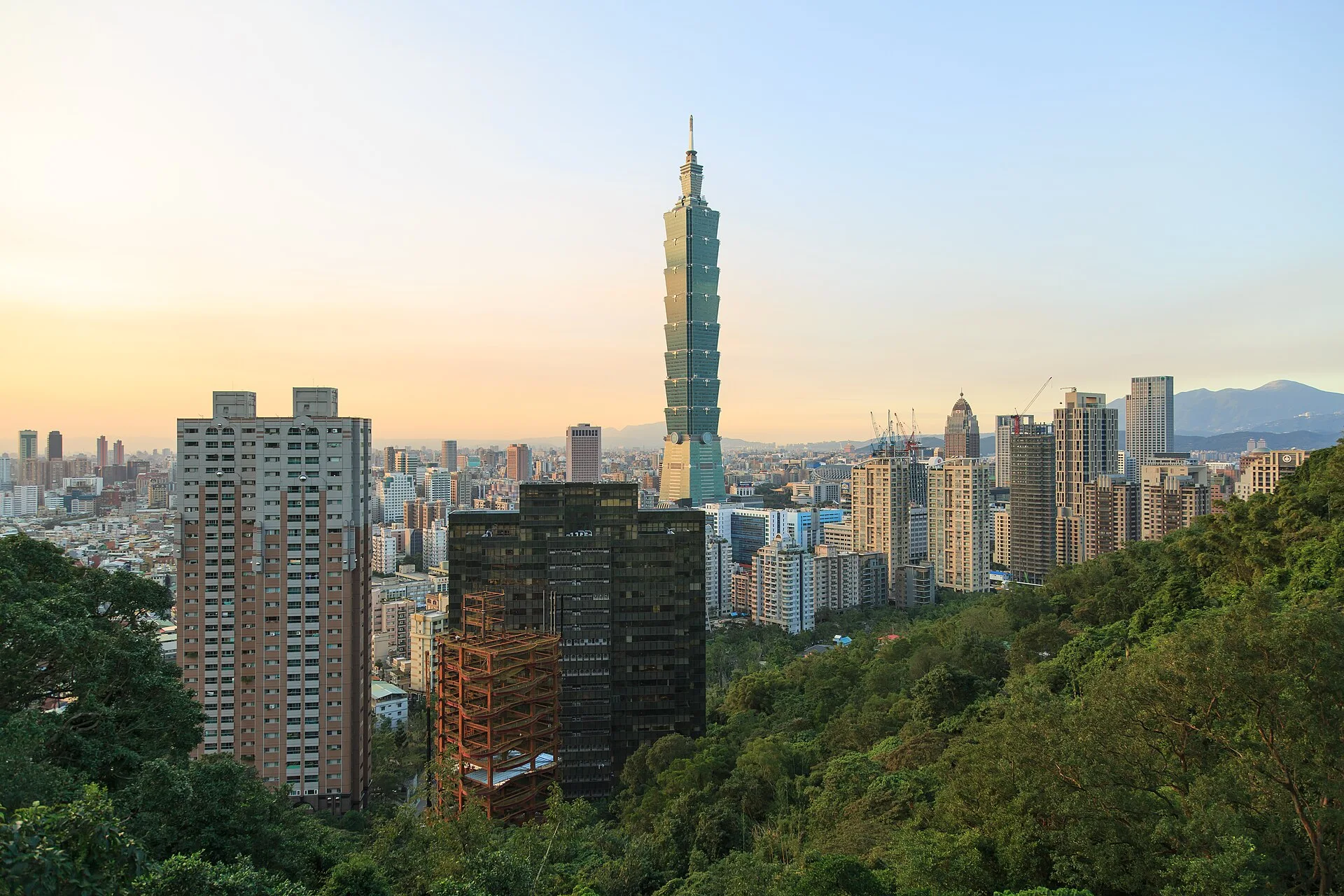
Local elections in Taiwan began on Saturday, with voters choosing mayors and county heads for a four-year term. Polling stations close at 16:00 local time, with results expected by evening.
According to reports, the campaign has focused mainly on transport, childcare and the environment, while the China issue has not been among the main issues in the race. Despite this, Beijing has repeatedly intervened in the public debate around the vote.
Most candidates belong to the ruling Democratic Progressive Party (DPP) or the Nationalist Party, also known as the Kuomintang (KMT). The KMT has traditionally performed better in local elections and supports closer ties with China.
President Lai Ching-te has campaigned for DPP candidates. Meanwhile, the Taiwanese government has warned citizens to be alert to fake news on social media, citing a disinformation campaign from China.
The race for Taipei and the weight of the result
In the race for mayor of Taipei, DPP candidate Puma Shen has been declared wanted by Chinese police on charges of "separatist activity". He started the race as an underdog but has managed to draw large crowds at campaign rallies.
Shen has stated that Chinese police have never contacted him and that, whoever wins, the election in Taipei would be a victory for democracy in the face of pressure from Beijing. If he wins, he would be the first DPP mayor in the capital in almost 30 years.
According to Austin Wang, a political science professor at the University of Nevada, such a result could be seen as "quite humiliating" in Beijing. China considers Taiwan part of its territory under the "One China" principle and has recently increased pressure, threatening force to bring the island under its control.
The current mayor of Taipei and KMT member, Chiang Wan-an, has campaigned against Shen and has also gathered thousands of supporters at his rallies. He is also seen as a possible candidate for future presidential elections.
In the last elections, the KMT won 14 of 22 cities and counties, while the DPP won only five. Analysts have warned that local votes are not a reliable indicator of how people may vote in the 2028 presidential elections.
However, Saturday’s results could influence the KMT’s process of selecting its presidential candidate. The DPP is expected to support President Lai for a second term, while the most likely KMT candidates are outgoing Taichung mayor Lu Shiow-yen and parliament speaker Han Kuo-yu.
KMT chair Cheng Li-wun, whose pro-Beijing stance has also alienated many party members, is also seen as a possible candidate for the party’s nomination. She could face pressure to resign if the KMT performs poorly in the local elections.