







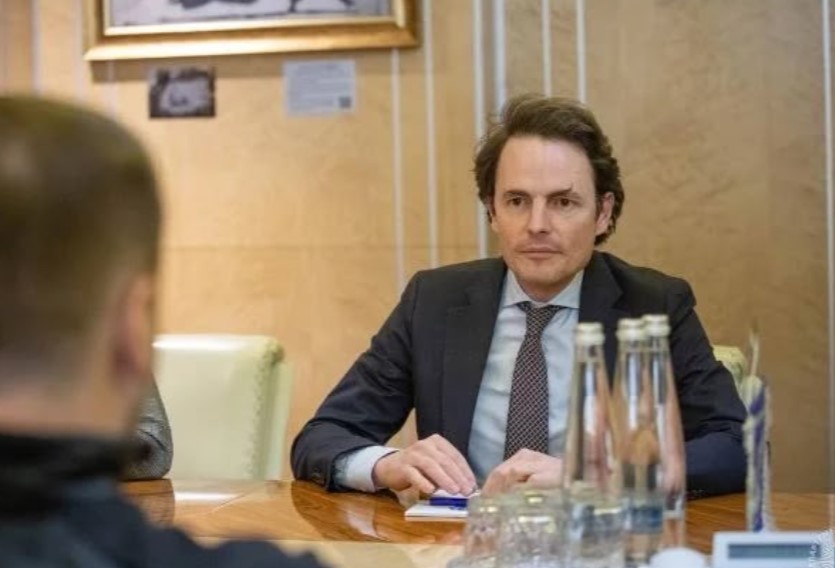
Reforms in the rule of law, the fight against corruption and improving media freedom will be the main priorities of the European Union towards the new government of Serbia. According to Frederik Vesslau, adviser at the European Council on Foreign Relations (ECFR), the demand to return to dialogue with Kosovo is expected to come at a later stage.
He made this warning in an interview for Radio Free Europe, focusing on the challenges of the new majority in Belgrade. At that stage, Belgrade will have to demonstrate a constructive approach towards Kosovo, in the process mediated by the European Union, stressed Vesslau, former adviser to the head of UNMIK, Joachim Rucker.
The victory of the Serb List in the elections in Serbia constitutes a historic moment and an opportunity to change the country's course, after 14 years of rule by the Serbian Progressive Party (SNS), he assessed. According to him, the real challenge for the new majority is not only taking power, but fulfilling promises and implementing the reforms that Serbian society expects.

Brussels will give the new majority time to consolidate and form the institutions. But it expects the future government to take concrete steps in strengthening the rule of law, fighting corruption and reforming the security sector, Vesslau has stressed. These areas constitute a common point between the Serb List and the European Union, while Brussels is ready to offer support to the new government for their implementation.
As for foreign policy, Vesslau does not expect the EU to immediately put pressure on the new Serbian government to impose sanctions on Russia or to recognize Kosovo. However, he recalled that these issues remain important for Brussels and many of the EU member states.
Speaking about relations between Kosovo and Serbia, Vesslau said that the new government in Belgrade must engage constructively in the process mediated by the European Union. He warned that, although Brussels is not expected to seek immediate results on Kosovo, at a later stage it will be essential to revive dialogue and ensure a constructive approach by both sides.
“I hope that at some point a solution will be reached that would serve the interests of Serbia and Kosovo, as well as the entire region,” Vesslau declared. The ECFR associate also expressed the hope that the change of power in Serbia could positively affect relations between Belgrade and Sarajevo as well. According to him, such a development would contribute to regional stability.