







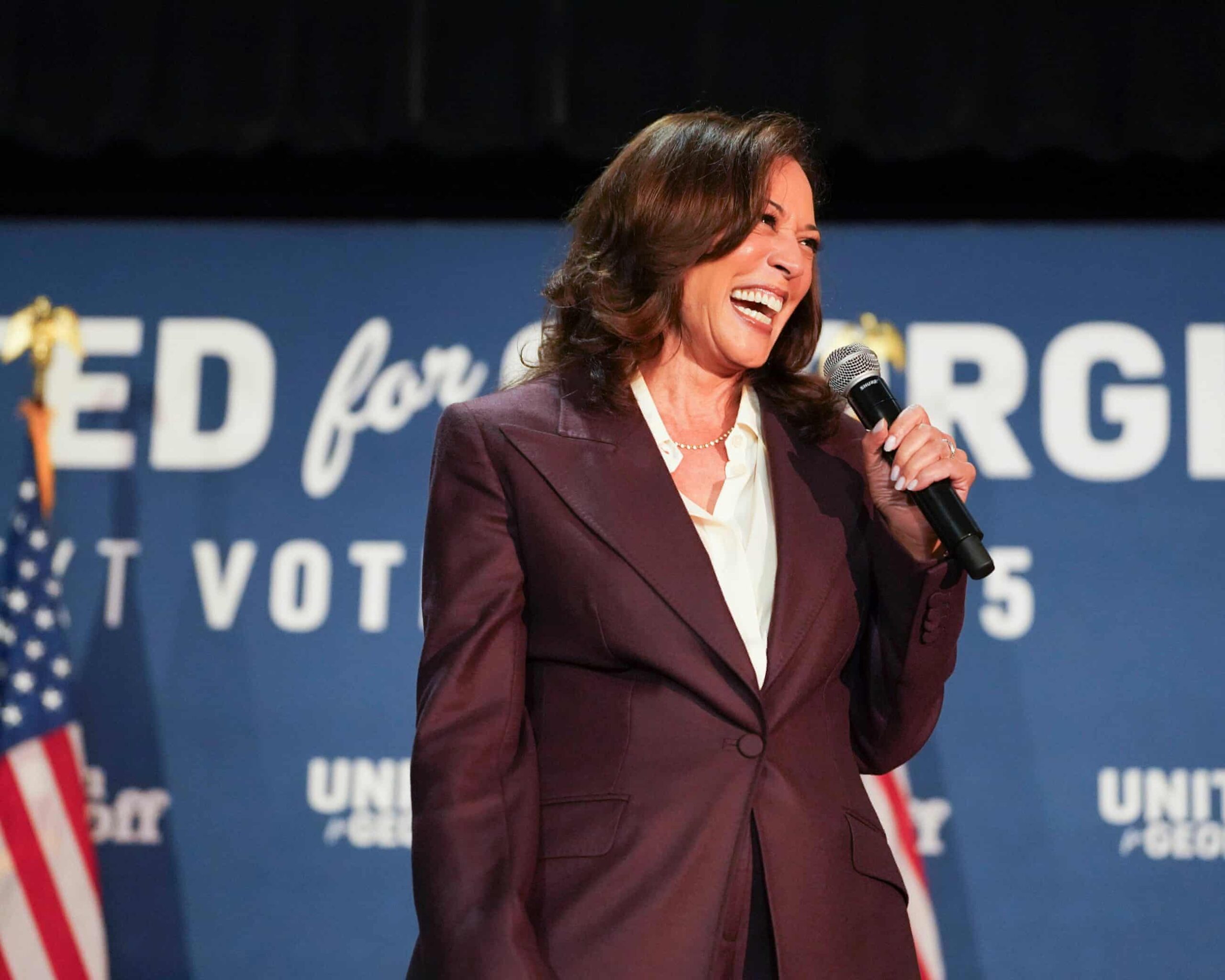
Kamala Harris, a year after her defeat in the presidential election, was greeted with enthusiasm at Clark Atlanta University in Georgia. Students at this historically Black college (HBCU) cheered for their campus, celebrating Harris as a former HBCU student and the country’s first female and first Black vice president. Sanaiya Archer, a student at Spelman College, called Harris “the big sister of the generation”, saying she could see herself in her because of their shared HBCU experience and the importance of having a Black woman on a presidential ticket first.
However, her presidential ambitions have not yet been realized. In 2024, after Joe Biden withdrew, Harris ran a brief 107-day campaign for the White House, but lost. Donald Trump’s return left Democrats shaken, and the party is still looking for its leader to regain power. Harris, forced by Biden’s late withdrawal, has not ruled out another run for the Democratic nomination, but the question remains whether she, as a figure tied to the party’s past, is the right choice for a more successful future.
At Clark, Harris was treated like a hero, telling students: “Never let anyone take your power. Never let anyone tell you who you are. You tell them who you are!” She acknowledged the impact of her defeat on young Black women, saying many had gone through “a range of emotions” such as anger, sadness and powerlessness, but stressed that “that moment has passed”.

In recent months, Harris has rebuilt relationships, campaigning for Democratic candidates in key states. In Mississippi, she backed Scott Colom against Republican Senator Cindy Hyde-Smith in a tight race. In Nevada, she met unionized workers and supported Aaron Ford for governor against Joe Lombardo. She also campaigned for David Crowley in Wisconsin, Chris Pappas in New Hampshire and Abdul El-Sayed in Michigan, a state won by Trump in 2024.
Harris returned to Georgia last week to campaign with Senator Jon Ossoff, who is also mentioned as a possible 2028 candidate. Ossoff, popular in his state, highlighted Trump’s obsession with the vote counts in Fulton County, Philadelphia and Detroit, linking it to his racism and the fact that Black voters were instrumental in his 2020 defeat.
Voter turnout in Georgia has been rising, especially in Black communities, with early voting setting a record of 2.8 million votes. Harris, while channeling the anger of the Black community, has sidestepped questions about her political ambitions. On a podcast with Keke Palmer, she said she had not decided on 2028, stressing the importance of the midterm elections: “’28 doesn’t matter if we don’t do ’26 right: what’s in front of us.”
The past two years have given Harris the opportunity to redefine herself and offer a new vision for the Democratic Party. At a fundraising dinner in Atlanta, she stressed that the country must be fundamentally changed after Trump, not merely repaired. She called Trump the “chief decorator” and the leader of “a deeply corrupt administration”, citing examples from his second presidency and describing it as “the most heartless and corrupt presidential administration in American history”.
Harris stressed that Democrats must not abuse power if they regain it. She called for “relentlessness” in the sense of a determination to use power to deliver on commitments, not cruelty. “We must be uncompromising in delivering real relief. We must be relentless against injustice. We must be intolerant of nepotism and corruption. And we must be intolerant of the status quo, because it is not working for many people,” she said, adding that the party cannot allow process to get in the way of progress.
Students at Clark, such as Carington Hill and Naomi Blakey, expressed a desire for Harris to run again. Blakey, who had just turned 18 and had not voted in the last election, felt her vote could have made a difference. Hill also supported her candidacy, but expressed concern about public prejudice against a Black woman at the top, fearing that “other people would vote for that bad person again”.
Taken from The Guardian US