







When Andrei Ilinbayev last contacted his family on October 3, he said he had passed a medical examination and was preparing to go to war in Ukraine. After that, he stopped responding to their messages.
Later, neighbors told his family that he had gone to be enlisted in the army in Ufa, the capital of the Bashkortostan region in southwestern Russia.
Ilinbayev, who is from a village in Bashkortostan, has special needs due to a serious mental illness that has affected him since childhood, according to his relatives. After his father died, he lived with his mother, who has dementia.
His relatives said they never believed he could understand the consequences of signing a contract with the army.
“When he first told me he was undergoing medical examinations, I thought he was joking. Who would accept him into the army? He is naive,” said a female relative of his for Radio Free Europe, who was identified by the name Marina.

Ilinbayev’s whereabouts and the circumstances of his recruitment remain unclear.
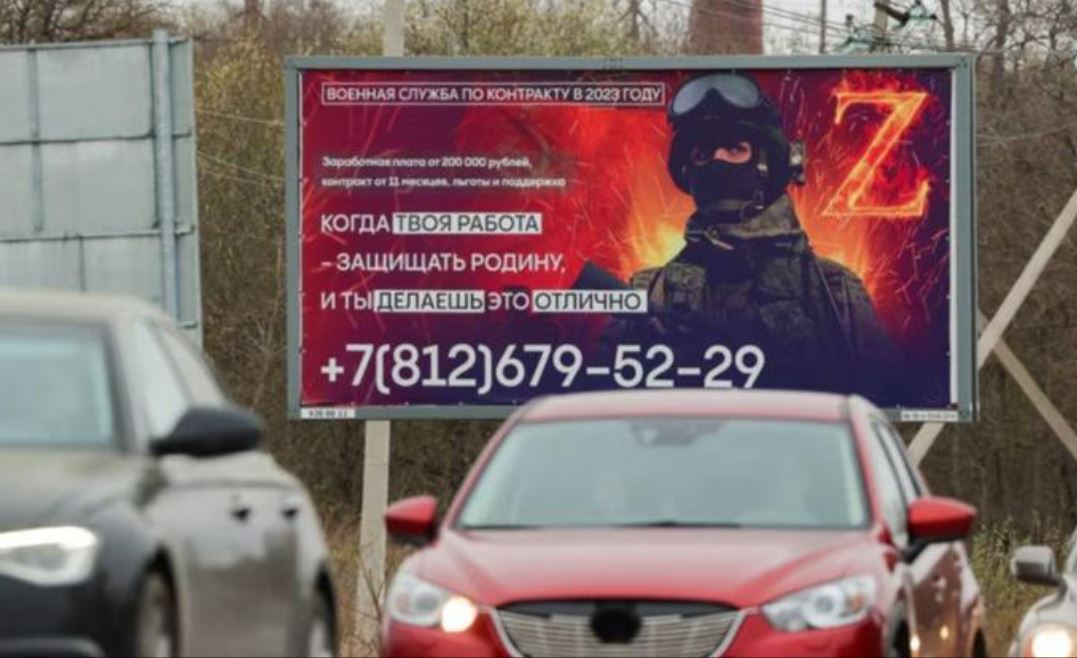
However, his case highlights the human cost of Russia’s recruitment system, which increasingly relies on private companies and intermediaries, who often operate beyond permitted limits in order to strengthen the ranks of an army worn down by the war against Ukraine. This war has left at least 1.5 million people dead or wounded, according to Western intelligence estimates.
Regional and municipal authorities give bonuses to people who bring in others to become contract soldiers. Some recruiters earn up to 1.2 million rubles ($15,300) for a single recruit, according to the independent Russian media outlet The Insider. These sums make the work potentially lucrative in a country where the average salary is around 113,000 rubles ($1,380).
According to human rights activists and former recruiters, massive financial incentives have helped create a recruitment industry in which some of the country’s most vulnerable people may be targeted.
A business built around recruitment
Regional governments allocate funds to organizations that employ subcontractors and individual agents. Recruiters are usually paid when a candidate signs a military contract.
At least 8 billion rubles ($98 million) have been spent on state-funded recruitment financial incentives since the system began to be used at the end of 2024, according to calculations by the independent Russian media outlet Important Stories. This figure, however, is considered not to represent the real value.
In Nizhny Tagil, in the Sverdlovsk region in the Urals, authorities reportedly allocated 100 million rubles ($1.22 million) for recruitment bonuses in 2026, offering, through a regional program, 400,000 rubles ($4,900) for each person they recruited.
In the western city of Penza, spending on these bonuses rose from about 3 million rubles ($36,700) in 2024 to almost 31 million rubles ($379,600) in 2025, according to official figures.
Some payments are considered secret, making it difficult to determine who benefits from the money.
In September, a prosecutor in Nizhny Tagil proposed ending bonuses, arguing that they were encouraging criminal groups and the recruitment of people who have been exempted from military service for health reasons.
However, city authorities rejected the proposal, arguing that the payments were helping to meet recruitment targets. At the end of October, the city banned municipal and state employees and officials from receiving bonuses, but authorities kept the scheme in place.
Vulnerable people
Human rights activists say recruiters target people who are vulnerable to pressure, including those with mental disorders, addictions, large debts, or few relatives who could intervene to protect them.
According to activists and former recruiters interviewed by REL, information about people who could be recruited may come from employees of medical institutions, banks, debt collection agencies, bailiff services, and organizations dealing with housing and municipal services. These claims could not be independently verified.
One human rights activist, identified by the pseudonym Semyon, said he had received dozens of complaints about people with mental health problems being sent to a recruitment center in Ufa.
According to Semyon, in one case, a young man with moderate intellectual disability, whom a court had legally declared incapable, was reportedly taken from his home and sent to the recruitment center.
According to Article 20 of Russia’s List of Diseases, moderate intellectual disability requires classification in category D, which makes anyone in this category ineligible for military service.
Semyon claimed that a psychiatrist had declared the young man fit for military service and that someone else had signed the contract in his name.
“The recruiters lured him out of the house,” Semyon said.
This contract is being challenged in court. The claim that the contract was forged has not yet been proven.
The center has recruitment officers, doctors and bank representatives, enabling candidates to undergo medical checks, complete documents and receive bank cards within a single day.
Internal documents of the recruitment company Agency for Communication Strategies, published in October by The Insider, list vulnerable social groups as possible targets.
Among them are people facing bankruptcy, clients of microfinance institutions, former prisoners, residents of the poorest areas, and people dependent on alcohol, drugs or gambling.
How do they deceive?
Recruitment companies also advertise jobs as drivers, transport workers, cooks or drone operators, sometimes promising free housing, food and help with completing paperwork.
Nikolai, a former recruiter who said he had worked for about 18 months at the Voevoda recruitment center, told REL that newcomers attended short courses on how to convince candidates.
The training included instructions on “how to lie to people convincingly,” Nikolai said.
He described job advertisements in which candidates were promised they would be trained as drone operators, rather than being sent to assault units.
“Most likely, they will send them to assault units,” Nikolai said.
According to him, recruiters targeted people whose financial situation made it difficult for them to refuse such offers.
Recruiters are not always paid
Intermediaries can also be exploited. Nikolai said companies began delaying payments to agents in 2025, prompting recruiters to sue them.
In November 2025, the independent Russian media outlet Verstka reported that at least five recruiters had sued the military recruitment company Expert, demanding between 1.2 million and 5.4 million rubles (14,700 to 66,100 dollars) in unpaid commissions.
For the payment delays, the company blamed regional clients, who had not transferred the money they owed.
Recruiters may have difficulty proving that a candidate has signed a contract. After the candidate is submitted for a medical examination, they may have limited access to the documents needed to claim the commission.
Nikolai described this arrangement as follows: “You deceive people to take their money, and then they do the same to you.”/REL