







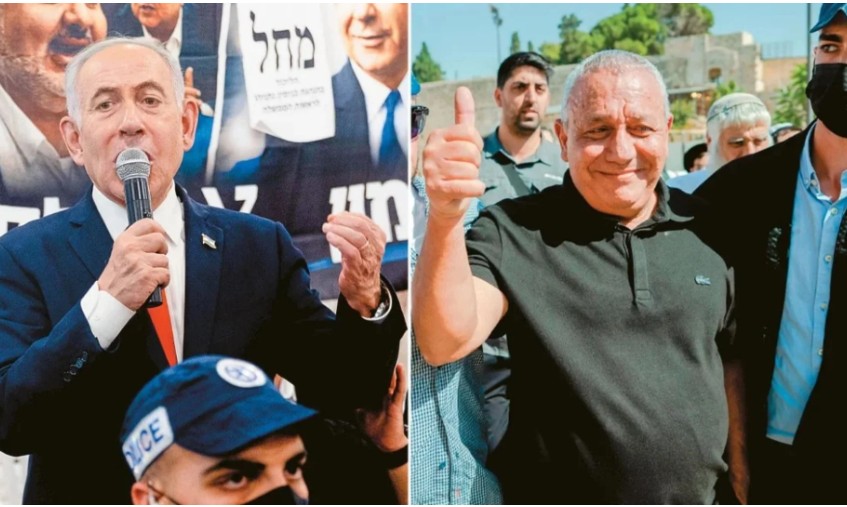
Today, on October 27, polling stations opened in Israel in an election that could end the decade-long rule of Benjamin Netanyahu, though not necessarily bring about a change of government.
Israelis are heading to the polls after three years of war, successive military operations and a deep domestic crisis that began with Hamas’s attack on October 7, 2023.
The latest pre-election polls gave the lead to former Chief of Staff of the Israel Defense Forces, Gadi Eisenkot, but leading in the polls does not automatically mean he will be able to form a government. Netanyahu, despite his significant decline, retains a strong electoral base and, above all, a network of political alliances that allows him to claim his place in power, even if Likud does not emerge as the main party.

Netanyahu is seeking another term, facing an opponent who knows Israel’s national security system better than many others. Eisenkot has managed to attract a considerable share of voters who want a change of leadership without a radical review of the country’s security strategy.
His rise does not reflect a general shift in Israeli society toward the left. Rather, it reflects an effort to seek a different form of governance, with figures who come from the same military and political world that has shaped Israeli politics for decades.
This very feature explains why opinion polls show an electoral contest with a possible winner, but without a clear governing outcome. Eisenkot’s party may come first, Likud may retain a particularly resilient electoral base, but neither of the two main political camps has, according to most measures, the 61 seats needed for an absolute majority in the 120-member Knesset.
Thus, Israel risks facing a familiar political deadlock, but this time with far greater regional and international stakes.