







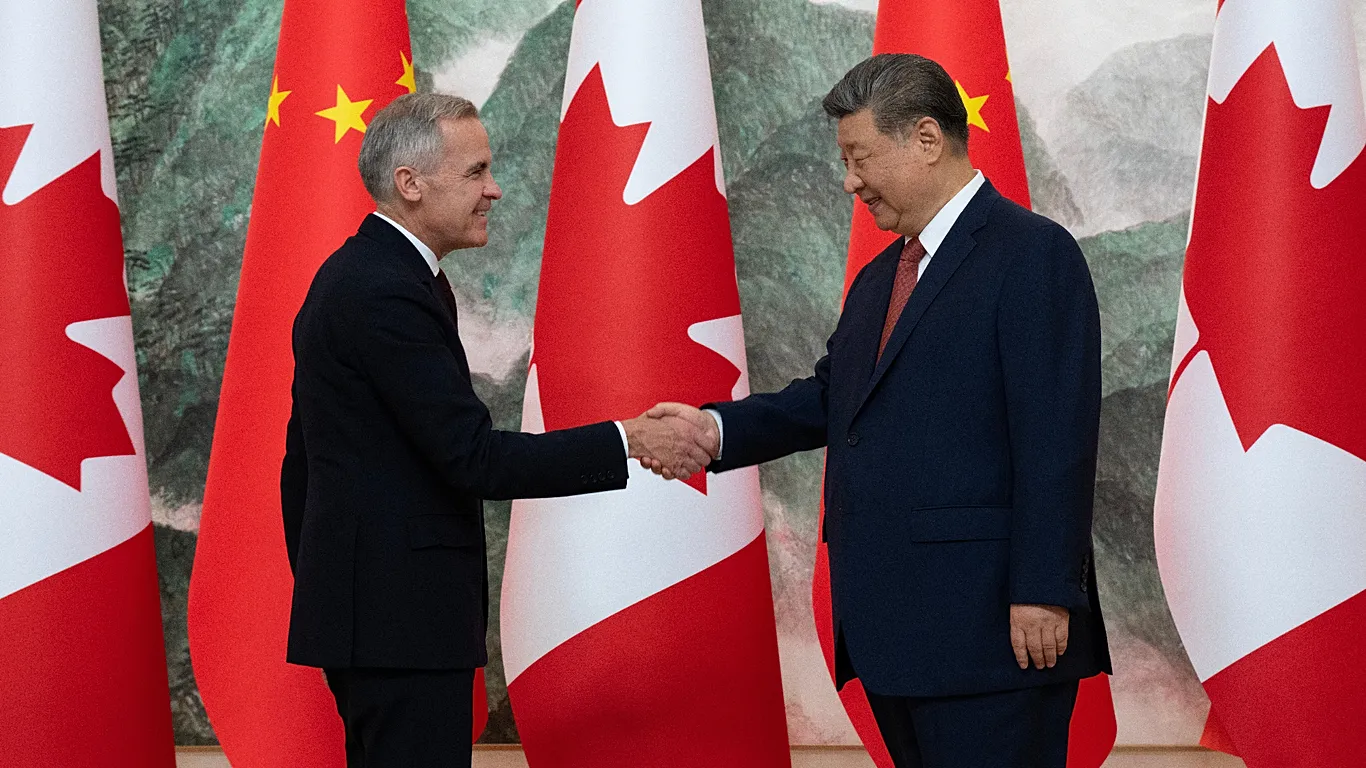
Canada and China have agreed to ease tariffs on more goods, with Beijing offering relief for Canadian pork and seafood, while Ottawa expands exemptions for Chinese steel and aluminum. The announcement followed talks between Canadian Prime Minister Mark Carney and Chinese President Xi Jinping in Shenzhen on Tuesday, ahead of the Asia-Pacific Economic Cooperation summit, according to Euronews.
The agreement comes amid trade tensions with the US and aims to ease Canada’s tariffs on China for certain categories of goods, while both sides seek to increase trade exchanges. The move affects Canada-China trade relations, which have been strained for years due to reciprocal tariffs and other disputes.
The Canadian Prime Minister’s Office said China will suspend additional 25% tariffs on most frozen pork cuts and some seafood products, from January 1, 2027 to December 31, 2028. The measures cover goods worth about 400 million Canadian dollars (254 million euros) in Canadian exports in 2024, before the additional tariffs were imposed.

The seafood products covered include certain frozen cold-water shrimp and prawns, some mollusks, sea cucumbers and Greenland halibut. In return, Canada will maintain existing tariff exemptions for selected Chinese steel and aluminum products until the end of 2028.
It will also introduce full or partial exemptions for 32 other product categories where Canadian supply is insufficient or unavailable. The agreement builds on measures announced earlier this month, which extended Chinese tariff relief for Canadian canola meal, peas, lobsters and crabs until 2028.
Canada had also announced at that time the extension of existing exemptions for metals. Carney has sought to expand trade with other countries as US President Donald Trump’s tariffs hit Canadian industries. Foreign Minister Anita Anand said on Wednesday that Canada is pursuing a gradual approach to rebuilding relations with China, while working to reduce dependence on a single trading partner.
Speaking in Shenzhen on Wednesday, Carney said Canadian exports to China had increased by more than a third this year. He added that Ottawa remains focused on reaching a trade agreement with Washington. “The United States fundamentally changed its trade objectives and we are focused on reaching the right agreement for Canadians,” he told reporters.
On Monday, Carney had said Canada could turn to Chinese automakers if talks with the US fail to protect the integrated North American auto industry, stressing that negotiations with Washington remain his priority. Canada and China began easing trade restrictions under an agreement reached during Carney’s visit to Beijing in January.
Ottawa agreed to initially allow up to 49,000 Chinese electric vehicles per year at a reduced tariff of 6.1%, while Beijing agreed to lower tariffs on Canadian agricultural products, including canola. Carney also announced a Canadian trade mission to China in 2027 and a joint initiative to help small businesses sell through Chinese online shopping platforms.