







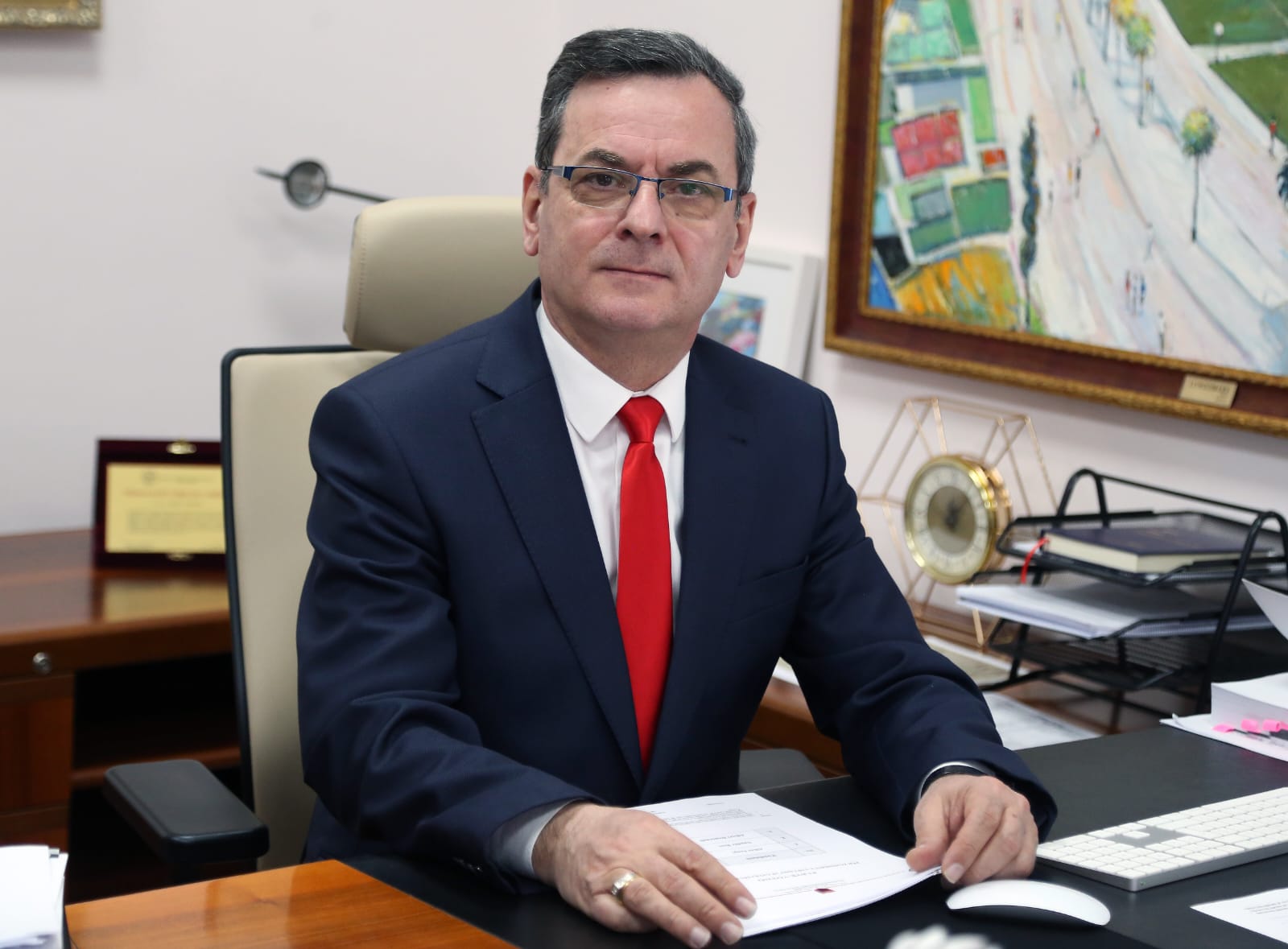
Reflection at the end of my mandate as Chairman of the Supreme Court
At the end of six years leading the Supreme Court, I feel a responsibility to speak about what we achieved, what remains undone, and what this role has taught me. Looking back, I remember the people I worked with, the difficult decisions, and the moments when we found strength in one another to carry on.
On 17 October my mandate as Chairman of the Supreme Court ends, while my service as a judge continues, together with the responsibility toward people who are awaiting justice.
In 2020, when this responsibility was entrusted to me, the Supreme Court was in one of the most difficult periods in its history. With only one judge in office and over 35,000 pending cases, its ability to fulfil its constitutional mission was called into question. We had to rebuild the Court’s functioning and demonstrate, every day, that the belief in its revival rested on dedication and our shared work.
Today, the Supreme Court is functional, with consolidated judicial activity and a more active role in the unification and development of judicial practice. The reduction of the historical stock of cases by around 68 percent is the result of extraordinary shared work.

The revival of the Court also required care for its heritage and the strengthening of institutional cooperation. Restoring historical memory, honouring judges across generations, and publications on case law have strengthened its identity. Cooperation with higher courts has expanded its international presence, while involvement in the preparations for the World Law Congress 2027 in Tirana has opened a new perspective for this cooperation.
I feel pride in these achievements, but I know that for the citizen who still awaits justice, no overall result replaces the answer to his or her own case. Behind every file there is a person, a family, a right waiting to be recognised. Therefore, reducing backlogged cases matters when it shortens the waiting time and puts an end to the uncertainties that weigh on people’s lives. Justice fulfils its mission when it decides fairly and on time.
This balance also includes what we did not achieve. Many cases still await review, and some processes could have moved faster. For what remains unachieved, I feel regret and accept the share of responsibility that falls to me.
The experience of these years has convinced me that leadership requires listening even when you are convinced of your position, respecting independent opinion, and making difficult decisions. High demands make sense when they are accompanied by attention to difficulties and recognition of everyone’s efforts.
These years have also brought strong confrontations beyond the administration of the Court, especially regarding the renewal of the Constitutional Court. The end of a constitutional mandate could not depend on the wishes of the one who was supposed to leave, nor could the replacement and appointment of a judge be conditioned by pressures of any kind. The responsibility of the office required timely decisions, based on the Constitution, the law and verifiable facts. Not every circumstance could be made public at that time. I did not withdraw, convinced that the independence of the process had to be protected precisely when pressure was greatest, opposition was strong and support was lacking.
The value of these decisions goes beyond resolving a deadlock. They protected the binding force of the Constitution and reinforced the principle that its observance stands above individual wills and momentary interests. These confrontations have convinced me that institutional responsibility requires acting at the right time and bearing the consequences of your position.
This conviction has also guided my positions on the drafting of the Criminal Code, the constitutional guarantees of magistrates, the resolution of the blockage of salaries, the safety of judges and the protection of personal liberty. Public words had to be accompanied by institutional action. Faced with politics, from any side, the principle has remained the same: the independence of the court and the dignity of the judge cannot be subordinated to the interests of the day.
I have spoken whenever I judged that the independence of the court and the dignity of the judge were being put at risk, regardless of where the pressure came from. I have also demanded that the institutions of justice itself fulfil their responsibilities. I have publicly voiced concerns to the High Judicial Council about the need for stronger leadership, for taking responsibility, for working conditions, for security in the courts and for the institutional protection of judges. Protecting the judiciary requires us to openly acknowledge the shortcomings within it and to seek their correction. Only in this way are institutions strengthened and do they deserve the trust of the public.
I have respected reasoned criticism, even when it has been harsh. It obliges us to give explanations and helps us improve. As for accusations, my position is equally clear. Whoever raises an accusation must bear responsibility for its truthfulness. Repeating a falsehood does not turn it into a fact. Any verification of my work and integrity is welcome.
The attacks have also had personal costs. They affect the person and his family, however strong one’s conviction in honest work may be. They have not been easy. I have experienced them as a human being, even when I chose not to respond publicly.
I have believed that the strength of convictions is proven through consistency and decisions, without the need for noise. I have not allowed personal attacks and provocations to dictate my words, to change my decisions or to pull me away from fulfilling my duty. Restraint was a conscious choice to preserve the dignity of the office, but when constitutional principles and the independence of the judiciary were violated, I spoke and acted with determination. Dignity required me not to respond to every attack. Responsibility did not allow me to remain silent or to withdraw when a decision had to be made.
In these challenges, the support of the people I have worked with has given me strength and reminded me how much their trust is worth. My deepest gratitude therefore goes to my fellow judges, legal advisers and the administration. Behind every shared achievement stand the long working hours, the fatigue, and their willingness to take on one more task. The respect and closeness they have shown me, especially in difficult days, have made me feel valued and proud to have worked with them. I thank them wholeheartedly for their dedication and human warmth, which made this journey unforgettable.
I am grateful to all those who trusted us and supported us, as well as to those who criticized us justly. I have felt their trust as a responsibility to justify every day with work and dignity. I owe a special thank you to my family for their patience and presence in moments the public does not see. I know how much time this duty has taken and how many worries it has shared with me. At the conclusion of this mandate, I also deeply feel its part in everything I have been able to do.
With gratitude for the path traveled, I hand over the leadership of the Supreme Court to my colleague, Ilir Panda. His experience, professional seriousness and human qualities convince me that he will fulfill this responsibility with dignity. He will have my full support, with respect for his authority and independence in leading it. His success will be the success of the Court and a particular source of satisfaction for me.
I trust the people who will continue this work, because I know their dedication and their ability to face difficulties. The value of what we have built will be proven in its continuity, in its achievements and in the best possible service to citizens. To this goal I will continue to serve, alongside my colleagues, with the same dedication.
I would like these years to be remembered for the justice we managed to deliver to people, for the resilience when independence demanded it, and for the courage to acknowledge how much still remains to be done. I hand over the leadership with gratitude and with the peace of mind that I did not shy away from responsibility. As a judge of the Supreme Court, I will continue to listen carefully, judge impartially and protect the independence of the judiciary. My responsibility continues before every person who seeks justice.
Sokol Sadushi
Tirana, 17 October 2026