







By Ylli Manjani
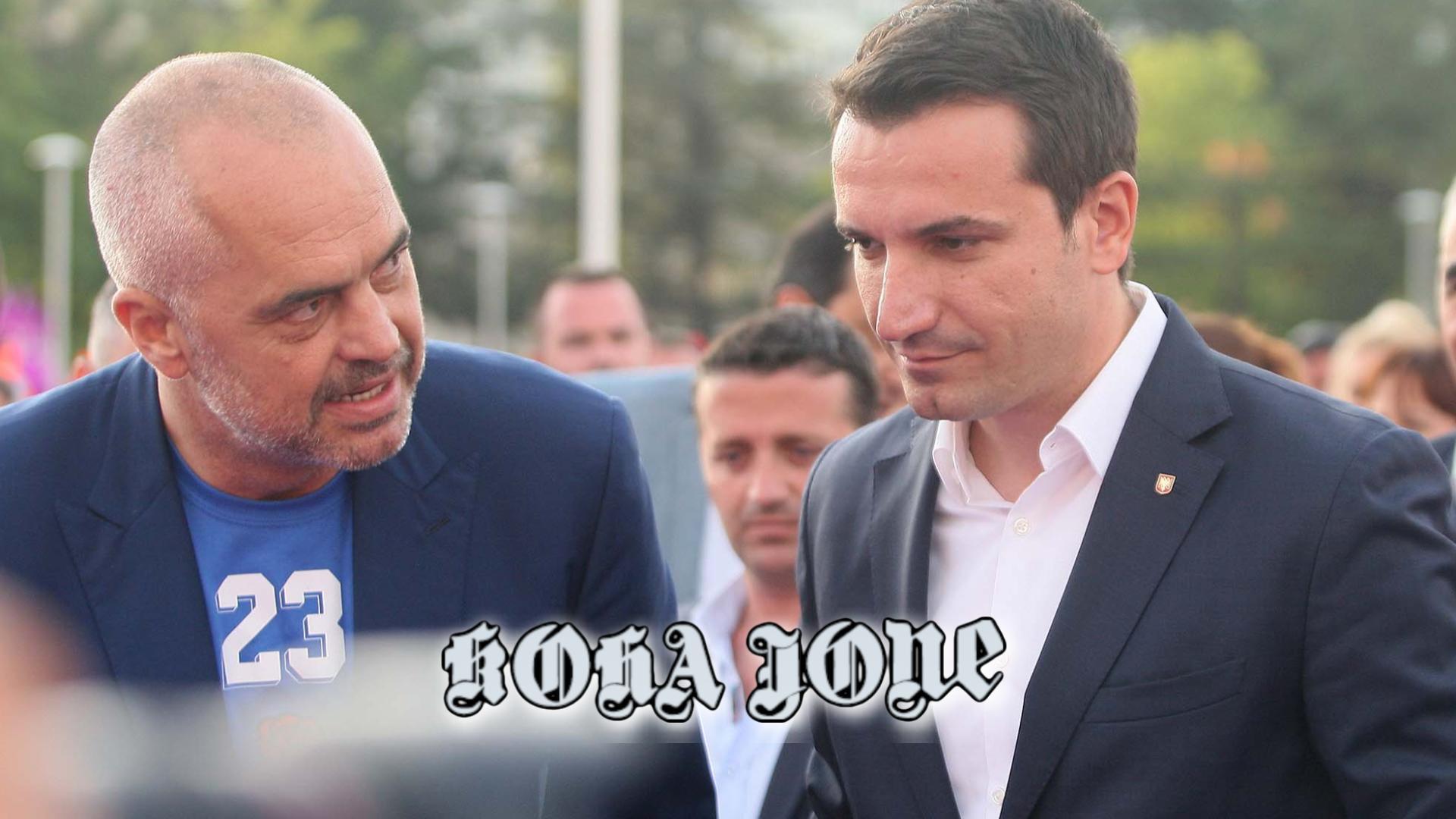
Erion Veliaj has already moved into direct political accusations against Edi Rama.
It took a transfer from one prison to another and then a visit by the Minister of Justice for this clash to take the form of a public conflict.
But I don’t think it matters much whether Rama arranged these “bad things” for Veliaj or not. Whether he did or didn’t, the fact is that the political reaction is Veliaj’s. And it is precisely this reaction that deserves to be read.
In truth, Erion’s accusations seem to have much deeper roots than dissatisfaction over the transfer of his cell. Even less can they be explained by a failure to communicate a transfer order or by Toni Gogu’s visit to the prison.
Veliaj is speaking about dignity, political positions, the failed flamingo resolution, the Municipality of Tirana and his relationship with power. His political message to Rama is “leave!”
So, we are no longer simply in a debate about prison administration. We are faced with the articulation of a political position against the man who promoted and supported him for years.

The question is: are we dealing with a political reckoning, a defense strategy in the face of justice, an outburst of accumulated resentment, or the emergence of a genuine political enmity?
Is this an irreconcilable enmity? We are entitled to ask this question, because Albanian politics has known many enmities that were declared eternal and ended in warm friendships. Even Erion and Rama have often played this game of enemies who make peace as friends…
Nevertheless, as far as can be read from public developments, all explanations remain possible.
There may be a political miscalculation. A long isolation, detachment from the exercise of power and the need to identify those responsible for the situation may influence how a political reaction is formed. But this is a hypothesis, not a proven explanation of Veliaj’s motives. In prison, every moment becomes the question “who did this to me?”
There may also be a defense strategy in the face of justice. Presenting the conflict with political power as an important circumstance of the criminal case may serve to raise claims about the purpose of the criminal prosecution. Even the jurisprudence of Strasbourg recognizes the importance of hidden political aims in restricting freedoms, especially within the framework of Article 18 of the Convention. But a political conflict, however harsh, does not in itself prove that the criminal prosecution is politically motivated. All the more so since Veliaj knows very well who Nesti Angoni is, and he is not Rama. Nor do we know of any anger of Rama toward Plarent Ndreca, Veliaj’s lawyer…
It may also be resentment. A human reaction to the loss of power, isolation and a sense of abandonment. Sometimes politics is not only calculation. It is also anger. You lose your temper and it bursts out. All the more so when you are in isolation.
But the possibility of a political enmity with older roots cannot be ruled out either.
Veliaj has long been seen as one of the figures with ambitions for the future of the Socialist Party. In this context, the relationship with Rama can be analyzed not only as a relationship between promoter and promoted, but also as one between a leader who continues to hold power and a politician who may have aimed to inherit it.
Here the conflict takes on a different meaning.
Efforts to replace Veliaj at the Municipality of Tirana are a political element that may have deepened the clash. However, whether they constitute evidence of a deliberate enmity or a consequence of institutional developments is a matter that requires more than interpretation. I don’t believe the name of Arbër Hajdari is an element of enmity between them…
So, miscalculation or enmity?
Perhaps the question has no single answer. In politics, calculation, resentment, ambition and enmity can coexist. Indeed, they often feed one another.
Where this clash may lead, no one knows.
But our political history, distant and recent, gives us two reasons to be careful.
First, when political enmities are mixed with state power, the heaviest consequences may fall on the one who remains without power. That is why justice must stay outside these relationships, regardless of who governs and who is in prison.
Second, political enmities are not necessarily eternal. Today’s enemies may become tomorrow’s friends, without feeling the slightest need to give the public an explanation.
And if, in the end, the restoration of a great political friendship depended on changing a prison cell, then that would be the most Albanian part of the grotesque.
A story that starts as a conflict over power, continues as a battle for dignity and ends as a negotiation over accommodation in prison, is truly absurd.