







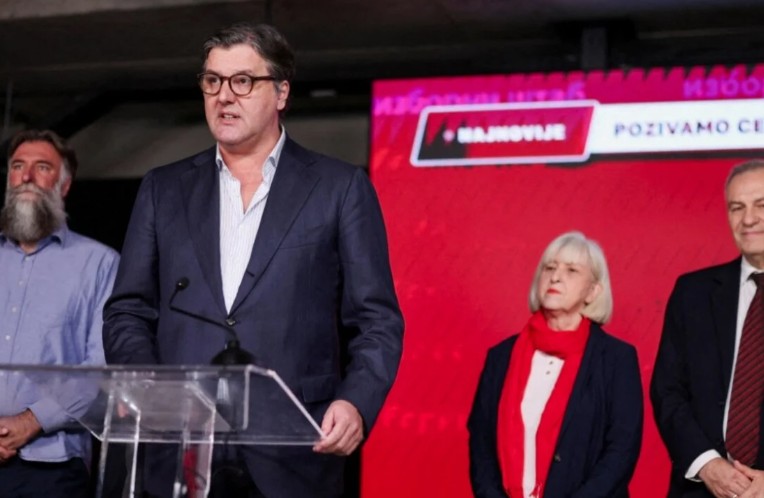
Aleksandar Vučić has conceded defeat in the parliamentary elections of 25 October in Serbia, saying he expects the Student List to win a majority in the new parliament.
According to preliminary estimates by CRTA, the Student List leads with 51.47 percent of the vote, compared with 40.42 percent for the “Aleksandar Vučić – Serbia United” list. These are not official final results.
The Student List emerged from the student protest movement against corruption, which began after the collapse of the railway station canopy in Novi Sad in 2024, in which 16 people lost their lives. It has no single leader: students organize through plenums, where decisions are made collectively, and for the elections they backed a list of candidates from various professional and social fields.

But what does the Student List plan for Kosovo?
During the campaign, candidates of the Student List spoke in favor of reviewing all agreements reached in the dialogue on normalizing relations with Kosovo, bringing back the question of its status to the United Nations, and making decisions only after consultations with the Kosovo Serbs.
It remains to be seen whether they will stick to these positions after the elections.
In public statements in Serbia, which Radio Free Europe analyzed before Sunday’s election, the common position of this political movement, which emerged from the student protests against corruption, is: “Kosovo is an integral part of Serbia, as written in the country’s Constitution.”
Representatives of this movement symbolically carried the Serbian Constitution with them during the campaign, with the message that they would defend it and act only in accordance with it.
Official Belgrade does not recognize Kosovo as an independent state, but negotiations on normalizing relations, mediated by the European Union, have been held since 2011. Within this framework, dozens of agreements have been reached, which many political analysts say amount to a “de facto” recognition of Kosovo’s independence.
One of the most recent agreements, accepted at the political level by Albin Kurti and Aleksandar Vučić, is the Agreement on the Path to Normalization of Relations between Kosovo and Serbia, also known as the Basic Agreement, agreed on 27 February 2023 in Brussels, following a Franco-German proposal. It provides for respect for territorial integrity and a commitment by Serbia not to oppose Kosovo’s membership in any international organization. The annex for its implementation was agreed on 18 March 2023 in Ohrid and is known as the Ohrid Annex.
Kosovo, for its part, accepted the obligation to give Kosovo Serbs a certain level of self-management, namely to establish an Association of Serb-majority municipalities.
What now?
Kosovo Prime Minister Albin Kurti conditions the continuation of high-level political dialogue on Serbia’s extradition of Milan Radoičić, who took responsibility for the armed attack in Banjska.
The Student List, which may determine Serbia’s state policy over the next four years, has so far not expressed a clear position on this issue.
Kritikat janë drejtuar kryesisht ndaj Listës Serbe, partisë kryesore të serbëve në Kosovë, të formuar me mbështetjen e Partisë Përparimtare Serbe dhe të Aleksandar Vuçiçit. Deri në sulmin në Banjskë, Millan Radoiçiç ishte nënkryetar i kësaj partie.
Megjithatë, largimi i Vuçiçit nga pushteti dhe ardhja në pushtet e Listës Studentore mund të sjellin ndryshime në mënyrën se si Beogradi ushtron ndikim politik te serbët e Kosovës, veçanërisht përmes Listës Serbe. Ndikimi i Serbisë, megjithatë, shkon përtej saj: për mijëra serbë të Kosovës, institucionet e financuara nga Beogradi janë burim vendesh pune, pagash, pensionesh dhe ndihmash sociale. Arsimi dhe shëndetësia vazhdojnë të funksionojnë me financim nga Serbia dhe të punësojnë mijëra pjesëtarë të komunitetit serb.
Serbët nga veriu i Kosovës duke pritur për të votuar pranë një qendre votimi në Rashkë të Serbisë.
Në Listën Studentore ishin edhe katër përfaqësues të Universitetit në Mitrovicën e Veriut, i cili funksionon në sistemin e Serbisë. Mes tyre ishte edhe docenti i Fakultetit të Mjekësisë, Jugoslav Gashiç, i cili ka folur për gazetën beogradase “Danas” për integrimin e mundshëm të institucioneve arsimore dhe shëndetësore që funksionojnë në sistemin e Serbisë në zonat e banuara me serbë në Kosovë.
“Nëse ai [integrimi] është vetëm regjistrim në të ashtuquajturin sistem të Kosovës, për mua është i pranueshëm, por integrimi si kosovarizim është absolutisht i papranueshëm”, tha ai.
Kosova e ngriti këtë çështje në shtator të vitit të kaluar, me arsyetimin se sistemi i dyfishtë është i paqëndrueshëm, ndërsa bashkësia ndërkombëtare këmbëngul që integrimi eventual duhet të zhvillohet në konsultim me komunitetin serb. Bashkësia ndërkombëtare i ka kritikuar edhe më herët veprimet e Kosovës për mbylljen e institucioneve të Serbisë, pa siguruar mënyra alternative për ofrimin e shërbimeve për qytetarët.
Marko Savkoviç vlerëson se infrastruktura politike e ndërtuar gjatë pushtetit të Vuçiçit do të vihej në pikëpyetje me largimin e tij.
“Ajo infrastrukturë do të përballej me kriza që do ta kishte shumë të vështirë t’i kapërcente: kriza financimi, kriza udhëheqjeje dhe kriza identiteti”, kishte thënë Savkoviç, bashkëpunëtor i Qendrës për Çështje Ndërkombëtare dhe të Sigurisë në Beograd, për programin Expose të Radios Evropa e Lirë në fillim të tetorit.
Aleksandar Vuçiç gjatë fjalimit të dorëheqjes nga posti i presidentit, 27 shtator 2026.
Kjo nuk nënkupton ndërprerjen e mbështetjes së Serbisë për serbët e Kosovës, por ngre pyetjen se në çfarë forme do të vazhdonte ajo dhe sa do të mbetej e lidhur me kontrollin politik nga Beogradi.
Për Sonja Biserkon nga Komiteti i Helsinkit për të Drejtat e Njeriut, ndryshimi i pushtetit mund të krijojë hapësirë për një qasje tjetër.
“Për serbët e Kosovës do të ishte e rëndësishme që një pushtet i ri në Serbi të kishte një qasje realiste ndaj tyre, t’i ndihmonte ta forconin pozitën e tyre në Kosovë dhe t’i orientonte drejt dialogut me Prishtinën. Kjo do të ishte zgjidhja më e mirë për ta”, kishte thënë Biserko për programin Expose të Radios Evropa e Lirë.
Meanwhile, in a debate on Serbia’s public broadcaster, Jugoslav Gashiç said that if the Student List comes to power, it will insist that all agreements signed with Kosovo be subjected to parliamentary procedure and review by the Constitutional Court, with the possibility of revising them.
For the moment it is not clear whether this would mean an attempt to legally challenge obligations taken earlier, their political revision, or a change in the way Belgrade implements them.
Political scientists who follow relations between Kosovo and Serbia, Ognjen Gogiç and Aleksandar Shljuka, have previously assessed for REL that future authorities in Serbia will not be able to withdraw from the dialogue, because such a move would risk relations with the European Union.
Memorandum for Kosovo
In mid-year, at one of its rallies, the Student List also published the Memorandum for Kosovo, in which Kosovo is treated as “an inalienable and integral part of the Republic of Serbia”.
A part of public opinion in Serbia criticized the text of the memorandum, arguing that the Serbian Progressive Party cannot be defeated with nationalist policies. The Memorandum for Kosovo contains four points.
One of them states that the Kosovo issue “cannot be resolved in isolation, but only within the complex developments of the international community”, and that authorities in Serbia should “cooperate actively and constructively with all relevant international organizations” to find a sustainable solution “within the framework of their Constitution”.
At the end of September, the students also published an episode of their election campaign titled “The Betrayal of Kosovo”.
Their criticism of Vučić is not that Serbia should recognize Kosovo. They criticize him for developments that occurred during his rule: from the removal of license plates and the Serbian dinar in Kosovo to the closure by Kosovo authorities of institutions that functioned under Serbia’s system.
However, the position of all governments after the fall of Slobodan Milošević’s regime, that Kosovo is part of Serbia, is also shared by the majority of Serbia’s citizens. According to a 2023 survey by the Institute for European Affairs, more than 50 percent of citizens expressed opposition to Kosovo’s independence.
Since opposition to Kosovo’s statehood did not begin with Vučić, according to Marko Savković, and is unlikely to end with him.
Savković told Radio Free Europe that the political space in Serbia for a fundamentally different approach to Kosovo’s status remains very limited.
“When it comes to opposing Kosovo’s statehood itself as a concept, this is certainly state policy, and some continuity can be expected here, whoever is in power in Serbia. Political options that accept the de facto situation, because Kosovo de facto is a state, are few and are on the political margins,” Savković says for Radio Free Europe’s Expose program.
Sonja Biserko does not expect the approach to Kosovo’s status to change quickly even if another government comes to power in Belgrade.
“It is certain that, in different crisis situations, everyone will try to use Kosovo for emotional mobilization, to gather people around themselves. I think that, essentially, there will be no changes regarding Kosovo’s status. That is ruled out,” Biserko says for Expose./ REL