







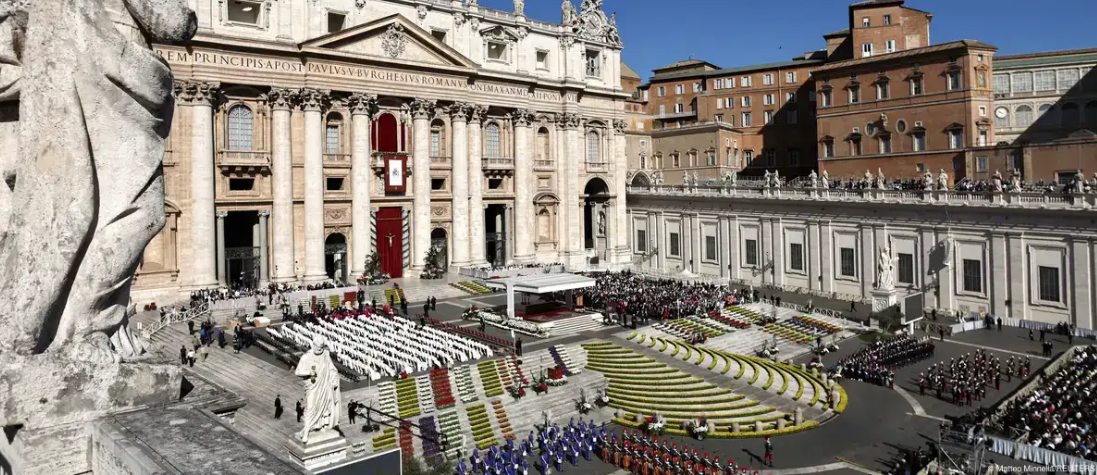
The epicenter of Catholic faith and pilgrimage and one of the masterpieces of church architecture, St. Peter’s Basilica in Rome, was consecrated 400 years ago after construction that lasted about 120 years.
St. Peter’s Square in Rome buzzes with tourists and pilgrims every day of the year. Since ancient times, believers have made pilgrimages to the site where St. Peter’s Basilica now stands. It is believed that the tomb of the Apostle Peter is located there. Four hundred years ago, on November 18, 1626, the basilica was consecrated.
A tourist attraction or a holy place?
Even 400 years after the basilica’s consecration, Pietro Zander, from the traditional Vatican institution responsible for the maintenance and restoration of St. Peter’s Basilica, has a clear stance: “We must ensure that this basilica is not perceived as a museum, even though it contains extraordinary works of art. Because here art is at the service of faith; art tells the story of faith.”

Inside the basilica, monumental columns intertwine with skillfully crafted mosaics. There are statues of saints and tombs of various popes. The floor is marble, while the ceiling is adorned with gilded stucco ornaments. All of this is the result of a construction history that lasted 120 years.
The foundation stone for the new St. Peter’s Basilica was laid as early as 1506, but work progressed slowly from the start. The first architect, to whom Pope Julius II of the time entrusted the project, was Donato Bramante.
Initially he had concrete plans, Pietro Zander explains: “Bramante envisioned the new building on the basis of a Greek cross. This means that the two axes of the church, the longitudinal and the transverse, had to have the same length, namely 105 meters.”
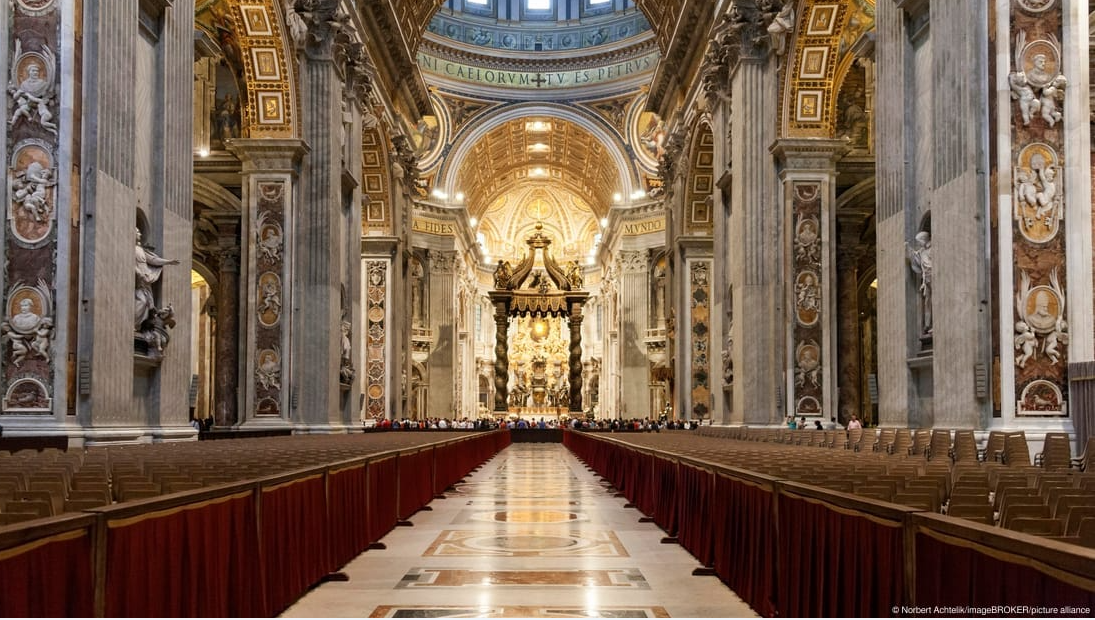
Many architects were involved in the construction
But Bramante managed to build only four gigantic columns before he died in 1514. And his fate almost became a pattern that would repeat itself. The architects who followed him also died after only a few years and did not manage to make much progress on the site. Work was repeatedly interrupted for years, even for decades.
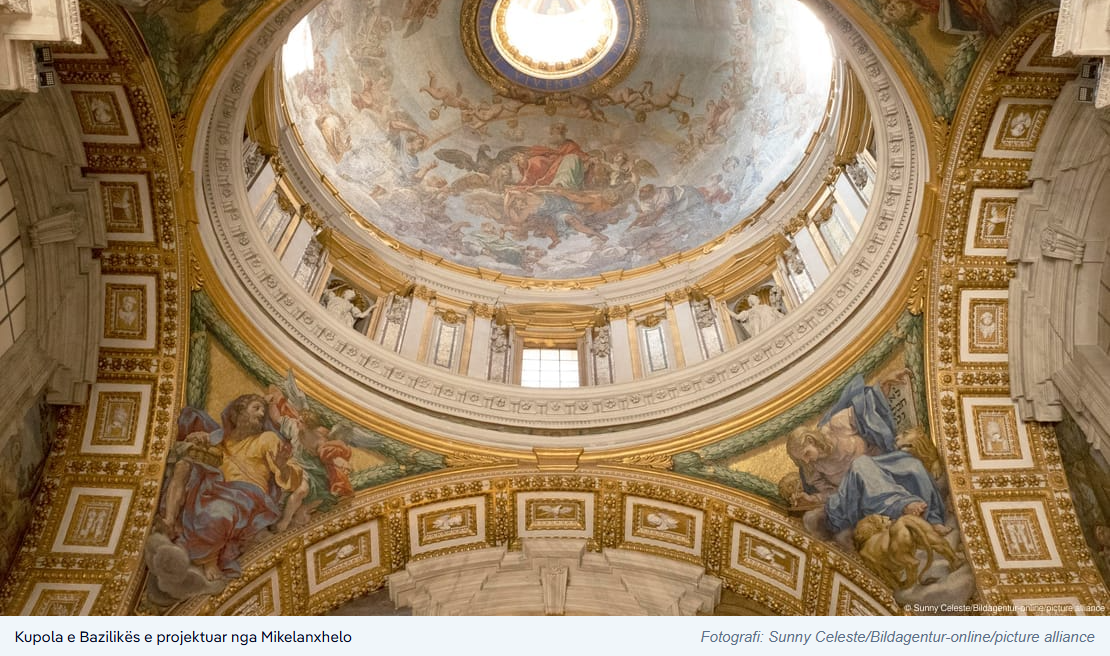
Only the artist Michelangelo Buonarroti, in the mid-16th century, gave construction a decisive impetus. He defined the monumental forms that characterize St. Peter’s Basilica today and drew up the sketches for the dome.
“I am fully convinced: if it had not been for Michelangelo, today we would have a Sagrada Familia here. That is, a church that no one would ever have finished,” says Zander.
It was Pope Paul V who, at the beginning of the 17th century, completed the front part of the building and ordered the construction of the facade that is seen today from St. Peter’s Square. In 1626, the solemn consecration of the basilica followed.
“Almost the entire city had worked on the construction or had contributed in one way or another,” Zander explains. “That is why the consecration was a very important event, especially for the residents of Rome.”
Even today, St. Peter’s Basilica has a special significance for the people of Rome and has become one of the city’s symbols. Its image appears on postcards, souvenir magnets or keychains. From almost every panoramic viewpoint people try to make it out, and above the rooftops of Rome it is almost always visible: its magnificent and impressive dome.
/DW/