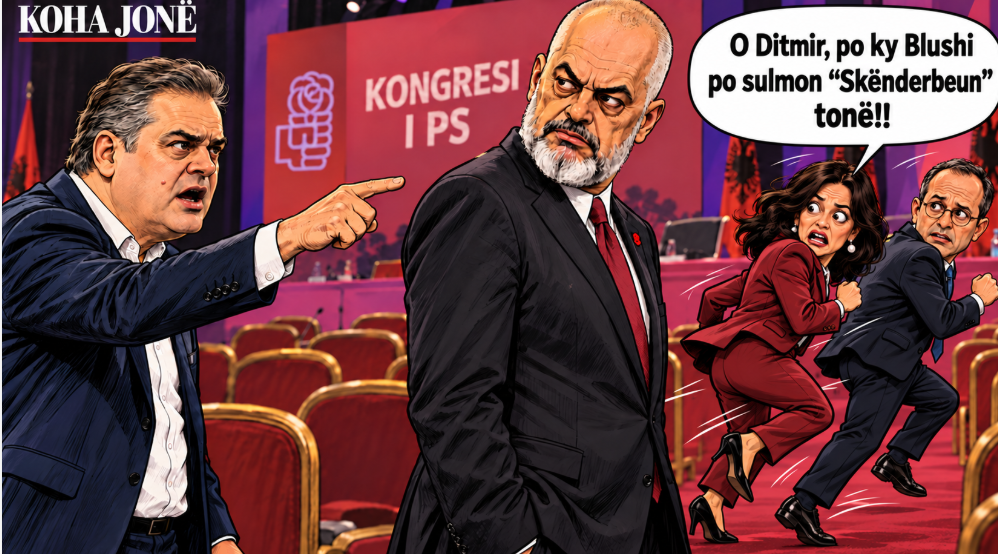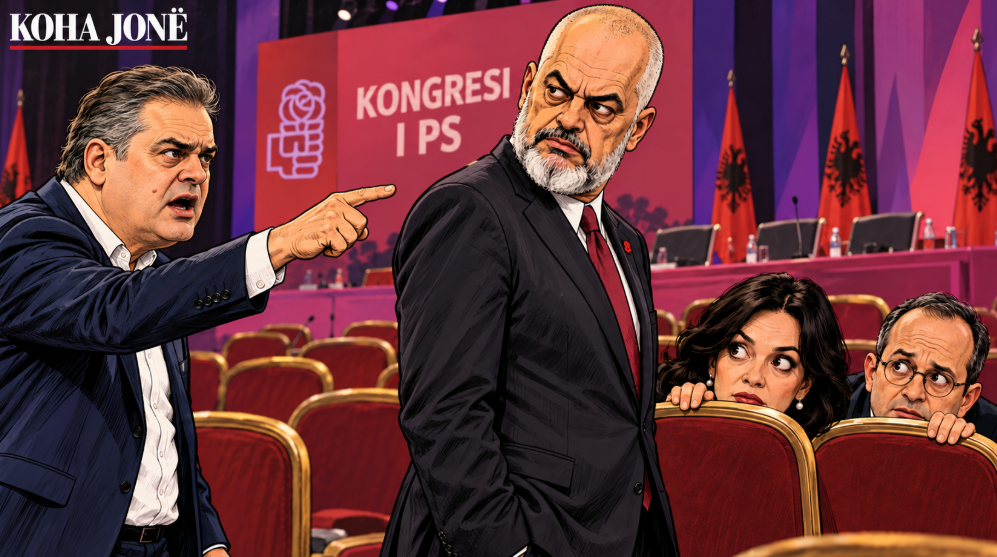
There is a big difference between dissatisfaction and political courage. Dissatisfaction can be expressed with a status update, with an indirect sentence, or by welcoming the defeat of a politician in another country. Courage is measured when you stand up to the leader of your own party and say openly what you think. Yesterday Elisa Spiropali and Ditmir Bushati reacted with jabs. Erion Veliaj too.
In the halls of the Assembly and of the Congress of the Socialist Party, facing Edi Rama and the apparatus of power, only Ben Blushi spoke directly. He criticized the style of leadership, raised the issue of internal democracy and demanded a political confrontation. The socialists knew who he was opposing, why he was opposing and what he was demanding.
Today, the reactions of Ditmir Bushati and Elisa Spiropali remain very far from that confrontation.
Starting from the reactions described after the results of the elections in Serbia, their messages can be read as a warning to Rama: no power is eternal. But this remains an interpretation of their subtext. A serious political stance should not need an interpreter.

If you have a message for Edi Rama, say his name!
If you think the PS has lost the debate, seek the debate in its bodies. If you believe the leadership is wrong, present the alternative. If you demand change, take on the responsibility of leading it too.

Spiropali addressed a letter to the party structures and has received no response to the concerns raised. This is a step that should be recognized. But silence in response to the letter calls for persistence and a further public stance. A letter left unanswered cannot be the end of a battle for internal democracy.
Bushati and Spiropali have held high posts. They have had power, access and opportunities to influence. For precisely this reason, the public has the right to demand more from them than a few careful jabs on social networks.
Blushi raised the bar much higher. He had ideas, arguments and a vision. He had the ability to turn opposition into a political thesis and the courage to defend it in front of the hall’s majority. His confrontation had an author, an address and content.
One can debate at length about the path he later chose and about the electoral results. But the later outcome does not erase the courage of the moment when he stood up against Rama’s leadership. Losing a battle does not diminish the worth of the person who had the courage to wage it.
This is the core that is often overlooked: Blushi risked his relationship with power by opposing it openly. His criticism carried a cost, which he took on himself.
Bushati and Spiropali need to show whether they are ready to do the same. So far, their reactions show dissatisfaction, but they still do not constitute a clear challenge to the leadership of the Socialist Party.
Therefore the comparison favors Blushi. He stood up in the middle of the hall and challenged Rama to his face. Bushati and Spiropali still leave the public to look for Rama between the lines of Facebook. In the courage of confrontation, the difference is like night and day.